
Solar panels are becoming an increasingly common sight on rooftops around Britain. With rising energy costs and growing environmental awareness, more homeowners are looking to solar power to reduce their carbon footprint and electricity bills. But how exactly do solar panels work to harness the sun’s energy?
Capturing Photons from Sunlight
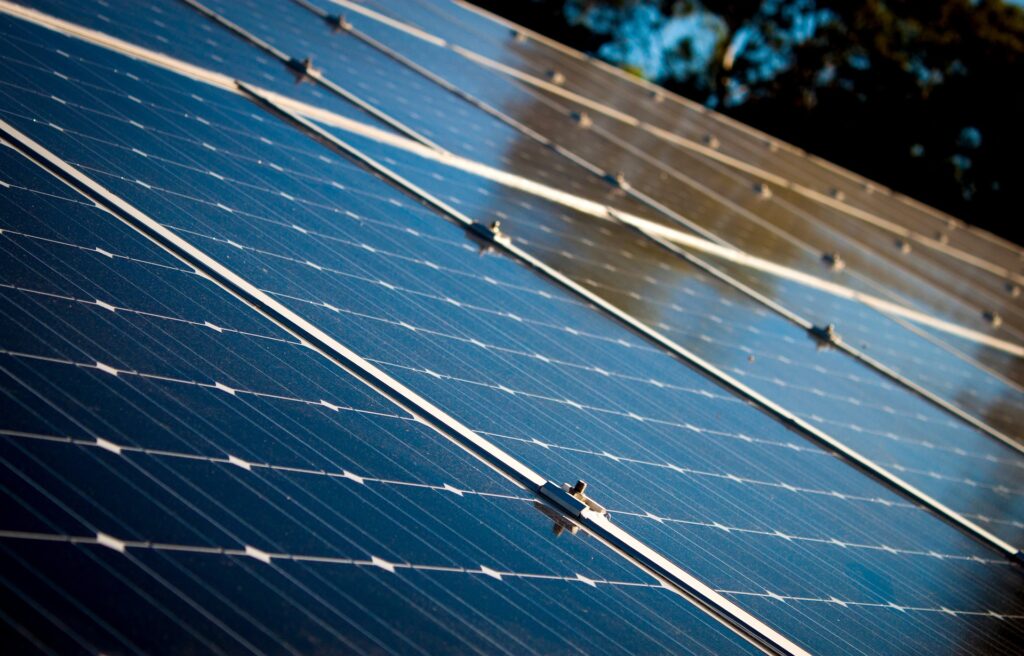
The key components of solar panels are photovoltaic cells. These cells are made from semiconducting materials like silicon that are specially treated to form an electric field. When sunlight hits these cells, the photons or particles of light energy knock electrons loose from the atoms in the cell. As the electrons move between positively and negatively charged layers in the cell, this generates an electrical current.
The more intense the sunlight striking the panel, the greater the electrical output. This is why solar installers aim to position panels at optimal angles to maximise their exposure to direct sunlight throughout the day. South-facing rooftops without shading from trees or other buildings are ideal locations in Britain.
Converting Direct Current to Alternating Current
The electricity generated by solar panels initially flows in direct current (DC). But household appliances run on alternating current (AC), which oscillates back and forth. So, an inverter is needed to convert the DC output from the solar panels to usable AC electricity.
Grid-connected solar panel systems feed this AC power directly into the home wiring to run lights, appliances and other electric devices. Any excess solar energy not immediately used can flow back into the wider electricity grid. The home’s electrical metre tracks both the electricity consumed from the grid and excess power exported back to the grid, facilitating billing.
Solar Batteries Store Power for Later Use
For solar panel systems not connected to the electrical grid, batteries are required to store the energy captured for use at night or on cloudy days. These batteries work just like car batteries, with solar electricity charging them up during daylight hours. Then the stored energy discharges from the batteries after dark to provide power.
Solar batteries maximise the self-consumption of the solar power generated and provide backup electricity in the event of a grid outage. However, they add significantly to the overall cost of installing a solar system. Energy storage technology continues advancing, with batteries becoming smaller, more efficient and cheaper over time.
Understanding Key Factors Impacting Output
Several key factors impact how much electricity solar panels produce:
- Sunlight Intensity – More intense sunlight leads to greater output. Solar production peaks on bright, cloudless summer days.
- Panel Orientation – Facing panels toward unobstructed sunlight increases energy capture. In Britain, south-facing rooftops are best.
- Panel Angle – Optimally tilting panels to directly face the sun’s angle improves efficiency. Trackers can automatically adjust the angle over the course of a day.
- Temperature – Solar cells become less efficient as they heat up. Cooler autumn or winter days see higher output than hot summer days.
- Shading – Even small shaded portions of a panel can have an outsized impact on electrical production. Solar panel installers carefully consider shading risks from buildings, trees and other obstructions.
Understanding these variables helps homeowners consider ideal solar locations and reasonable expectations for energy output across seasons and weather conditions.
Benefits of Solar Power for British Homes
Going solar provides a range of benefits for eco-conscious homeowners across Britain looking to reduce their environmental footprint and energy costs:
- Lower Electricity Bills – Solar panels reduce grid reliance, lowering monthly utility costs. Excess power sent back to the grid can even earn payments or credits.
- Reduced Carbon Emissions – Home solar energy decreases reliance on fossil fuel-based grid electricity, cutting a household’s carbon footprint.
- Greater Energy Independence – With battery storage, solar panels provide some electricity self-sufficiency for homeowners.
- Improved Property Value – Homebuyers increasingly favour properties with existing solar panel systems and discounted electricity bills.
So, while upfront installation costs are still considerable, over the system’s 25+ year lifetime, the environmental and economic payoff from solar panels makes them worth considering.