

Ecommerce sales tax can be a minefield for online businesses. Unlike physical stores, you might need to collect taxes based on your customer’s location, not yours. Factor in state-specific economic nexus thresholds, and keeping track of everything can be overwhelming. Non-compliance can lead to penalties, audits, and damaged trust.
The good news is there’s help! Ecommerce sales tax software automates calculations, tracks nexus thresholds, and streamlines filing. This saves you time, reduces stress, and ensures you stay on the right side of the taxman.
Why Use Ecommerce Sales Tax Software?
Sales tax can be a complex beast for ecommerce businesses. Keeping up with varying rates, exemptions, and tax holidays across different jurisdictions can be a nightmare.
This is where ecommerce sales tax software comes in. It acts as a lifesaver by automating tasks and ensuring compliance, allowing you to focus on running your business.
Challenges of Manual Sales Tax Calculations:
- Sales tax rates differ not only by state but also by local jurisdictions.
- Many states have tax holidays for specific products or periods.
- Certain products may be exempt from sales tax or taxed at a different rate.
Benefits of Ecommerce Sales Tax Software:
- The software integrates with your ecommerce platform and automatically calculates the exact sales tax based on the customer’s shipping address and product type.
- Sales tax software automates report generation, summarizing your sales tax data by location and product.
- Sales tax software eliminates human error, ensuring accurate tax collection and reducing the risk of penalties and audits.
- By automating calculations, reporting, and filing, sales tax software frees up your valuable time to focus on core business activities like marketing and sales.
Choosing the Right Ecommerce Sales Tax Software
When selecting the sales tax software for your business, look at the following aspects:
Business Size and Needs:
- High-volume businesses: Look for features like automatic filing and bulk processing that can be time-saving lifesavers.
- Complex tax rules: Businesses selling across multiple states or facing intricate tax regulations need software with robust capabilities.
Integration:
- Compatibility: Seamless integration with your existing ecommerce platform and accounting software ensures smooth data flow.
Features:
- Automatic tax calculations: This is essential for accurate tax collection and reduces the risk of errors.
- Sales tax reporting and filing: Automated report generation and filing assistance streamline tax compliance and save you time.
- Tax rule updates: Automatic updates ensure your software stays current with ever-changing tax regulations.
Pricing and Budget:
- Budget-friendly options: Many software providers offer tiered plans with features that scale according to your business size.
- Scalability: Look for software that offers additional features or higher processing volumes in higher tiers.
Top Ecommerce Sales Tax Software Options (2024)
1. Yonda Tax
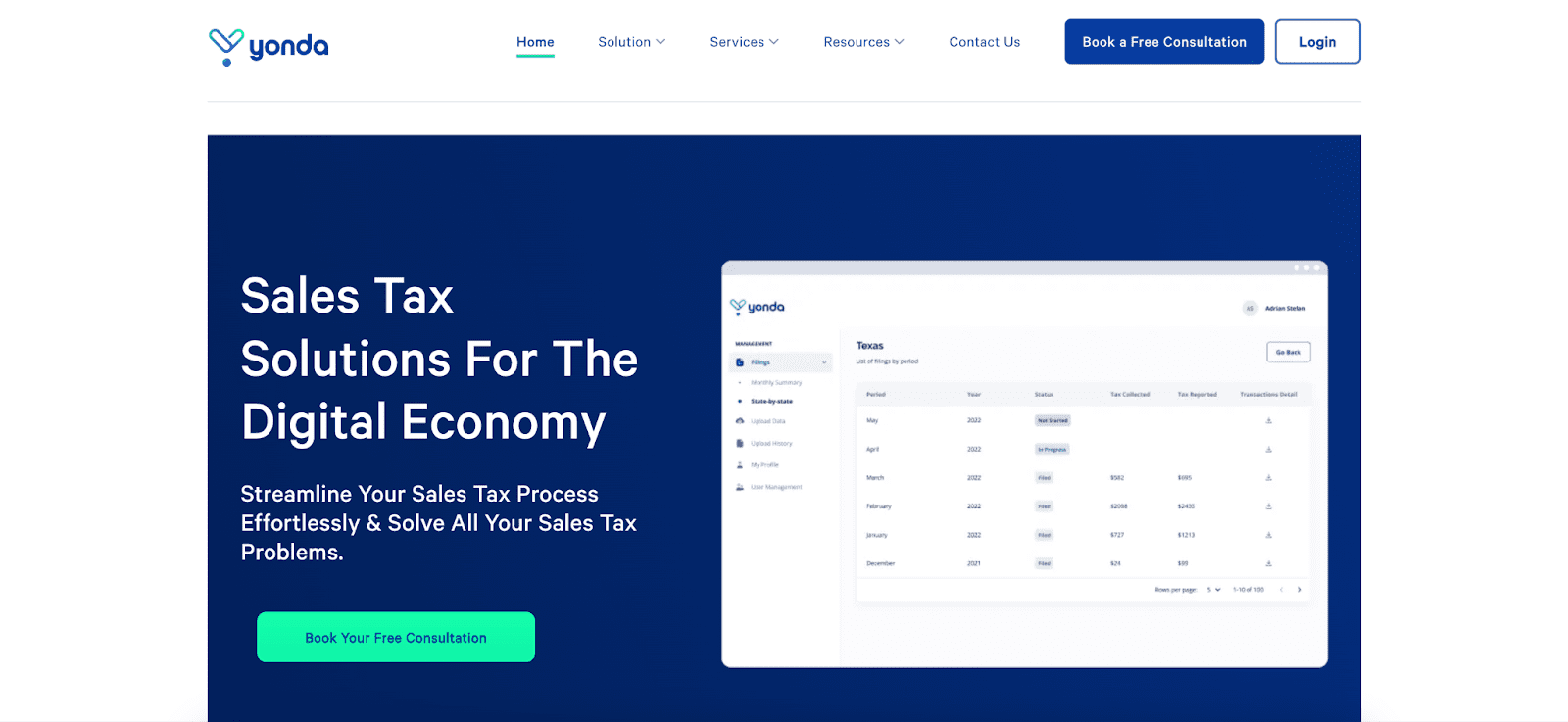
Yonda Tax positions itself as a user-friendly platform with a focus on personalized support for online businesses.
- Ideal for: Small to medium digital commerce businesses seeking a comprehensive solution with expert guidance.
- Key features: Automatic sales tax calculations at checkout or invoicing, nexus monitoring, registration assistance, dedicated sales tax manager, and integration with major eCommerce platforms.
- Pros: Personalized service with a dedicated account manager, simplifies sales tax compliance across the US.
- Cons: Limited information available on pricing plans.
2. TaxJar
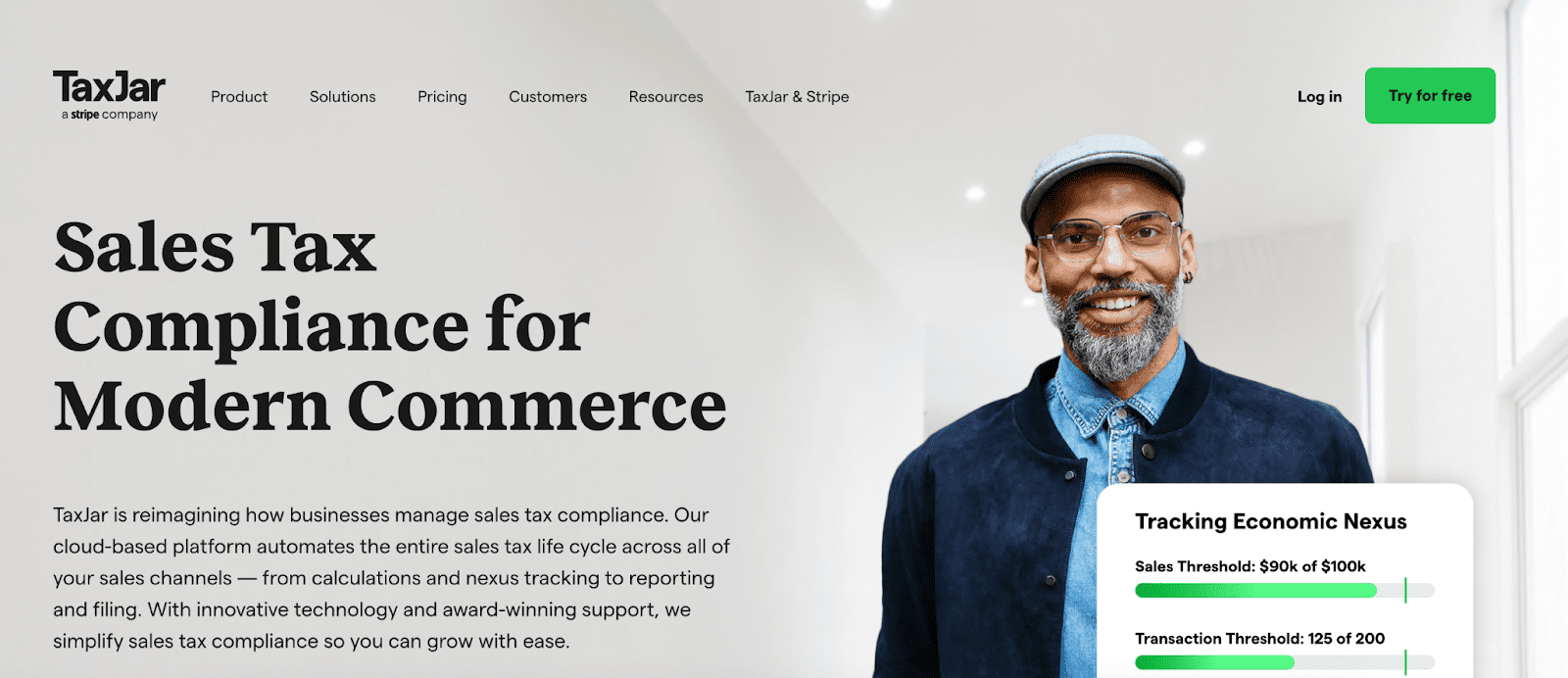
- Ideal for: Small to medium businesses, and startups (especially with a free plan).
- Key features: Easy to use, integrates with most platforms, automatic tax calculations, sales tax report generation, filing assistance (paid plans).
- Pros: User-friendly interface, free plan for low-volume sellers, real-time tax calculations, automates core tasks.
- Cons: Limited automation in the free plan, enterprise plans can be expensive for high-volume businesses.
3. AvaTax
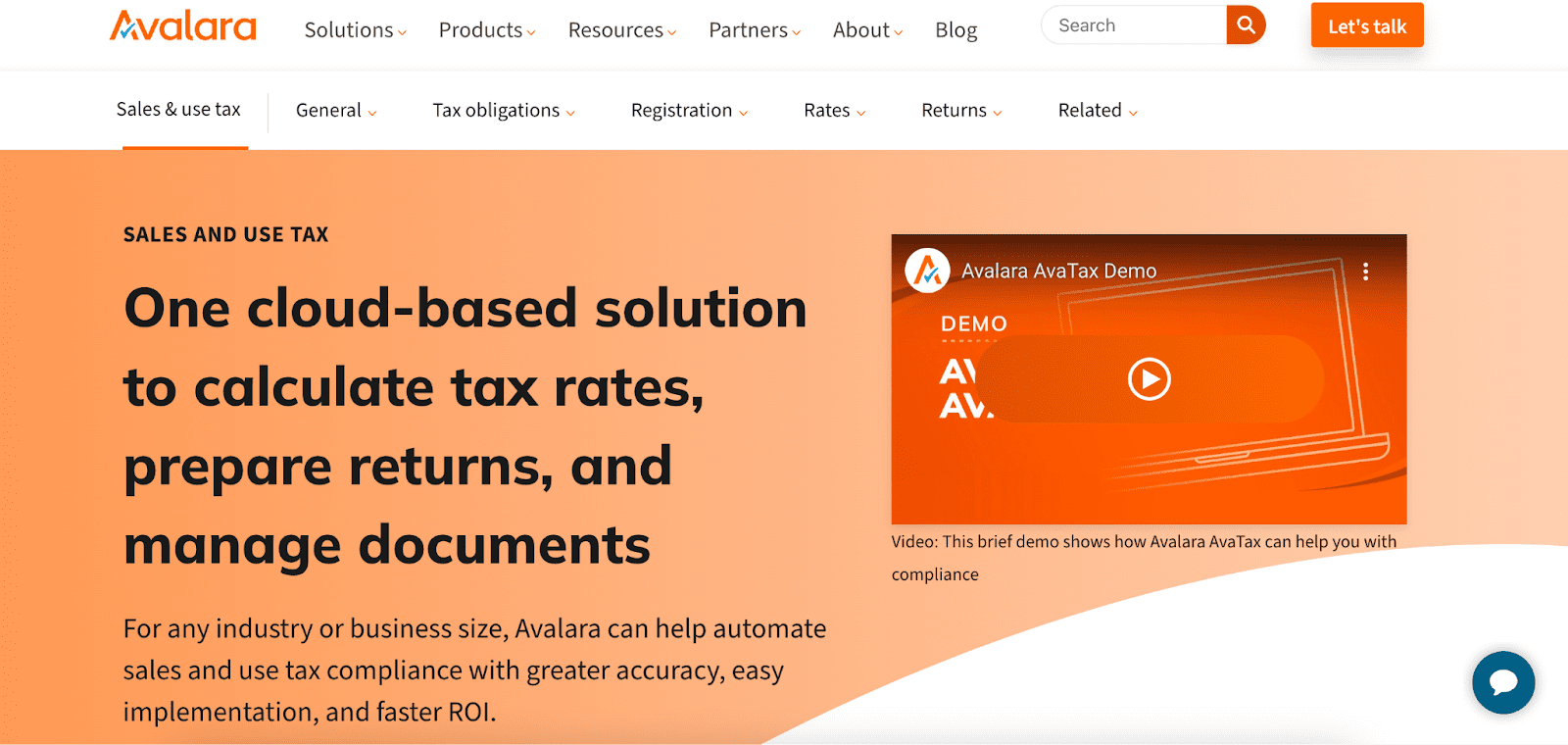
- Ideal for: Medium to large businesses, and complex tax landscapes.
- Key features: Extensive tax library, real-time tax calculations, automated filing (paid plans), advanced analytics, robust API for custom integrations.
- Pros: Handles intricate tax rules, automates filing and reporting (paid plans), and provides valuable sales tax insights.
- Cons: Steeper learning curve, complex setup, can be cost-prohibitive for smaller businesses.
4. Quaderno

- Ideal for: Businesses selling internationally, especially in the EU.
- Key features: Manages complex international tax rules, automates EU VAT calculations and other regional taxes, and multilingual support.
- Pros: Streamlines global sales tax compliance, handles VAT and other regional taxes, and caters to businesses with a multilingual customer base.
- Cons: Limited free plan, might be overkill for businesses solely focused on US sales.
4. Sovos Taxify
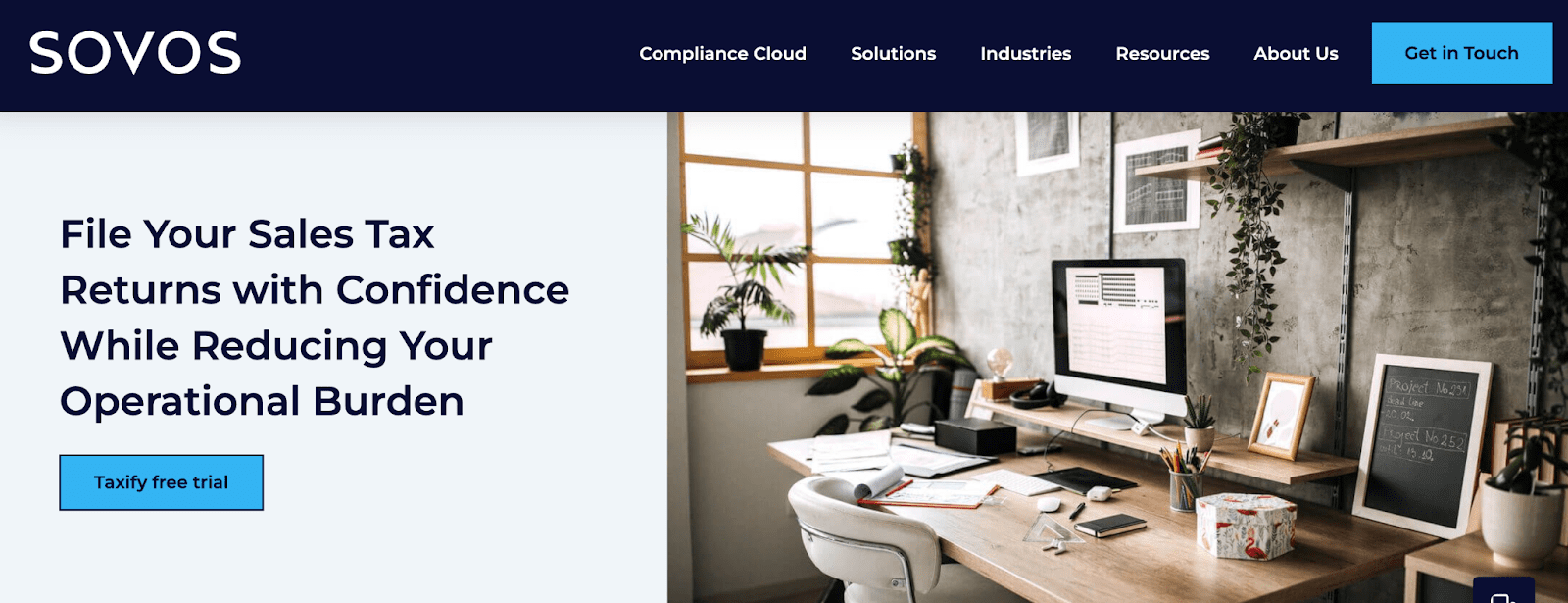
- Ideal for: Businesses requiring expert support, and complex tax compliance needs.
- Key features: Excellent customer support with access to tax experts, comprehensive compliance features, automated sales tax calculations, filing, and reporting.
- Pros: Top-notch customer service, tackles intricate tax scenarios and automates workflows for efficiency.
- Cons: Limited free plan, caters more towards enterprise-level pricing.
3 Additional Tips for Streamlining Ecommerce Sales Tax
While sales tax software automates many tasks, here are some additional practices to ensure smooth sailing:
- Stay Ahead of the Curve: Sales tax rules can change. Subscribe to updates from tax authorities and your software provider to ensure you’re always compliant.
- Double-Check Your Data: Regularly review sales tax reports generated by your software. Look for discrepancies and reconcile them to maintain data accuracy.
- Automate for Efficiency: Integrate your sales tax software with your accounting tools. This automates data transfer between platforms, saving you time and minimizing manual errors.
Conclusion
Ecommerce sales tax can be a thorn in your side, but it doesn’t have to be. Sales tax software automates calculations, simplifies reporting, and minimizes errors, freeing you to focus on running your business.
Don’t let sales tax slow you down! Explore the software options mentioned above, consider your business needs, and choose the perfect tool to streamline your sales tax management. With the right software in place, you can confidently expand your ecommerce business and achieve tax compliance with ease.