
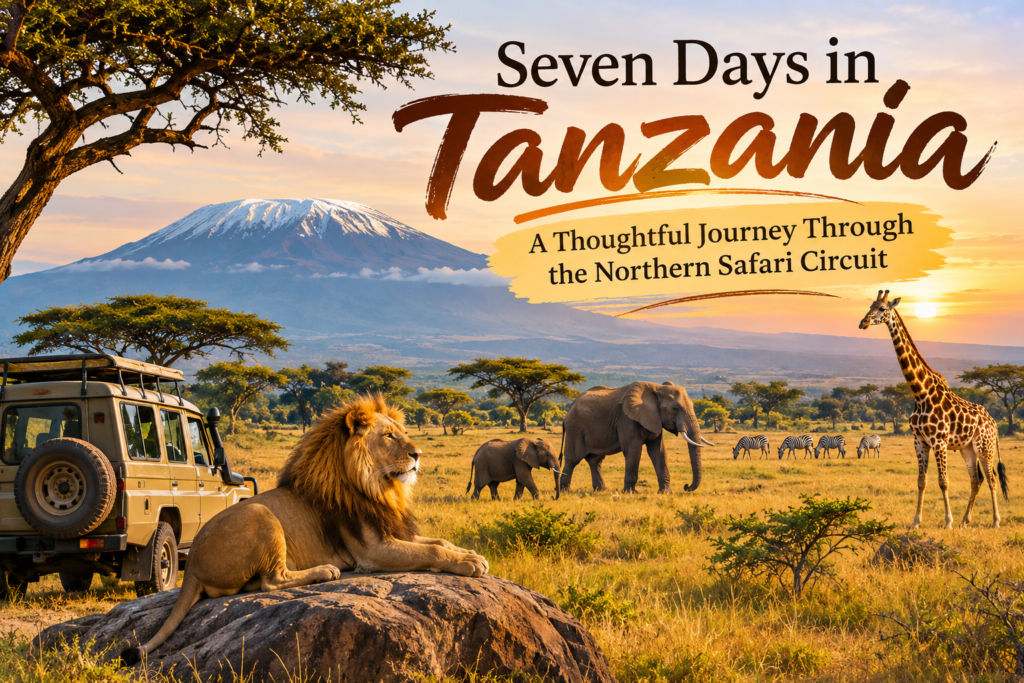
Why a Seven-Day Route Works So Well
A seven-day safari offers a useful balance between variety and depth. Travellers can include several major Northern Circuit destinations without turning every day into a long transfer. The exact order depends on arrival arrangements, accommodation availability, wildlife interests and the season, but a common route links Tarangire National Park, the Ngorongoro area, Serengeti National Park and, when time allows, Lake Manyara. Each destination adds a different perspective. Tarangire is known for its baobab-dotted scenery and elephant herds, the Ngorongoro Crater offers a compact wildlife-rich landscape, and the Serengeti is famous for expansive plains and predator-prey interactions. A thoughtful schedule leaves enough time in each area to appreciate those differences.
Tarangire: Elephants, Baobabs and River Country
Tarangire is an excellent introduction to northern Tanzania because its landscape feels distinct from the open plains that many visitors imagine when they think of an African safari. Ancient baobab trees rise above grassy areas and seasonal waterways, while elephants are among the park’s most memorable residents. During drier periods, wildlife may concentrate around dependable water sources, creating opportunities to observe several species in the same area. The park is also home to giraffes, zebras, wildebeest, antelope and a variety of birdlife. Rather than rushing from one sighting to another, guests can ask their guide to explain tracks, feeding patterns and the relationship between the river system and the surrounding ecosystem.
The Ngorongoro Area and Its Remarkable Crater
The Ngorongoro Conservation Area brings a dramatic change of scenery, with highland views, volcanic terrain and the celebrated crater floor. Descending into the crater can offer a concentrated wildlife experience because its grasslands, marshes and water sources support a wide range of animals. Lions, buffalo, elephants, hippos and many plains species may be seen, while the endangered black rhinoceros remains an important conservation symbol. Sightings are never guaranteed, and responsible guides avoid disturbing animals simply to get a closer photograph. The crater is also a place where conservation and human livelihoods intersect, making it worthwhile to learn about the area’s protected status and the communities who live in the wider highlands.
Serengeti: Space, Wildlife and Changing Seasons
The Serengeti is vast, and its appeal comes partly from the feeling of space. Long horizons, scattered kopjes and open grasslands create a setting where wildlife can be observed in its natural context. The Great Migration is a seasonal movement involving enormous herds of wildebeest and zebra, but the animals do not remain in one location throughout the year. Their distribution changes with rainfall and fresh grazing, so the best region to visit depends on travel dates. Resident wildlife is present beyond migration periods, including lions, cheetahs, leopards, hyenas, giraffes and many herbivores. Spending more than one game-drive period in the Serengeti gives guides flexibility to follow recent sightings and explore different habitats.
Choosing Accommodation and Safari Style
Accommodation influences the rhythm of a safari as much as the route does. Camping can suit travellers who value simplicity and want to keep more of their budget for park time. Mid-range tented camps and lodges offer additional comfort while retaining a close connection to the landscape. Luxury properties may provide spacious rooms, distinctive locations and more personalised service. The best choice is not automatically the most expensive one; it is the option that fits the traveller’s priorities, comfort expectations and overall budget. Before confirming a trip, check what is included in the quotation, such as park fees, meals, drinking water, transfers, guide services and accommodation taxes. Ask clearly about excluded items and any flights required.
The Value of a Skilled Driver-Guide
A knowledgeable driver-guide turns a scenic drive into a learning experience. Guides interpret animal behaviour, identify birds and plants, explain local geography and adjust the day when conditions change. They also make practical decisions about departure times, road conditions and how long to remain at a sighting. Good guiding is not measured by promises of finding every famous animal. Wildlife is free-ranging, and an ethical operator will be honest about uncertainty. Travellers can help by sharing their interests before departure: photographers may prefer patience at a sighting, families may need flexible breaks, and first-time safari guests may appreciate more explanation about the ecosystems they are visiting.
Preparing for the Journey
Preparation makes the experience more comfortable. Pack neutral-coloured clothing, a warm layer for early mornings, a hat, sunglasses, sunscreen, insect repellent and comfortable shoes. A camera or binoculars can make distant sightings more rewarding, but neither is essential to enjoying the trip. Keep luggage manageable, especially when small aircraft are part of the itinerary, and confirm baggage limits with the operator or airline. Travellers should review current entry requirements, health advice and travel insurance arrangements before departure. It is also sensible to discuss mobility needs, dietary requirements and any important timing constraints in advance so the itinerary can be planned realistically.
The right week-long African safari is shaped by the season, guiding and the time spent in each habitat. A plan should explain how its destinations fit together and what is included in the quoted price, so travellers can compare the experience rather than relying on a headline description.
Safari Planning Insight 1
For travellers comparing options, 7 seven days Tanzania Safari is worth assessing carefully. A seven-day itinerary gives travellers room to combine contrasting northern landscapes without making every day a transfer day. Review the route, overnight locations and actual time reserved for game drives. A balanced schedule is usually more valuable than adding too many parks.
Safari Planning Insight 2
For travellers comparing options, Best 7 days African Safari is worth assessing carefully. The right week-long African safari is shaped by the season, guiding and the time spent in each habitat. Check how destinations fit together and what is included in the quoted price, so the experience can be compared fairly.
Conclusion
A successful week in Tanzania is built around good pacing, realistic expectations and an itinerary that respects the character of each park. Tarangire, Ngorongoro and the Serengeti each offer a different experience, and the right balance depends on the season and the interests of the people travelling. Compare routes carefully, ask what the price includes and choose a team that communicates clearly. With thoughtful planning and an experienced guide, seven days can become a memorable introduction to Tanzania’s wildlife and landscapes.
Previously in Latest News: Veeir Chaudary Honoured by Sonu Sood with Best Actor & Producer Award 2026