
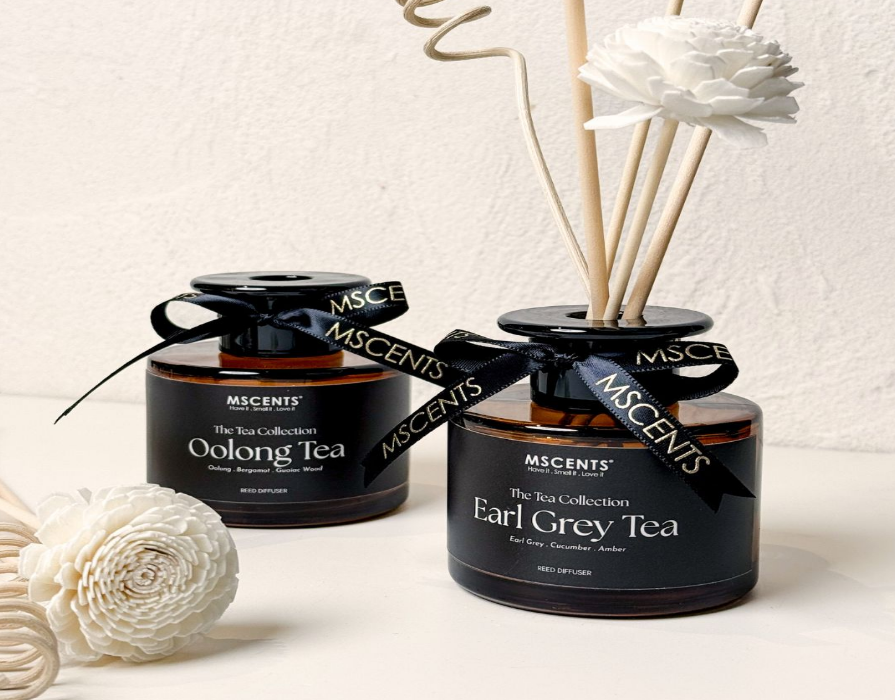
A visitor waits in a small meeting room that was scented that morning. Two minutes in, her head hurts, and she cannot leave without being rude.
Businesses should use scent cautiously in small, enclosed rooms, at desks where people spend hours, or in places where visitors may be anxious or unable to leave easily. Where scent is used elsewhere, it should be light, easy to adjust and easy to opt out of. The risk is real. California’s health department reports that fragranced products are associated with over 350 cases of work-related asthma in the state’s surveillance data from 1993 to 2012. Scent marketing can add to a good space, but the person breathing the air cannot switch it off. Consent is therefore a design question, not an afterthought. This article covers where scent does not belong, why sensitivities matter and how businesses can scent responsibly.
Where should businesses not use scent?
Businesses should exercise caution when using scent in small enclosed rooms, at desks and workstations, and in spaces used by people who are anxious or cannot easily leave. In those places, people have little control over the air they breathe. Scent works better in entrances and shared areas where people pass through, with a light setting and a way to give feedback.
| Space | Why caution is needed | Safer approach |
| Small enclosed rooms | People cannot easily leave | No scent, or a very light setting |
| Desks and workstations | People stay for hours and may be sensitive | Scent entrances and shared areas only |
| Waiting rooms for anxious patients | Visitors may be sensitive to fragrances, particularly in healthcare settings | Consider keeping these areas scent-free or consulting users before introducing scent. |
Waiting rooms show why. A 2014 study in the Health Environments Research and Design Journal tested scent and music in a plastic surgeon’s waiting room. Scent and music each helped reduce patients’ anxiety, but the combination did not, and the authors advised using them with caution.
Room scents work best as one small layer in a space that already works, not as a fix for a space that does not.
Why do sensitivities matter for scent marketing?
Some people react to fragrance with asthma symptoms, headaches or irritation, and a business cannot see who they are. Health agencies and human rights bodies treat this as a real accessibility issue. A business that scents a shared space should assume that some visitors and staff will be affected.
The California Department of Public Health’s Occupational Health Branch counted over 350 cases of work-related asthma associated with fragranced products between 1993 and 2012. That is more than 17 recorded cases a year on average.
The Canadian Human Rights Commission describes environmental sensitivity as a hidden disability that people often misunderstand. It compares scent-free policies to other accessibility measures, such as ramps and automatic doors.
Hotel guests report reactions too. A Hong Kong Polytechnic University study of a luxury hotel chain found that most guests preferred scent in public areas. A few found it too strong, and some reported headaches.
What does consent mean for scent in public spaces?
In public spaces, consent means giving people notice and a way out. People can’t opt out of the air in a lobby or waiting room, so businesses should keep strength low, tell staff before installing, offer a scent-free area, and act on complaints. Silence from customers is not agreement.
Workplace guidance in Canada is practical on this. Toronto’s scented products guidelines tell managers to document concerns thoroughly when staff report symptoms. University guidelines suggest a fragrance-free zone where staff are severely affected.
Labels need care too. The Canadian Centre for Occupational Health and Safety notes that “fragrance-free” or “unscented” products are typically odourless and contain no masking ingredients, but some products labelled “unscented” may contain ingredients that hide a smell.
Consent also covers strength. A 2020 Journal of Marketing meta-analysis by Roschk and Hosseinpour found that effects do not increase linearly as scent strength rises. A stronger setting does not mean a better result, and it raises the chance of complaints.
What should businesses ask scent marketing companies about sensitivities?
Businesses should ask any scent marketing company four questions. Can the strength be adjusted by area? Can one zone stay unscented? How are complaints handled? What happens if a trial fails? Clear written answers matter more than claims about how pleasant a scent is.
Specialist scent marketing providers, such as MScents in Singapore, supply fragrance, equipment, installation, a warranty, filter replacement, and servicing for hotels, shops, and offices. Whichever provider a business uses, the same questions apply.
A trial in one area shows how people react before a business commits.
The short version
Scent marketing works best in shared, passing-through spaces, at a low level, with notice, a scent-free option, and a way to give feedback. It should generally be avoided in small enclosed rooms or at desks, and used cautiously where people are anxious. Businesses that treat consent as part of the design are less likely to lose the customers and staff they set out to please.
Previously in How To: Wedding Dinner Photography in Singapore: How Many Hours to Book and What It Costs