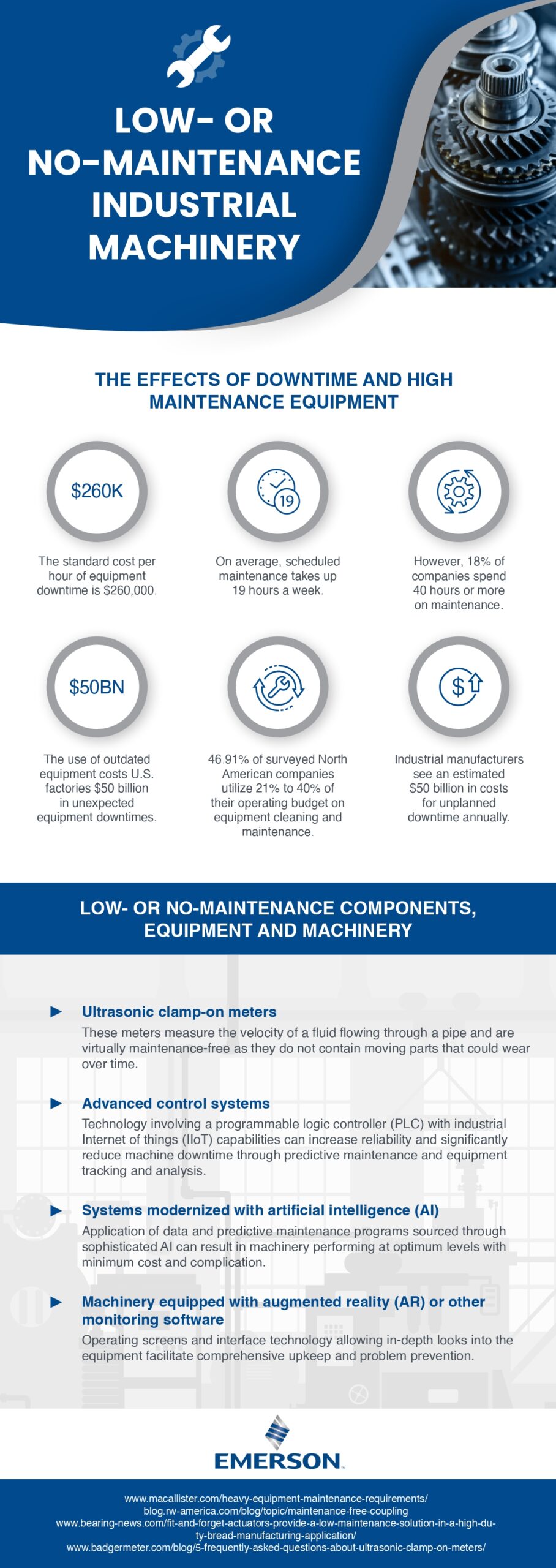
Industrial machinery maintenance is a significant factor in operational efficiency and profitability. The costs associated with repairs and downtime can quickly add up, making it crucial for businesses to adopt strategies that optimize equipment performance while minimizing expenses. Here’s how companies can reduce maintenance costs and keep operations running smoothly.
Common Causes of Downtime and Maintenance Costs
Aging equipment is one of the biggest contributors to unplanned downtime, often leading to costly repairs and lost productivity. Other common causes include mechanical failures, operator errors, supply chain disruptions, and insufficient time allocated for routine maintenance. When left unaddressed, these issues can result in unexpected breakdowns, increased operational expenses, and even safety risks for workers.
The Role of Durable, Low-Maintenance Components
One effective way to lower maintenance demands is to invest in durable, low-maintenance components. For example, ultrasonic clamp-on meters used in industries like water distribution offer a nearly maintenance-free solution due to their lack of moving parts. Similarly, industrial automation technologies, such as self-lubricating bearings and corrosion-resistant materials, can extend equipment lifespan and minimize repair frequency.
Implementing Preventive Maintenance Strategies
A preventive maintenance (PM) program is essential for reducing downtime and prolonging the life of industrial assets. By scheduling routine inspections, servicing, and minor repairs, businesses can identify potential issues before they escalate into costly failures. Implementing a structured PM program includes:
- Regular Equipment Inspections: Checking for wear and tear on key components.
- Scheduled Lubrication and Calibration: Ensuring machines operate at peak efficiency.
- Proactive Part Replacements: Replacing aging parts before they cause system failures.
However, preventive maintenance requires ongoing resources, and its effectiveness depends on the type of machinery being maintained. While it reduces the risk of unexpected failures, it does not eliminate inefficiencies caused by unnecessary maintenance tasks.
Advancing with Predictive Maintenance (PdM)
For a more advanced solution, predictive maintenance (PdM) leverages analytics, real-time monitoring, and artificial intelligence to anticipate failures before they occur. Using IoT-enabled sensors and machine learning algorithms, PdM continuously tracks equipment conditions, providing insights into when maintenance is truly needed. This method allows companies to avoid unnecessary servicing while preventing unexpected failures, leading to significant cost savings. Key benefits of PdM include:
- Minimized Unplanned Downtime: Early fault detection prevents catastrophic failures.
- Optimized Maintenance Scheduling: Resources are allocated based on actual equipment conditions rather than fixed schedules.
- Extended Asset Lifespan: Data-driven insights help prevent excessive wear and tear.
Integrating Automation and Digital Tools
Beyond preventive and predictive maintenance, integrating automation and digital tools such as those offered by Emerson, enhances maintenance efficiency. Technologies such as computerized maintenance management systems (CMMS) enable organizations to track asset performance, schedule repairs, and analyze historical data to refine maintenance strategies. Additionally, augmented reality (AR) solutions can assist technicians by overlaying real-time diagnostic information onto physical equipment, reducing the time required for troubleshooting and repairs.
The Path to Cost-Effective Industrial Maintenance
Managing industrial maintenance effectively requires the right combination of technology, strategy, and equipment upgrades. By adopting predictive and preventive maintenance techniques, investing in high-quality, low-maintenance components, and leveraging digital tools, businesses can maximize operational efficiency while reducing long-term costs.