
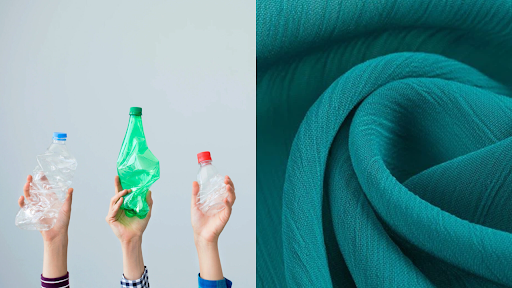
Recycled polyester is becoming an increasingly popular material in the fashion industry due to its ability to reduce plastic waste and lower carbon emissions. In this writing, we’ll take a closer look at the advantages of recycled polyester, its drawbacks, and what brands should watch out for when using it.
What Is Recycled Polyester and How It’s Made
Recycled polyester, also known as rPET, is a type of synthetic fabric made by repurposing plastic waste, most commonly used plastic bottles. As a more sustainable alternative to virgin polyester, which is derived from newly extracted petroleum, rPET offers the same key benefits such as durability, wrinkle resistance, and versatility across different garment types. What sets it apart is its lower environmental impact, helping reduce dependence on fossil fuels and giving a second life to materials that would otherwise contribute to landfill or ocean waste.
The process of making recycled polyester typically begins with collecting and sorting plastic waste, such as post-consumer plastic bottles. These bottles are thoroughly cleaned, stripped of labels and caps, and then shredded into small flakes. The flakes are then melted down and extruded into new polyester fibers, which can be spun into yarn and woven or knitted into fabrics for use in garments, accessories, or even footwear.
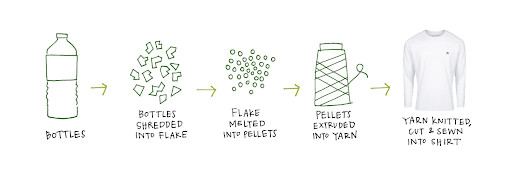
The process of making recycled polyester typically begins with collecting and sorting plastic waste, such as post-consumer plastic bottles
There are two primary methods of recycling polyester: mechanical recycling and chemical recycling. Mechanical recycling involves physically melting the plastic flakes to create new fibers. This method is more common and cost-effective but may slightly degrade the quality of the fiber over time. Chemical recycling, though less widespread, breaks down the plastic at a molecular level, allowing for higher-quality fibers that are closer in performance to virgin polyester.
Recycled polyester can be used in a wide range of apparel categories, including activewear, outerwear, swimwear, and casualwear. By using rPET, brands can reduce their dependence on fossil fuels, cut down on greenhouse gas emissions, and give a second life to plastic waste that would otherwise end up in landfills or oceans.
2. Advantages and Drawbacks of Recycled Polyester
Advantages
From reducing plastic waste to supporting performance needs, here are some key benefits of using rPET in fashion:
- Environmental Impact Reduction: One of the most recognized benefits of recycled polyester is its ability to reduce plastic waste. By repurposing used PET bottles, rPET prevents large volumes of plastic from ending up in landfills and oceans. This contributes to reducing environmental pollution and promoting circular use of materials.
- Lower Energy and Resource Consumption: Compared to virgin polyester, rPET production generally consumes less energy and water, helping reduce carbon emissions and overall resource use in the supply chain.
- Functional Performance: Recycled polyester retains the same physical characteristics as virgin polyester, including strength, elasticity, wrinkle resistance, and quick-dry performance, making it highly suitable for activewear, outerwear, swimwear, and other performance-driven garments.
- Alignment with Sustainability Goals: As more brands and consumers prioritize sustainability, using rPET can support a company’s environmental commitments and enhance brand perception.
Drawbacks
Despite its environmental advantages, recycled polyester still carries several limitations that brands and consumers should be aware of:
- Non-Biodegradable: Like virgin polyester, rPET is made from plastic and does not break down naturally, contributing to long-term landfill waste.
- Energy-Intensive Production: Although it uses less energy than virgin polyester, the recycling process can still be resource-intensive and relies on petrochemicals, contributing to emissions and pollution.
- Heat Sensitivity: Recycled polyester is prone to melting or damage under high heat from irons or dryers, making it less durable in certain care conditions.
- Comfort and Skin Issues: Some users find polyester less breathable and soft compared to natural fibers. It may trap moisture and heat, potentially leading to discomfort or skin irritation for sensitive individuals.

Recycled fabrics have both advantages and challenges, it’s important to understand both sides
3. How to Choose Certified, High-Quality Recycled Materials
Choosing high-quality recycled fabrics is essential to ensuring that your sustainability efforts are both credible and effective. In an industry where greenwashing is a real concern, using certified and traceable recycled materials helps maintain product integrity and consumer trust. This is particularly important in activewear and sportswear, where a reputable sportswear manufacturer must balance sustainability with technical performance—ensuring that recycled polyester still meets standards for stretch, moisture management, and durability.
One of the most reliable ways to validate recycled content is through globally recognized certifications. Standards like the Global Recycled Standard (GRS) and the Recycled Claim Standard (RCS) verify not only the percentage of recycled material but also the environmental and social criteria in the supply chain. Additional certifications such as OEKO-TEX® and bluesign® can further ensure that the fabrics are safe for the skin and produced with responsible chemical management.
GRS (Global Recycled Standard) is a leading certification for recycled fabrics, ensuring verified recycled content and responsible production practices
Equally important is working with reputable fabric suppliers who can provide full transparency. Trusted mills will be able to present valid certificates, performance test results, and even samples for quality assessment. When evaluating a supplier, it’s worth checking whether they support batch-level traceability and whether they have experience working with international apparel brands. Sustainable clothing manufacturers often collaborate closely with such suppliers to ensure that environmental claims are backed by verifiable data and that fabric integrity meets global standards.
For brands that don’t yet have a strong sourcing network, the most efficient path is to partner with a clothing manufacturer that already has access to reliable, certified fabric mills. These manufacturers can help guide material selection, verify certifications, and even assist in aligning fabric choices with product performance needs and sustainability goals. Their sourcing experience not only saves time but also reduces the risk of sourcing uncertified or low-quality materials.
In conclusion, recycled polyester is becoming a valuable material in the shift toward more sustainable fashion. It is not only a practical solution for eco-conscious design, but also a step toward building a more circular and future-ready apparel industry.
By choosing certified, high-quality rPET and working with trusted partners in sourcing and production, fashion brands can align their collections with growing consumer expectations for responsibility and transparency.