
From rotating captains to six-figure race-week berths, here’s where yacht money really goes, and which line item protects all the others.
By James Zampetti, Managing Director, Casey Insurance Companies
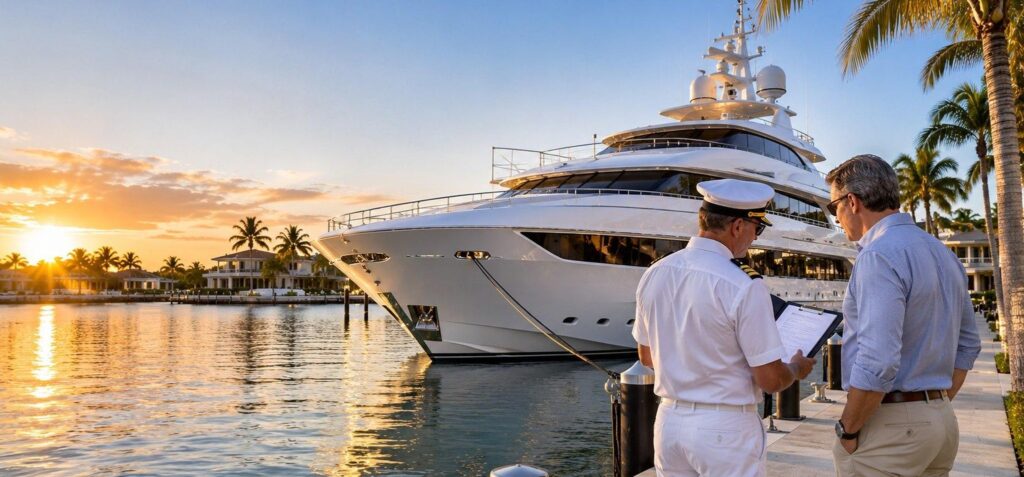
Picture a hypothetical scene at this fall’s Fort Lauderdale International Boat Show. A first-time buyer shakes hands on a 150-foot motor yacht. Twenty million dollars, champagne on the aft deck. Then the captain leans over with the question every seasoned owner has heard: “So, what’s the budget for next year?”
A line long attributed to J.P. Morgan says that if you have to ask what a yacht costs, you can’t afford one. I’d argue the opposite: ask, and ask early. Yacht brokerage Fraser puts annual running costs at roughly 10 to 15 percent of the purchase price, while Moran Yacht & Ship gives a market range of 8 to 20 percent. Moran puts the yearly bill for a $30 million, 50-meter (164-foot) yacht anywhere from $2.7 million to $5.4 million.
The purchase price gets you aboard. After that, the yacht sends you a new bill every single year. In my work placing marine coverage in South Florida, the owners who understand that bill before they sign are the ones who enjoy the boat. The ones who don’t spend their first season in shock.
Here is where that money goes.
Crew: The Biggest Line Item Has a Heartbeat
Salaries
Yacht broker and manager Burgess says crewing typically accounts for around half of a yacht’s annual running costs. Crew agency YPI Crew’s 2026 captain salary guide puts a captain on a 50-to-60-meter yacht at €10,000 to €16,000 a month. YachtBuyer estimates that a 50-meter yacht with nine crew carries roughly $942,000 a year in salaries alone, and an 80-meter yacht with 25 crew about $2.25 million.
The Costs Nobody Mentions at the Boat Show
YPI Crew calls equal-time rotation the standard expectation for captains on yachts of 50 meters and above, so owners increasingly pay two captains to run one wheelhouse. Placement agencies can charge around 10 percent of a new hire’s first-year salary. On commercially operated yachts, the Maritime Labour Convention requires owners to carry financial security for crew repatriation, abandonment, death and long-term disability.
Dockage: Real Estate That Floats
South Florida Slips
In South Florida, the problem is finding a slip at all. Phil Purcell of the Marine Industries Association of South Florida has said there are seven boats for every slip in prime markets like Fort Lauderdale. At the City of Fort Lauderdale’s 2025-26 annual rate of $2.23 per foot per day, a 100-foot yacht pays about $81,000 a year before shore power and sales tax. Heavy-duty 480-volt shore power adds roughly $25,000 more. Private superyacht marinas in Miami quoted the owner of a 157-foot Feadship between $143,000 and $200,000 a year.
The Monaco Premium
For the ceiling, look to the Mediterranean. A prime trackside berth for a 50-to-59-meter yacht during the 2026 Monaco Grand Prix cost €110,135 for the race week, up about 47 percent since 2019. That’s a week of parking, not a year.
Fuel: The Bill That Moves With You
Fuel depends on how far and how fast you cruise. Moran budgets $300,000 to $600,000 a year for its 50-meter example, based on 8 to 12 weeks of cruising. YATCO notes that fuel can easily top $500,000 a year for large yachts.
Maintenance: Salt Water Always Wins
Haul-Outs, Surveys and Refits
Fraser budgets maintenance at 5 to 10 percent of a yacht’s purchase value every year, before anything unexpected breaks. Most superyachts need a dry-dock period every few years, class surveys arrive on a five-year cycle, and major refits typically come every five to seven years.
At this year’s Fort Lauderdale show, Rolls-Royce extended the overhaul interval on eligible mtu Series 2000 M96 yacht engines to a maximum of 12,000 hours. The hours still add up, though.
Depreciation
Value slips away too. One 2026 SuperyachtNews model found that a conventional superyacht retains only about 44 percent of its delivery price after 15 years. Boaters have a joke for all of this: B.O.A.T. stands for “Bust Out Another Thousand.”
Insurance: A Small Slice and the Biggest Shield
Insurance typically runs 0.5 to 2 percent of a yacht’s value each year, according to Fraser and BOAT International. For the Florida-based private client yachts I work with, I typically see premiums land around 1.5 percent. Moran’s example works out to roughly 7 percent of the annual budget, yet insurance protects everything else on the list.
Why Florida Is Different
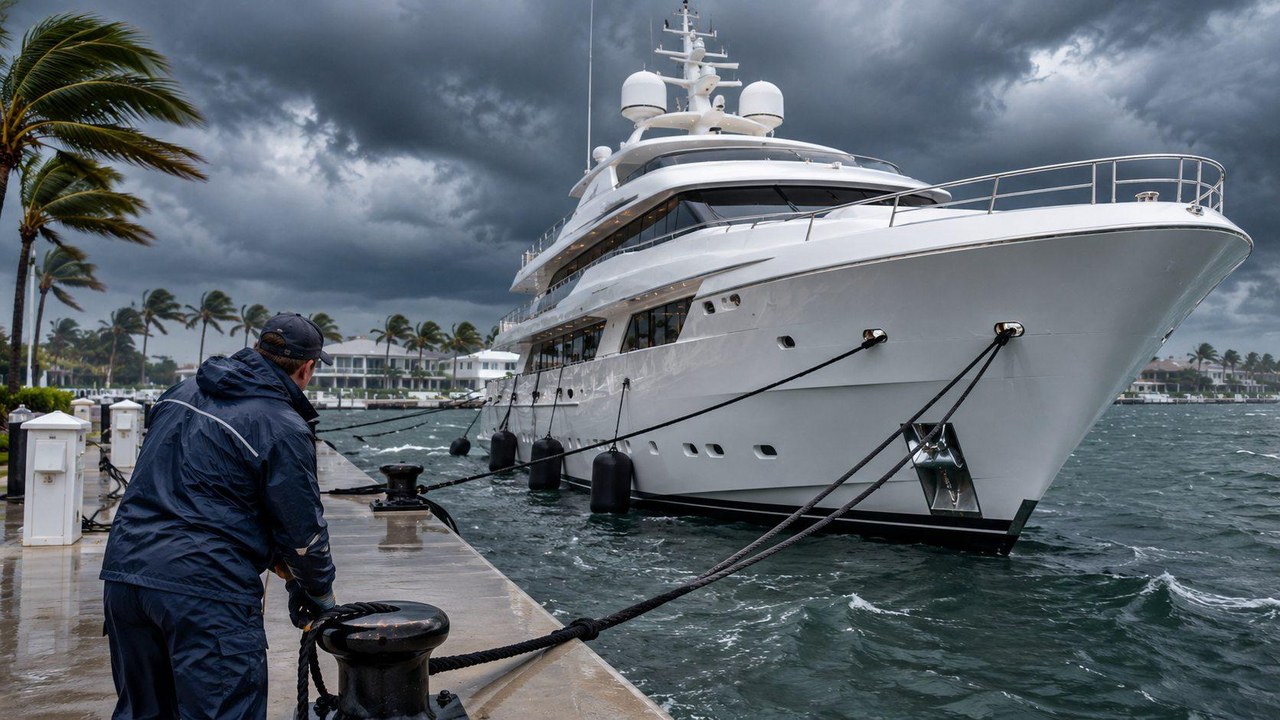
Within weeks of Hurricane Ian in 2022, the Florida Fish and Wildlife Conservation Commission and its partners had assessed more than 2,000 displaced vessels. Under Florida law, owners of vessels left derelict by a hurricane generally have 45 days after the storm passes over the state to remove or repair them. Leaving a derelict vessel on state waters can bring criminal penalties, and owners can be billed for its removal.
Wreck removal, named-windstorm terms and a written hurricane plan are now central to every serious yacht policy.
What the 2026 Market Looks Like
The 2026 market offers some relief. After several years of hefty increases, Insurance Journal reported in March that yacht rates are flat or even slightly lower, and that insurers are starting to return to South Florida. In my experience, underwriters still look hard at captain experience, loss history and where a yacht spends hurricane season.
What a Policy Should Cover
Insurance is one of the smaller lines in the budget, and often the one owners think about last. That’s backwards. A properly built private client luxury yacht insurance program should cover agreed hull value, crew, liability, and the storm scenario no Florida owner can ignore.
Premiums also swing widely by vessel. For owners comparing options, this breakdown of how marine insurance costs vary by boat type shows ranges for everything from small fishing boats to luxury yachts.
The Bottom Line
A yacht can be one of life’s great joys. Smart owners budget for what it really costs: crew first, then maintenance, fuel, dockage and protection.
As for J.P. Morgan’s famous advice? If you have to ask what a yacht costs, good. Just make sure you ask what it costs next year, too.
About the Author
James Zampetti is Managing Director of Casey Insurance Companies, a Florida-based insurance brokerage specializing in marine insurance. He holds Florida 2-20 and 1-20 surplus lines licenses and learned the business from the ground up placing marine surplus lines risks. Learn more at caseyinsurancecompanies.com.
Previously in Business news: Predict Pro Outlines Its Web4 Ecosystem Vision, Connecting AI Agents, Prediction Markets and Human Participation