

Healthcare physicians face growing challenges, including staff shortages, managing complex data, and ensuring accurate diagnoses and treatments, all while dealing with a straining workload. To ease this burden, 86% of healthcare leaders reported extensive AI adoption in 2025, with the global healthcare AI market expected to exceed $120 billion by 2028.
Over 40% of U.S. hospitals had integrated AI solutions by 2024 to improve efficiency, reduce costs, and enhance patient care. AI offers benefits like personalized treatments and reduced clinician burnout, supporting better work-life balance and care quality.
In this guide, we explored how AI is transforming healthcare delivery and also the leading AI platforms to help you make informed choices.
The Shift Toward AI-Powered Personalized Healthcare
In personalized healthcare, treatment plans are crafted around each patient’s unique traits, including lifestyle, genetics, medical history, and environment. Moving beyond traditional one-size-fits-all approaches, preventive measures and therapies are tailored to individual needs.
Advances in genomics, biotechnology, and data analytics are driving this shift. The personalized medicine market, relying on genetic technology to customize care, was valued at approximately USD 512.8 billion in 2024 and is expected to grow at a CAGR of 9.3% from 2025 to 2032.
Beyond treatment, AI enhances connectivity among patients, caregivers, and providers. AI-powered chatbots and predictive analytics also allow continuous communication, improving patient adherence and overall satisfaction.
How AI Technologies are Transforming Patient Care
- Streamlining Clinical Documentation
In the past few years, burnout among clinicians has become a critical healthcare issue, affecting their well-being and the quality of care they provide to patients.
According to a 2023 study, nearly 69% of physicians believed that tasks associated with maintaining Electronic Health Records (EHRs) didn’t require their expertise. In fact, for every hour of direct patient contact, clinicians may need to spend an additional 2 hours on data entry tasks.
Applying AI tools such as NLP-driven assistants and digital scribes can help ease the situation. These technologies use natural language processing (NLP) to detect patient-physician conversations in real-time and convert them into clinical notes, significantly reducing the need for manual typing.
- Accurate and Real-Time Data Capture
AI tools can analyze vast quantities of clinical documents in mere seconds. This can help identify trends and markers of diseases that practitioners often overlook. AI technologies are analyzing clinical data to identify emerging patterns and predict healthcare outcomes with unprecedented precision.
A 2024 study has shown that AI clinical summarization tools achieved an accuracy of 94.9% in identifying patient issues for disorganized EHR data. In addition, hospitals and clinics using AI algorithms to forecast certain events have experienced up to a 50% decrease in unplanned readmissions.
- Maintaining Data Security and Compliance Standards
Healthcare professionals must adhere to ethical standards and protect patient information and data. AI systems designed for healthcare compliance provide effective solutions by using machine learning, automation, and natural language processing to help organizations meet medical practice standards and data security regulations.
These systems support adherence to a range of compliance frameworks, including the Utilization Review Accreditation Commission (URAC), the National Committee for Quality Assurance (NCQA), the General Data Protection Regulation (GDPR), and other relevant frameworks related to patient privacy and quality of care. According to the findings of a 2024 survey, 75% of leading healthcare organisations are using or considering the use of AI for tasks related to legal compliance.
What to Look for in AI-Powered Healthcare Platforms
Using the right AI platforms for healthcare services can be highly beneficial for both professionals and patients. However, to make an informed choice, healthcare organizations should look for certain key features:
- Regulatory Compliance: Ensure the platform supports HIPAA, HITECH, and other healthcare regulations by monitoring EHR access and alerting to unusual activity.
- Seamless EHR Integration: Must integrate smoothly with existing Electronic Health Records to avoid disrupting clinical workflows and enable effective data analysis.
- Clinician Training and Adoption: Provides comprehensive, context-sensitive onboarding with tools like simulations and walkthroughs to facilitate clinician proficiency without workflow interruption.
- Clinical Accuracy: Uses validated clinical guidelines and large datasets to support evidence-based decision making.
- Operational Efficiency: Automates routine administrative tasks such as scheduling and billing to reduce clinician burden and improve throughput.
Top 6 AI Technologies Powering Next-Generation Patient Care
Here are some of the most exciting AI technologies that are powering the next generation of patient care:
1. Twofold Health
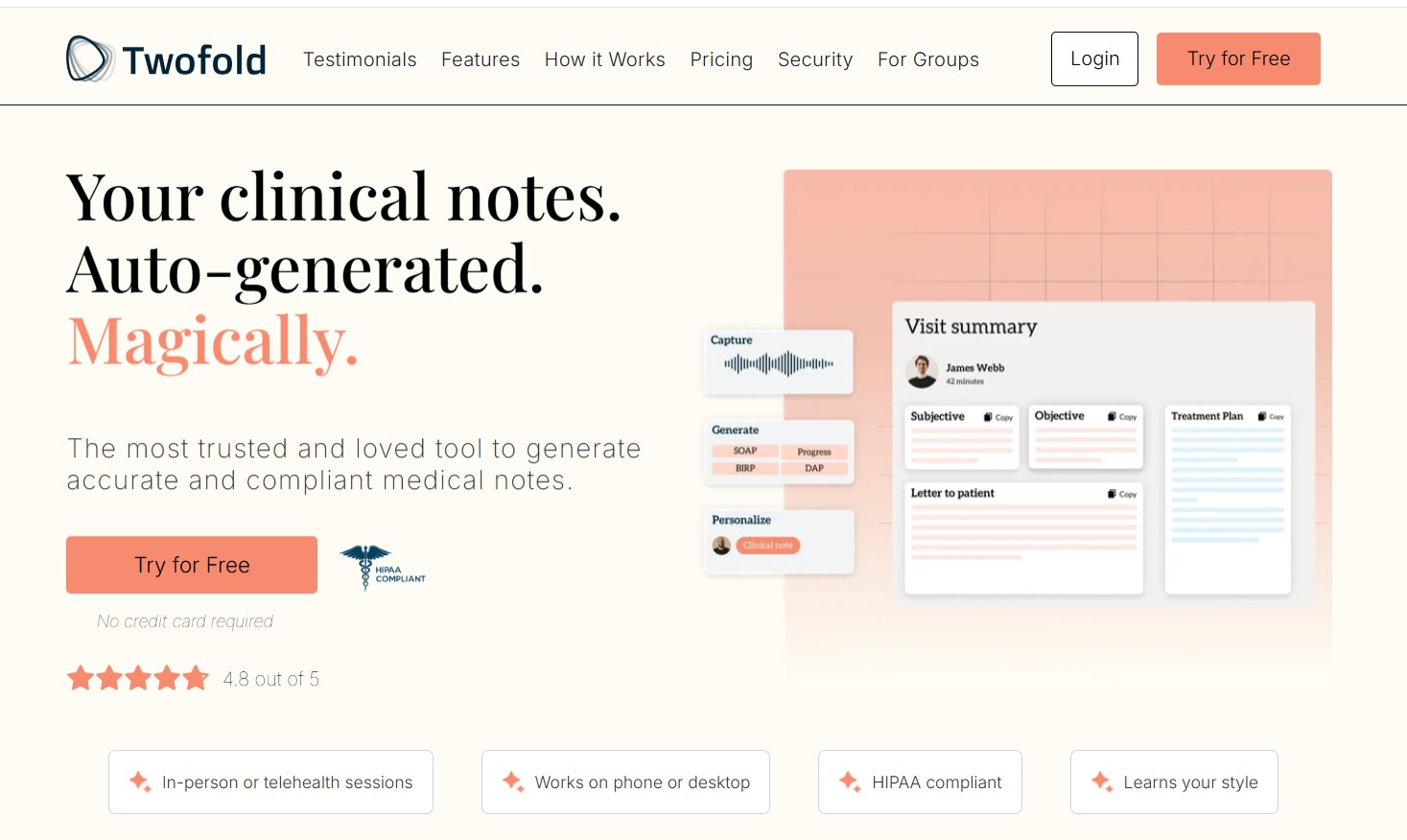
Twofold makes clinical note taking a breeze by creating and copying notes in EHRs. It captures patient-doctor conversations in real-time and generates personalized notes in just a few seconds.
Features:
- Personalization of Notes: Twofold learns a clinician’s writing style over time, and prepares notes accordingly to make them easy to understand for all.
- Compatible with all EHRs/EMRs: You can easily copy and paste your notes into any preferred EHR or EMR.
- Secure: The tool maintains full compliance with the regulations that are part of the HITECH and HIPAA protocols. It doesn’t store any recording used for the notes.
2. Mendaera
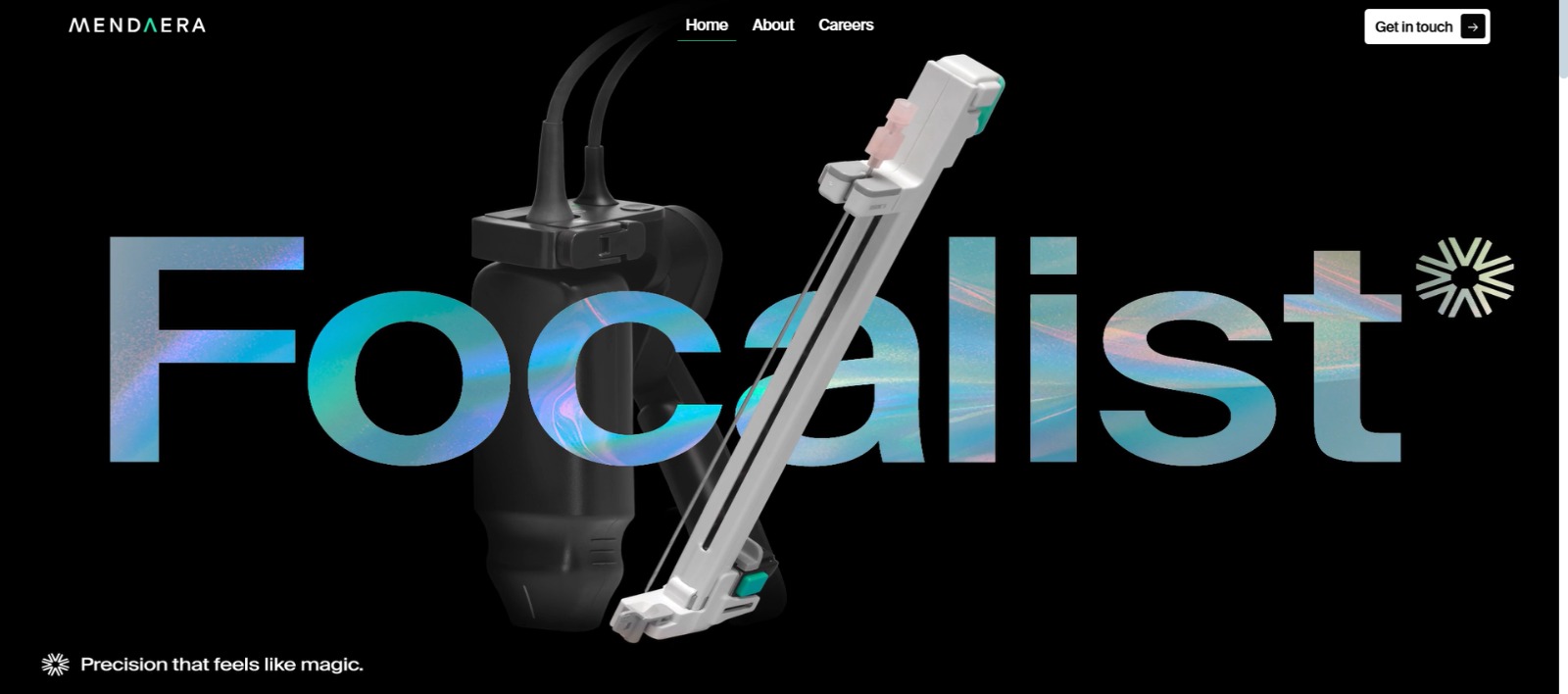
Mendaera is pioneering a new category of handheld robotic platforms designed to improve precision and accessibility in routine medical procedures, including biopsies, vascular access, and pain management interventions.
Combining real-time imaging, AI, robotics, and virtual connectivity, the platform empowers healthcare providers across specialties and care settings to deliver high-quality, scalable care.
Features:
- Easy-to-Use Design: The tool features a compact, fist-sized design to ensure easy handling and accessibility for all.
- AI-Integrated Tool: Focalist uses the power of AI to provide robotic needle placement, real-time needle depth measurement, and touchscreen targeting on ultrasound images.
- Designed for Specialized Interventions: The tool focuses on common needle-based procedures, such as pain management, vascular access, and biopsies.
3. Cleerly
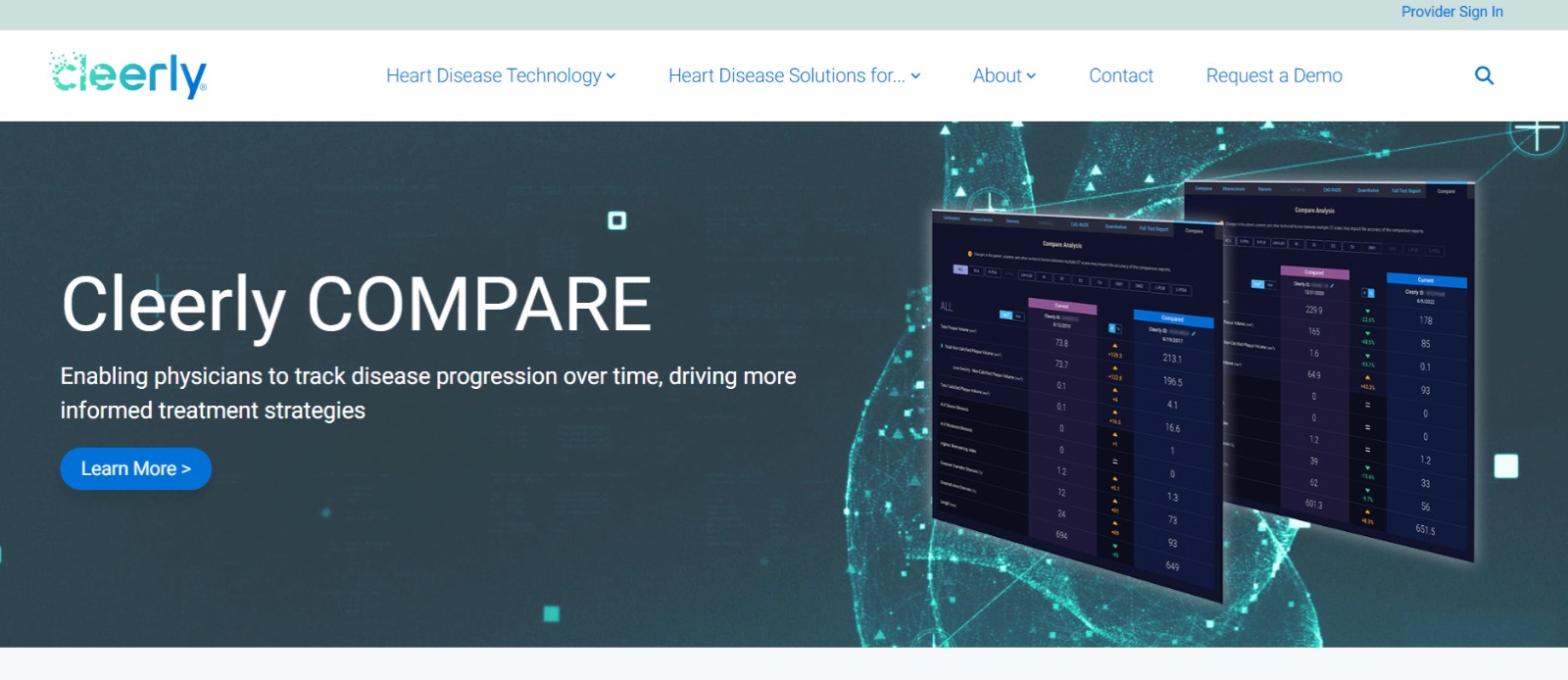
Designed to analyze cardiovascular imaging, this tool reviews coronary CT angiography scans and offers detailed analyses of heart health. The platform uses AI-powered imaging analysis to assess coronary artery disease more accurately and non-invasively using existing heart scans, allowing physicians to detect and treat heart disease earlier and more precisely.
Features:
- Actionable and Measurable Insights: Cleerly presents an interactive summary and the details of an AI-based analysis of plaque, ischemia, and stenosis. These reports enable providers to convert clinical data into personalized diagnoses and treatments for coronary artery disease (CAD).
- Personalized Analysis: This tool adopts a comprehensive approach that gives physicians actionable insights, going beyond coronary computed tomography angiography (CCTA). It thoroughly evaluates the condition of each vessel.
- Convenient and Efficient Workflow: There are several options for uploading CCTA on Cleerly. These include direct upload, a cloud-based solution called Cleerly Proxy, the Nuance Powershare network, and Intelerad Inteleshare.
4. Switchboard, MD
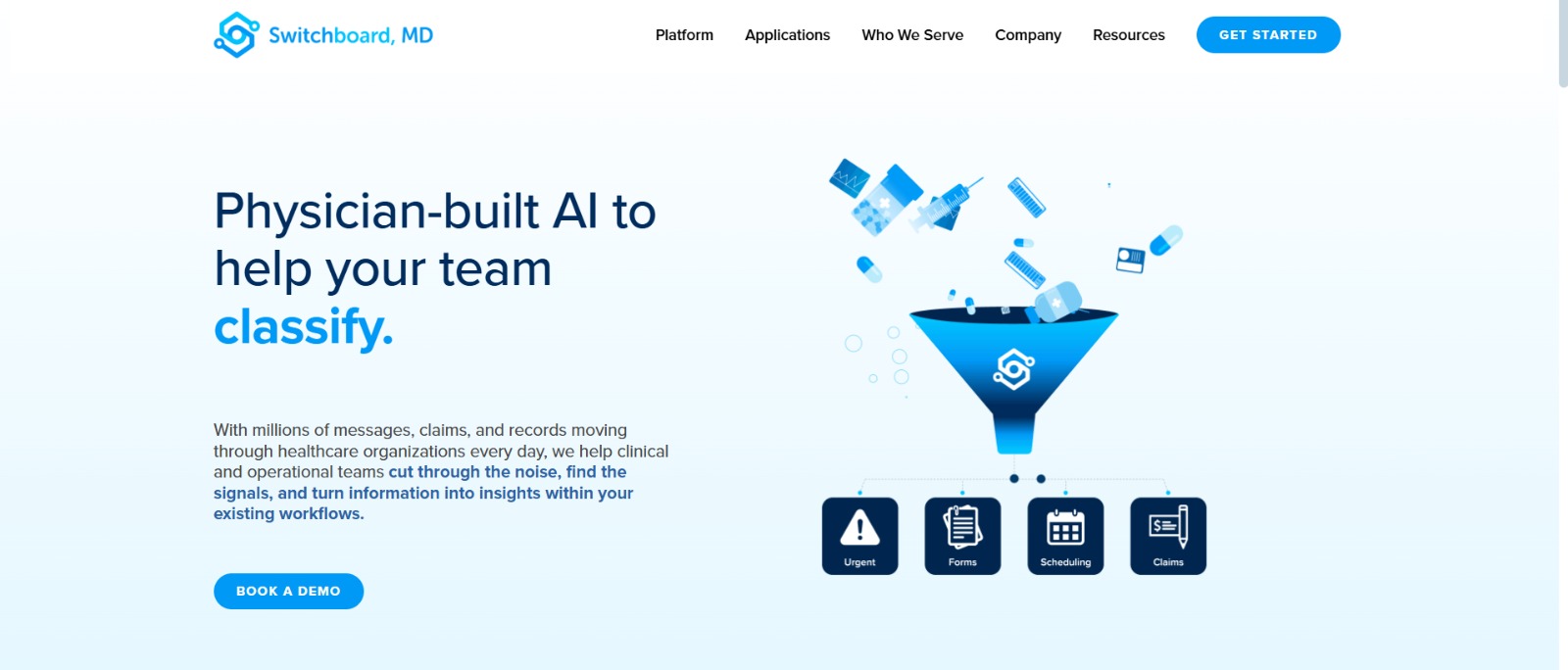
Switchboard, MD is an AI-powered platform for patient communication and scheduling appointments. It automates bookings, follow-ups, and reminders to help healthcare institutions operate more efficiently.
Features:
- Automation of Contact Centers: The tool processes voicemails and patient calls in real-time, presenting details that match existing patient records. Following this, it generates structured gists to ensure immediate action for patients.
- Effective Handling of Disease Escalation: The platform can also analyze inbound communication to detect early signals of any infectious disease.
- Management of Revenue Cycles: Switchboard, MD can also uncover denials of claims by insurance providers, organize delayed or old billing cases, and spot high-value claims that need quicker payment.
5. Hippocratic AI
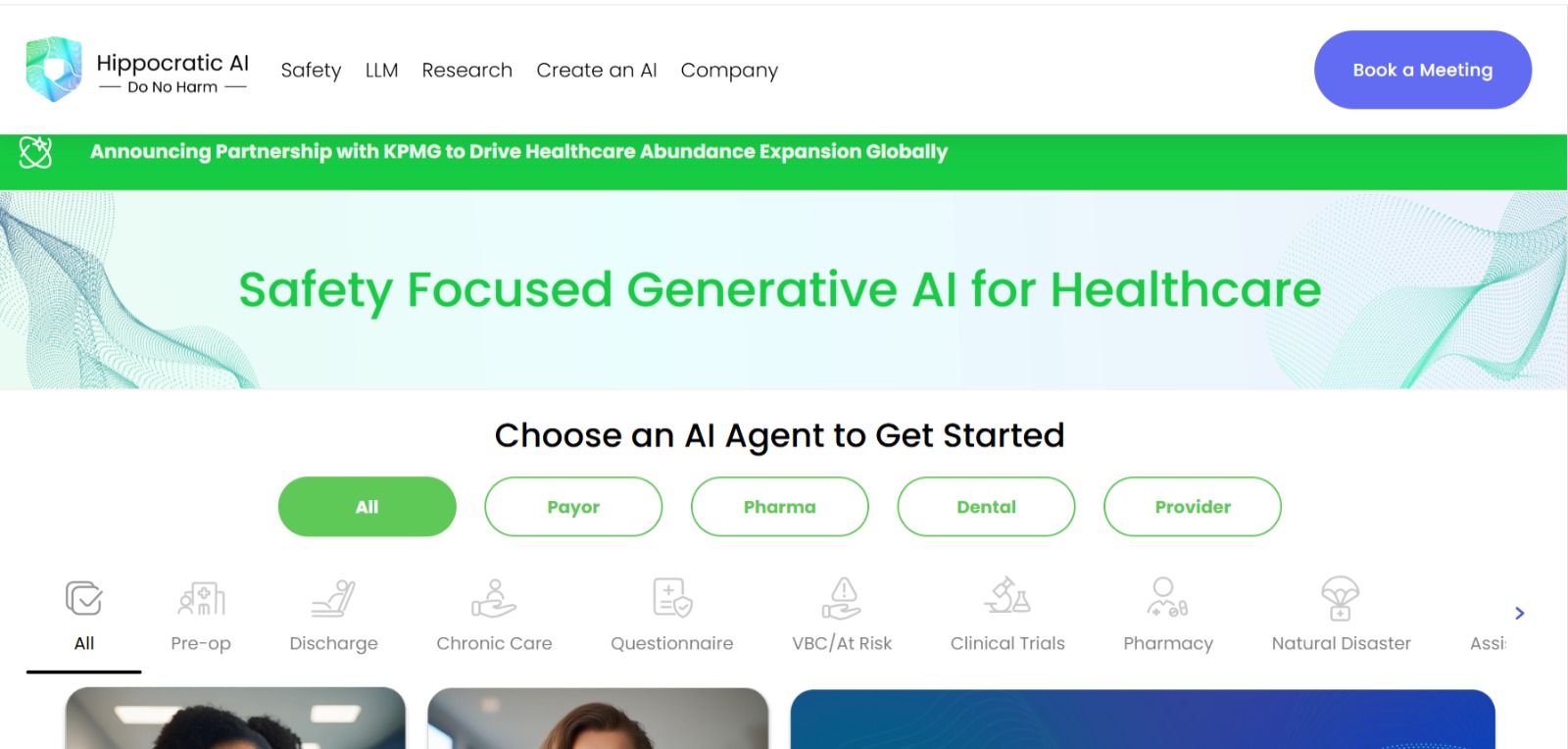
Hippocratic AI primarily functions as a safety-focused, healthcare-specific large language model (LLM). It is designed to assist healthcare professionals by providing reliable, evidence-based information and automating routine, non-diagnostic tasks, like patient check-ins, medication and diet reviews, and health assessments during live calls.
Features:
- Automates Routine Tasks: The tool helps healthcare providers automate documentation and follow-ups, making patient care decisions more accurate and safe. Its AI agents can perform such tasks across several use cases, such as chronic care, dental, pre-operative care, women’s health, and more.
- Handles Patient Enquiries and Intake: Hippocratic AI is also equipped to assist with patient intake, address patient enquiries on any issue, facilitate compliance forms, and streamline EHR workflows.
- Explains Insurance Terms: The tool offers innovative features that help patients clear their gaps in understanding insurance policy terms. It uses easy language to explain complex terms, thereby promoting more effective completion of insurance requirements.
6. Cohere Health
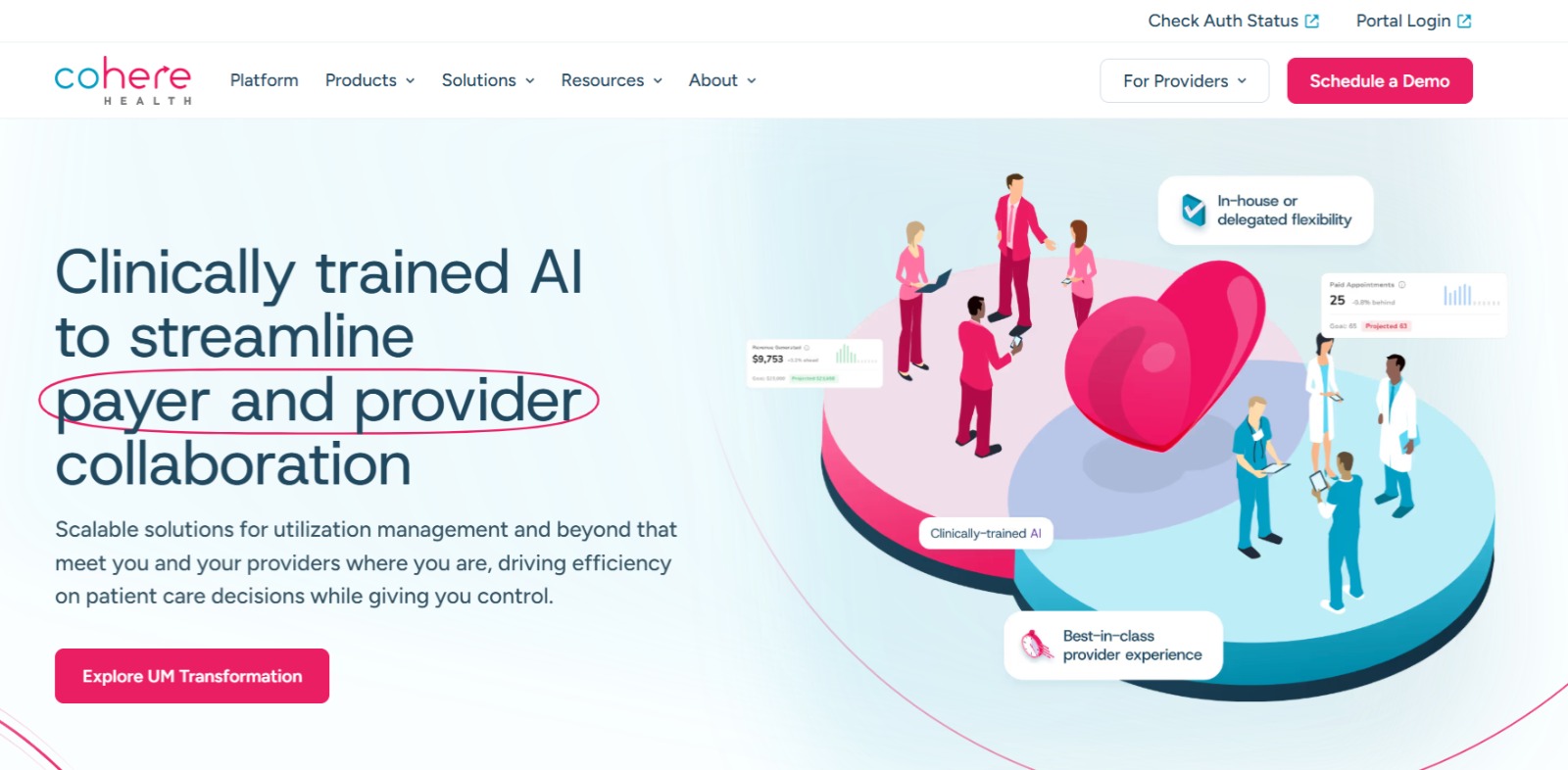
It is an AI platform designed to optimize care management by enhancing coordination between payers and providers. It also automates prior approvals of health insurance by understanding the clinical case and guiding smarter decisions, rather than simply rubber-stamping approvals.
Features:
- Improved Accuracy of Car Decisions: The tool simplifies key care decision-making through guidance and intelligent insights, helping to achieve 50% faster reviews of both outpatients and inpatients.
- Management of Medex Risk: Cohere Health also guides providers to help them make cost-optimized and patient decisions to avert medex risks and improve savings on medex.
- Automation of Prior Authorization: This AI solution digitizes all care requests within a single workflow. It builds detailed patient profiles and automates decision-making for up to 90% of patient care needs.
What Does the Future for AI-Driven Patient-Centered Healthcare Ecosystem Look Like?
With the use of AI reshaping most industries, the healthcare space is bracing for a much more profound transformation. AI platforms are likely to help build healthcare ecosystems that streamline efficiency, focus on precision, and adopt a patient-centered approach;
- Predictive Analysis & Remote Monitoring: AI-powered sensors and wearables analyze real-time data to detect early health risks, reducing hospitalizations and improving chronic care management. For example, remote patient monitoring (RPM) cut 30-day readmissions for heart patients by 50% in an Arizona cardiology practice.
- Clinician-AI Collaboration: AI identifies health deterioration risks and processes complex data to support timely clinical decisions, helping reduce ICU transfers through improved teamwork between physicians and nurses.
- Expanding Healthcare Access: AI tools like mobile diagnostics and chatbots deliver care to underserved populations, bridging gaps in rural areas and improving equity with inclusive datasets.
Conclusion
All in all, predictive analytics, real-time data capture, automated workflows, and remote monitoring can help cut costs, increase accuracy, and reduce clinician workload.
These are just a few examples of how AI is expected to bring pivotal change to the healthcare industry. These advances improve overall outcomes and also help alleviate clinician burnout, while optimizing resource use.