
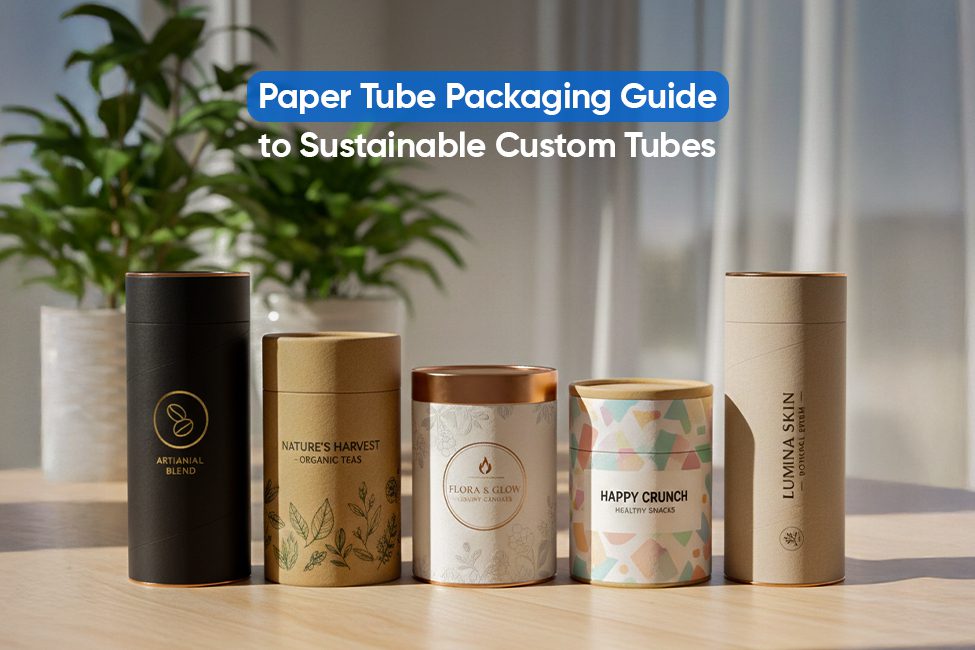
If you’re considering about custom printed paper tubes, you might be speculating: Is it just a trendy eco-option, or could it be a long-term solution that delivers on performance, branding, and cost as well? I’ve worked with brands that switched from plastic and rigid packaging to paper tubes, and seen both successes and astonishments. This guide gives you all you need to know: practical details, case studies, plus a roadmap so you can choose surely for your product.
What Is Paper Tube Packaging? Basics & Variants
A paper tube is a cylindrical (or sometimes non-cylindrical) container made primarily of paper or board. Typical structure includes wall(s) (one or more layers), a base and lid or cap, and potentially inner liners or coatings. Purpose: protect, present, brand, and contain your product.
Main types & styles
- Spiral-wound tubes: Layers of paper wound spirally around a mandrel; robust, good for desktops, cosmetics.
- Composite tubes: Paper plus other barrier materials (foil, plastic film, glassine etc.) for moisture, light, oxygen guard.
- Push-up / telescopic / butted designs: Different lid/base styles for opening/closing aesthetics or ease.
- Special shapes or features: Square, oval shapes; window cut-outs; child-resistant lids; see-through linings; decorative finishes.
Each style has pros and trade-offs (cost, ease of manufacture, consumer experience).
How Paper Tubes Are Made: Materials, Manufacturing & Finishing
Materials & Properties
- Paper types: Primary fiber, recycled, Kraft (white or brown), coated/uncoated. Primary fiber grades usually cost more but provide higher purity and strength. Recycled grades are more economical and sustainable, though they may have lower mechanical or barrier performance.
- Wall thickness / density: Thicker walls improve resistance against crushing and better withstand shipping stress. However, added thickness increases weight and costs.
- Mechanical properties: Compression strength, burst strength, and dimensional stability (particularly under humidity exposure).
Manufacturing methods
- Winding (spiral or convolute): how layers are arranged, influences strength, seam integrity.
- Lamination or gluing: joining layers, adding barrier films or coatings.
- Sealing bases/lids: metal, board, plastic inserts, or pressure handles.
Barrier & finishing options
- To protect from moisture, oxygen, light: inner lining (e.g. foil, plastic film), coatings (e.g. PE, biodegradable polymer, wax).
- Odor barrier (for food or fragrance).
- Printing & finishing: offset, flexographic, litho, digital; embossing, debossing, foil stamping, varnishes, matte/gloss finishes.
Regulatory, Safety & Environmental Considerations
Food-contact safety & certifications
If packaging food, drinks, or cosmetics, you likely need to meet FDA (US) or EFSA (EU) or similar local regulatory requirements. Barrier linings, inner coatings must be food-grade. Seal tightness, migration limits, odor, taste transfer must all comply. Always ask suppliers for compliance documentation.
Sustainability certifications & raw-material sourcing
- Certifications like FSC (Forest Stewardship Council), SFI, PEFC, etc., ensure upstream materials are responsibly sourced.
- Recycled content claims: check post-consumer content, whether it undermines food safety or barrier requirements.
- Supplier transparency: traceability, use of non-toxic inks, coatings.
Environment & lifecycle
- Compare carbon footprint vs alternatives (plastic, metal). Factors: raw material, transport, finishes, recyclability. Market reports show rising demand for recycled, composite tubes, and forecast strong growth in this sustainable segment.
- End-of-life: is the tube recyclable / compostable / biodegradable? Coatings often complicate recycling.
Advantages & Limitations: What Paper Tubes Do Well & What They Do Poorly
What paper tubes do well?
- High potential for premium branding — tactile feel, finishes, unique shapes help stand out.
- Eco-friendly perception: renewable materials, recyclability, biodegradability (when coatings are appropriate).
- Lightweight: lowers shipping costs compared to glass or metal.
- Safe for many applications, especially non-liquid, dry goods, beauty, confectioneries.
- Versatile in size and design.
What paper tubes struggle with / limitations
- Moisture, liquid contents: without proper lining, tubes may leak, degrade, and warp.
- Barrier performance: oxygen, light, aroma may permeate unless special treatments are used.
- Cost of high-quality finishes, barrier coatings, tight sealing can be high.
- Durability under heavy or rough transporting / storage: compression strength, impact resistance sometimes lower than metal / plastics.
- Scalability challenges: minimum order quantities, print setup costs, tooling.
How to Choose the Right Paper Tube for Your Product
When I helped a cosmetics brand choose packaging, asking the right questions at the start saved weeks and a lot of expense. Here’s how to make good choices.
Match product properties
- Product type: solid, powder, dry goods, liquids?
- Sensitivity: moisture, light, oxygen, odor.
- Fragility and weight.
Select geometry & features
- Size: diameter, height, wall thickness. Margin for expansion, filling, sealing.
- Lid style: snap, twist, push-up, telescopic, butted; how that affects user experience.
- Shape: standard cylinder often cheapest; special shapes cost more.
Trade-offs: cost vs quality
| Feature | Adds Cost | Benefit |
| Barrier lining (foil / PE / bio-based) | Significant cost + complexity | Protection vs moisture / oxygen / longer shelf life |
| Premium finishes (foil stamping, embossing) | Setup cost; unit cost higher | Justifies premium brand image; good customer perception |
| Custom shapes or child-resistant lids | Tooling cost, minimum volume | Differentiation; regulatory compliance for certain products |
| Thicker walls / higher strength board | More material; shipping weight up | Better protection; possible reduced returns / damage |
Case Studies & Real-World Examples
Case Study 1: Cosmetic Brand – From Plastic Tube to Paper Tube
A mid-sized lip balm brand switched from plastic squeeze tube to a push-up paper tube design. Outcomes:
- Challenges faced: needing food-grade inner lining, ensuring airtight seal to keep balm consistency; getting printing quality up to par.
- Wins: customer perception improved; packaging costs dropped by ~20% in material plus shipping; marketing angle (“plastic-free”, “zero waste”) helped in social media; small increase in unit cost offset by increased loyalty.
Case Study 2: Food Product – Composite Paper Tube for Sensitive Dry Goods
A gourmet coffee company used spiral wound paper tube with foil-lined interior and a metal bottom seal. Observed:
- Great retention of freshness, reduced moisture uptake; coffee stayed fresh longer compared to Kraft paper bags.
- Trade-off: higher production cost; complexity in sealing, slightly higher shipping due to thicker walls.
Case Study 3: Mistakes / What Went Wrong
An artisanal tea company made a tube without considering moisture barrier; teas lost aroma after storage; returns increased. Lesson: barrier treatment is not optional for certain products.
Production, Sourcing & Cost Breakdown
Key cost components
- Material cost (paper type, recycled vs virgin)
- Barrier / lining materials and sealing
- Printing & finishes (artwork, color, special effects)
- Tooling & setup (dies, molds, lid/base design)
- Minimum order quantities and shipping/logistics
Sourcing issues
- Regional availability of high-quality board or paper with required certifications.
- Lead times for custom printing or finishes.
- Minimum volumes: small brands may have difficulty with high MOQs.
Scaling production
- Prototyping: small batches to test strength, barrier, appearance.
- Testing: moisture exposure, internal migration, shelf life.
- Supplier audits for quality, regulatory compliance.
Designing & Branding for Paper Tubes
How your design & branding decisions affect perception, cost, usability.
- Artwork: resolution, color selection, how colors appear on Kraft/recycled paper vs bleached surfaces.
- Printing methods: digital vs offset vs flexographic; cost, turnaround, color fidelity.
- Surface texture & finishes: matte, gloss, natural, embossing, foil. Each has cost & supplier availability implications.
- Consumer experience: ease of opening, resealing, push-up bottoms, lids fitting, what it like is to hold.
- Ethical / sustainability messaging: labels like “recyclable”, “made from FSC paper”, helping consumer understand care (how to dispose or recycle correctly).
Environmental Impact & Future Trends
Life cycle & environmental impact data
- Market reports show growing share of recycled and composite tubes.
- Lightweight nature reduces shipping emissions.
- But coatings, lamination, toxic inks can undercut recyclability; worst-case, tubes with mixed materials may be hard to recycle.
Innovation trends
- Better barrier coatings: bio-based, compostable liners.
- Composite materials that balance protection with recyclability.
- New shapes (square, oval) for distinctive branding and shelf efficiency.
- Smart packaging integration: QR codes, NFC, visibility windows.
- Consumer demand & regulatory push toward sustainability disclosures.
Market outlook
- Rapid growth expected: forecasted market reaching USD ~$20-30B worldwide in coming decade for paper tubes and composite tubes.
- Asia-Pacific especially growing.
Practical Guidelines & Checklist for Implementation
Here’s a step-by-step you (brand manager / product designer) should follow:
- Define product requirements: what are product’s vulnerability points (moisture, oxygen, light, weight)? What are the packaging performance goals (shelf life, aesthetics)?
- Set budget range: how much extra per unit can you spend (versus cheaper / more basic tube or alternative)?
- Shortlist suppliers with examples / sample tubes; check certifications, barrier materials, finishing capabilities.
- Prototype & test:
- Moisture / leak tests
- Compression / drop tests
- Shelf life / odor / taste transfer if relevant
- Consumer total experience testing (opening, feel)
- Iterate design: adjust thickness, coating, lid fit etc.
- Manufacture & quality assurance: ensure consistency, check QC at scale.
- Labeling & disposal info: instruct end-users on recycling; mark any limitations.
Checklist (you can print or save)
- Paper type & % recycled/virgin
- Wall thickness / density
- Barrier treatment (type, food-safe, certifications)
- Lid & base style & sealing method
- Printing & finish specs
- Cost per unit + shipping
- Supplier lead time + minimum order quantity
- Environmental credentials / certifications
- Testing plan & shelf life data
Conclusion
Paper tube packaging is not a one-size-fits-all solution. But when used appropriately, it can offer an influential blend: sustainability, premium branding, shipping efficiency, and consumer appeal. The key is to comprehend your product’s necessities, the trade-offs involved (particularly barrier and cost), and to test. If your product is dry or solid, not very moisture-sensitive, and you care about brand image, paper tubes are often among the best choices.