
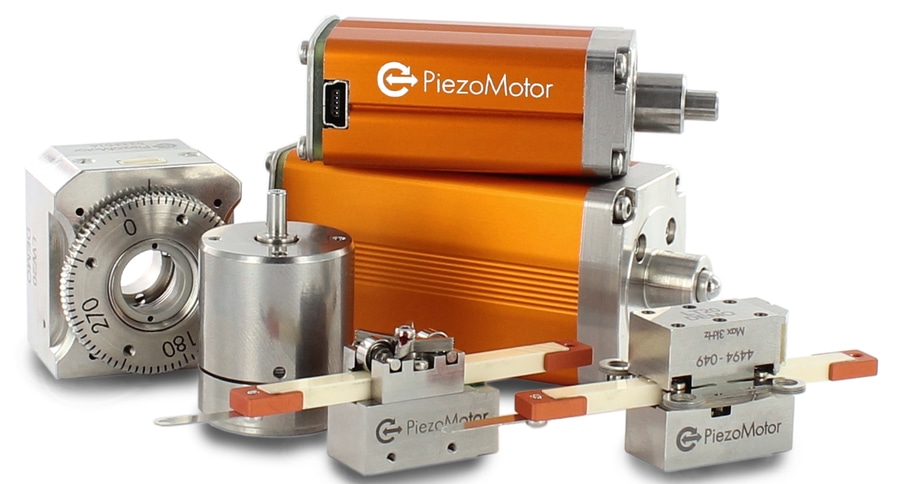
Motion systems form the backbone of countless industries today—from robotics and semiconductor fabrication to medical diagnostics and space technology. As industries demand ever more precision and miniaturization, traditional electromagnetic motors often fall short. This is where Piezoelectric Motors come into play, offering revolutionary advantages in speed, control, and size. Companies like Nanomotion are leading the charge by designing innovative motion systems that push the boundaries of what’s possible.
What Are Motion Systems?
A motion system is an integrated setup that enables controlled movement of mechanical components. These systems typically include:
- An actuator (such as a motor),
- A drive mechanism (like screws or linear stages),
- Controllers,
- Sensors for feedback and position monitoring.
Motion systems are essential in industries where accuracy and speed are critical. For instance, semiconductor lithography machines use nanometer-level motion systems to align silicon wafers with extreme precision.
The Rise of Piezoelectric Motors
One of the most significant advancements in motion control has been the development of Piezoelectric Motors. Unlike conventional motors that use magnetic fields to generate motion, piezo motors rely on the piezoelectric effect—a property of certain materials to deform when subjected to electric voltage. These tiny deformations, when oscillated at high frequencies, produce precise and controlled movements.
Benefits of Piezoelectric Motors:
- Nanometer Precision: Ideal for ultra-fine positioning tasks.
- Compact Design: Allows miniaturization of complex systems.
- No Electromagnetic Interference (EMI): Suitable for sensitive environments like MRI machines.
- Silent Operation: Ideal for lab instruments and medical devices.
- No Backlash or Play: Ensures stable, smooth operation.
Nanomotion: A Leader in Piezo-Based Motion Systems
https://www.nanomotion.com/ stands at the forefront of motion technology, offering a complete line of piezoelectric motors, drives, and fully integrated motion systems. Their motors are based on ultrasonic standing wave technology, delivering high speed, high force, and nanometer-level accuracy.
Nanomotion’s product lineup includes:
- HR Series: High-resolution motors ideal for semiconductor and optical systems.
- EDGE Series: Designed for compact systems requiring fine movement and low noise.
- Linear and Rotary Stages: Pre-configured modules for easy integration.
Key Features of Nanomotion Systems:
- Speeds up to 300 mm/s.
- Resolution better than 1 nanometer.
- Force ranges from 0.5 to 4 Newtons per motor element.
- Vacuum-compatible and non-magnetic options available.
These capabilities make Nanomotion products suitable for high-end applications like laser beam steering, autofocus mechanisms, wafer inspection, and optical alignment.
How Piezoelectric Motors Work
Piezoelectric motors convert electrical energy directly into mechanical motion through the vibration of piezo materials. Nanomotion’s motors utilize standing wave motion, where a combination of bending and longitudinal vibrations form an elliptical trajectory on the motor’s contact tip. This tip presses against a ceramic friction surface and drives it forward with precision.
This method allows for:
- Unlimited linear or rotary motion
- High holding force when powered off (ideal for fail-safe applications)
- No wear-prone gears or belts
Applications of Piezo-Based Motion Systems
Thanks to their versatility, piezoelectric motion systems are used in a wide range of industries:
1. Semiconductor Manufacturing
Precision is everything in semiconductor fabrication. Nanomotion’s motion systems are used in:
- Wafer alignment
- Lithography stages
- Metrology instruments
Their high-resolution control and repeatability help ensure that sub-micron patterns are aligned flawlessly.
2. Medical Devices
Instruments such as surgical robots and imaging tools benefit from silent and accurate motion control. Since piezo motors don’t emit magnetic fields, they are perfectly safe for MRI environments.
3. Aerospace and Defense
Space and aviation demand lightweight and compact systems. Nanomotion offers vacuum-compatible and radiation-resistant motors that operate in the extreme conditions of space.
4. Laboratory and Research Equipment
Microscopes, spectrometers, and nanopositioners require fine adjustment over long periods. Piezo motors provide sub-nanometer resolution without mechanical drift.
5. Industrial Automation
In factory settings where speed and precision must be balanced, Nanomotion’s modular systems allow seamless integration into robotics, inspection machines, and pick-and-place equipment.
Why Choose Piezoelectric Motion Over Traditional Motors?
While traditional servo or stepper motors have been around for decades, they are bulky, generate heat, and often require complex gearboxes or encoders for accurate control. Piezoelectric motors offer:
- Compactness: Smaller form factor fits into tight spaces.
- High Responsiveness: No latency between command and action.
- Energy Efficiency: Consumes power only during movement.
- Direct Drive: No intermediate mechanical parts like gears or belts.
These benefits make piezoelectric systems ideal for modern devices that demand compact, accurate, and energy-efficient motion control.
The Future of Motion Systems
As industries continue to demand more speed, precision, and miniaturization, motion systems must evolve. Piezoelectric technology is not just an alternative—it’s becoming the new standard. With advancements in material science and control algorithms, future motion systems will offer even better performance at lower costs.
Companies like Nanomotion are already pioneering this future by:
- Developing smart motor systems with integrated feedback loops.
- Expanding vacuum and cleanroom capabilities.
- Innovating in multi-axis coordination and AI-assisted motion control.
Final Thoughts
The demand for high-performance motion systems is growing across all sectors of technology and manufacturing. Piezoelectric motors, especially those developed by Nanomotion, are perfectly positioned to meet these demands.
Whether you’re designing the next breakthrough medical device or building a cutting-edge semiconductor tool, integrating piezoelectric motion systems could provide the accuracy, reliability, and versatility your application requires. Explore Nanomotion’s full product range to discover how they can bring your project to life.