
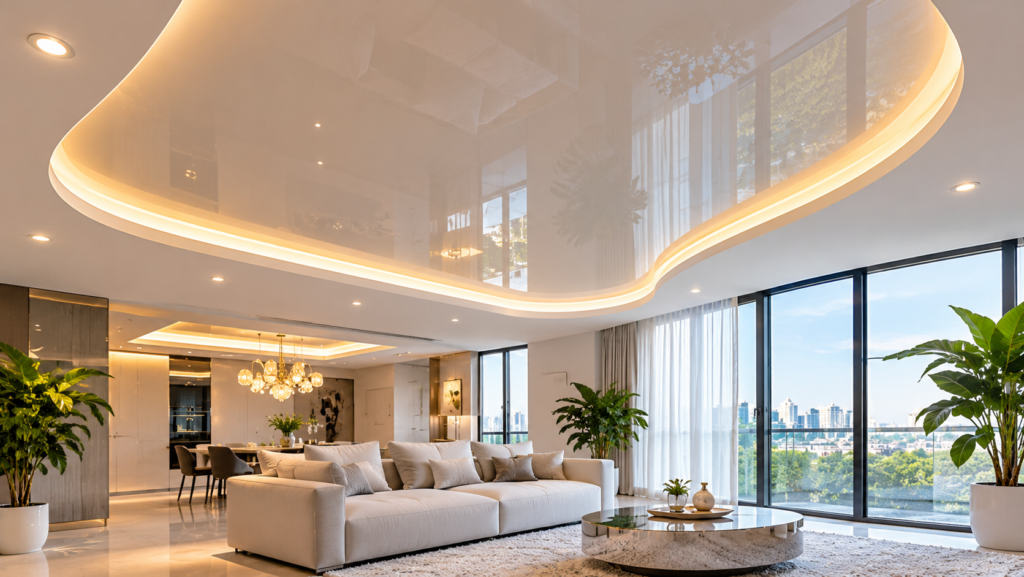
The American architectural landscape is undergoing a significant shift as designers and homeowners seek more versatile and durable alternatives to traditional drywall. Among the most innovative solutions gaining traction across the United States is the modern stretch ceiling. Originally popular in Europe, this technology has crossed the Atlantic to redefine how we perceive interior overhead surfaces in both high-end residential projects and large-scale commercial developments.
The concept involves a specialized membrane, typically made from a high-quality PVC or polyester fabric, that is stretched and secured into a perimeter profile. This method provides a perfectly flat, flawless finish that is impossible to achieve with traditional plaster or paint. As the demand for minimalist and high-tech interiors grows, Stretch ceiling systems have become a go-to choice for architects looking to integrate complex lighting and acoustic treatments without the mess of heavy construction.
The Growing Popularity of Stretch Ceilings in the United States
For decades, the US market relied almost exclusively on gypsum board and drop-tile ceilings. However, the limitations of these materials—such as cracking, water damage susceptibility, and lack of design flexibility—have led to a surge in interest for membrane-based solutions. Modern stretch technology offers a lightweight, moisture-resistant, and fire-rated alternative that aligns with contemporary building codes and aesthetic preferences.
The versatility of these systems is a primary driver of their popularity. Whether it is a luxury penthouse in Manhattan or a tech startup office in Silicon Valley, the ability to create bespoke shapes, textures, and lighting effects makes this technology highly attractive. Furthermore, the installation process is remarkably clean and efficient, often taking only a fraction of the time required for traditional renovations.
Technological Advancements and Modern Solutions
The modern stretch ceiling is no longer just a flat white surface. Recent technological advancements have introduced a variety of specialized solutions that cater to specific functional and aesthetic needs:
- Backlit Ceilings: By using translucent membranes and strategically placed LED arrays, designers can create ‘luminous ceilings’ that mimic natural skylights or provide soft, even ambient lighting.
- Acoustic Optimization: Micro-perforated membranes act as powerful sound absorbers, reducing echo and improving speech intelligibility in open-plan offices and home theaters.
- Custom Printing: High-definition UV printing allows for the application of art, textures, or branding directly onto the ceiling material, turning a functional surface into a focal point.
- 3D and Multi-Level Designs: The flexibility of the track systems allows for the creation of curves, waves, and complex geometric volumes that add depth to any room.
Residential Applications: Elevating the Home Environment
In residential settings, stretch ceilings offer practical benefits that go beyond mere appearance. In areas prone to humidity, such as bathrooms, indoor pools, or kitchens, these membranes are ideal because they do not support the growth of mold or mildew. They also act as a protective barrier; in the event of a minor water leak from a floor above, the elastic membrane can hold the water without breaking, preventing damage to furniture and flooring until the issue is resolved.
Homeowners are increasingly opting for high-gloss (mirror) finishes to make small rooms feel larger or matte finishes for a sophisticated, museum-grade look. The integration of smart LED lighting allows for mood setting through mobile apps, making the ceiling a dynamic part of the home’s ecosystem.
Commercial Applications: Performance and Brand Identity
Commercial spaces require materials that are durable, easy to maintain, and capable of hiding unsightly mechanical systems like HVAC ducts and wiring. Stretch ceilings excel in these environments. Retail stores use them to create bright, inviting atmospheres that highlight products, while healthcare facilities value their hygienic properties and ease of cleaning.
In the hospitality sector, hotels and restaurants utilize custom-printed membranes to reinforce brand identity. Large-span areas, such as airport terminals or shopping malls, benefit from the lightweight nature of the material, which reduces the structural load on the building compared to heavy plasterboard installations.
The Importance of Professional Installation
While the materials themselves are highly advanced, the quality of the final result depends heavily on the skill of the installers. Achieving a perfectly tensioned surface requires specialized tools, heat cannons, and precision engineering. This is why many developers and interior designers turn to established experts who understand the nuances of the US building market.
NYCeiling has established itself as a leader in this niche, specializing in high-end stretch ceiling installations throughout New York and the surrounding regions. Their expertise ensures that complex designs—from integrated linear lighting to multi-tiered architectural features—are executed with surgical precision, meeting the high standards of the New York design community.
The Future of Interior Surfaces
As we look toward the future of sustainable and efficient construction, stretch ceilings are likely to play an even larger role. Their recyclability, combined with the reduction in waste during installation, makes them a greener choice for eco-conscious projects. By merging technology with artistry, these systems provide a canvas for innovation that traditional materials simply cannot match.
Whether you are looking to solve an acoustic problem in a noisy office or want to create a stunning visual statement in a residential living room, the modern stretch ceiling offers a unique blend of form and function. As more Americans discover the benefits of this versatile technology, it is set to become a standard feature in the next generation of US architecture.