
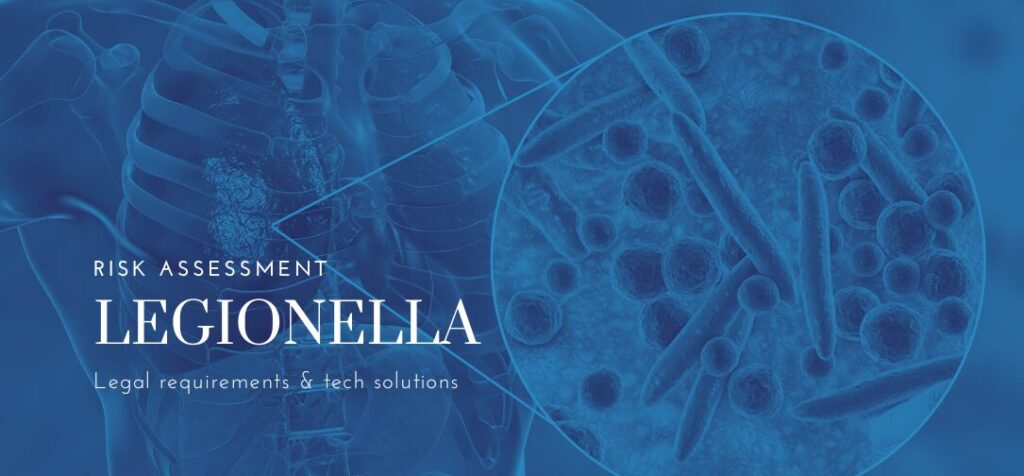
Legionella bacteria pose a significant health risk, leading to Legionnaires’ disease, a severe and potentially fatal form of pneumonia caused by waterborne pathogens. Complex water systems in buildings, such as cooling towers, hot water tanks, and plumbing networks, are prime breeding grounds for Legionella bacteria, making risk assessments a critical public health and legal concern.
In 2025, advancements in safety regulations and technology are transforming how businesses, facility managers, and property owners handle Legionella risk assessments. Compliance with evolving health and safety regulations is no longer optional; it is a fundamental aspect of responsible water management. At the same time, innovative technologies such as IoT-enabled sensors, AI-driven analytics, and cloud-based compliance platforms are revolutionizing Legionella control and prevention.
This article delves into the latest legal requirements and technological solutions for Legionella risk assessment in 2025, offering insights into best practice strategies and future-proof compliance standards.
Understanding Legionella and the Risk It Poses
What is Legionella?
Legionella is a type of bacteria commonly found in natural water sources, such as rivers and lakes. However, it becomes a significant health threat when it proliferates in engineered water systems, such as:
- Cooling towers
- Hot and cold water storage tanks
- Showers and faucets
- Spa pools and hot tubs
- HVAC systems
When contaminated water droplets become aerosolized and inhaled, they can cause Legionnaires’ disease, a potentially fatal form of pneumonia. This risk is particularly high in healthcare facilities, where immunocompromised individuals are more vulnerable.
Health Risks of Legionnaires’ Disease
Legionnaires’ disease manifests through symptoms such as fever, cough, shortness of breath, muscle aches, and severe pneumonia. In recent years, outbreaks have led to increased legal scrutiny and enforcement of Legionella risk management measures.
The cost of non-compliance can be severe, ranging from lawsuits and regulatory penalties to reputational damage and, most importantly, human health consequences. Therefore, a legionella risk assessment app is an essential component of public health protection which is now essential for businesses trying to remain compliant.
Legal Requirements for Legionella Risk Assessments in 2025
As governments worldwide recognize the dangers of Legionella contamination, regulatory frameworks are tightening to mandate proactive prevention strategies.
Global & Regional Regulatory Updates
- United Kingdom: The UK’s Health and Safety Executive (HSE) continues to enforce ACoP L8, which mandates regular Legionella risk assessments. Updates in 2025 include stricter requirements for continuous monitoring and automated documentation.
- European Union: The European Water Quality Directive has been revised, placing greater emphasis on real-time water quality monitoring and digital compliance tracking.
- United States: The Centers for Disease Control and Prevention (CDC) and Occupational Safety and Health Administration (OSHA) require large buildings, hospitals, and cooling towers to implement water management programs.
- Australia & Other Regions: Increasing focus on Legionella control in healthcare facilities has led to stricter enforcement of water hygiene policies in hospitals and aged-care facilities.
Who is Responsible for Compliance?
Regulations place the onus on employers, landlords, facility managers, and property owners to ensure that their water systems are safe from Legionella contamination. Failure to comply with risk assessment requirements can lead to heavy fines, shutdowns, and legal actions.
Key Compliance Requirements in 2025
- Legionella Risk Assessments: Conducted regularly in commercial buildings, healthcare facilities, hotels, and industrial sites.
- Water Testing & Monitoring: Real-time monitoring is becoming the industry standard, replacing outdated periodic testing.
- Automated Documentation: Digital compliance platforms are now a requirement in many jurisdictions.
- Mandatory Reporting: Regulators are demanding transparent and accessible Legionella reports.
- Failure Consequences: Penalties, lawsuits, business closures, and potential criminal liability for negligence.
Challenges in Traditional Legionella Risk Assessments
Manual Inspections & Testing Delays
Traditional Legionella risk assessments rely on manual water sampling, which is time-consuming and prone to delays. Since water quality fluctuates, intermittent testing often fails to detect contamination spikes in real-time.
Human Error & Documentation Issues
- Inconsistent logging of water temperatures and chemical treatments.
- Paper-based reporting systems prone to loss, misinterpretation, or falsification.
- Lack of key personnel trained in Legionella compliance and prevention.
Increasing Regulatory Complexity
New compliance requirements demand more frequent testing and detailed reporting, making it difficult for businesses to keep up.
Cost & Resource Constraints
- Legionella risk assessments and water testing can be expensive.
- Large facilities require constant monitoring, making manual methods impractical.
Emerging Technology Solutions for Legionella Risk Assessment
IoT-Enabled Smart Water Monitoring
The Internet of Things (IoT) is revolutionizing Legionella risk assessments with smart water sensors that provide real-time monitoring of temperature, water flow, and bacterial levels.
Benefits:
- Instant alerts when water conditions become favorable for Legionella growth.
- Continuous monitoring instead of periodic sampling.
- Reduced human intervention, lowering labor costs.
AI & Predictive Analytics for Legionella Prevention
Artificial intelligence (AI) is being integrated into Legionella risk assessments to predict potential outbreaks before they occur. By analyzing historical data, AI can detect patterns that indicate increased risk.
How It Works:
- Machine learning models assess temperature fluctuations, water stagnation, and historical contamination trends.
- AI generates predictive maintenance schedules to prevent Legionella growth before it starts.
Best Practices for Legionella Risk Management in 2025
1. Implementing a Proactive Risk Assessment Strategy
- Move beyond regulatory minimums and adopt real-time monitoring solutions.
- Conduct Legionella risk assessments more frequently.
2. Investing in Continuous Monitoring Systems
- Adopt smart sensors and AI-driven analytics for Legionella detection.
- Transition from periodic water testing to continuous risk assessment.
3. Training & Awareness for Compliance Teams
- Educate facility managers and water safety personnel on new technologies.
- Establish a Legionella prevention culture in workplaces.
Conclusion
As Legionella risk assessments evolve in 2025, businesses must stay ahead by embracing technological innovations and adhering to strict compliance standards.
By leveraging cutting-edge technology and best practices, facility managers, landlords, and property owners can ensure safer water systems, legal compliance, and long-term risk mitigation.