
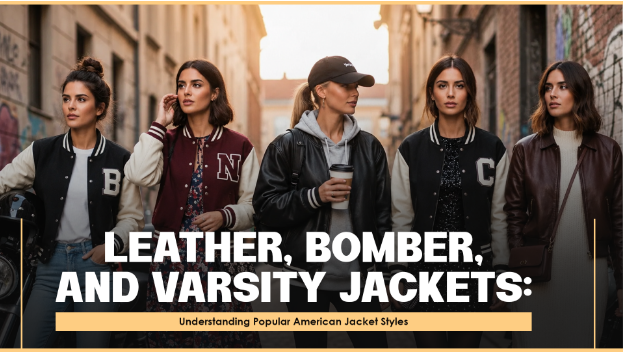
Ask ten people what their go-to jacket is and you’ll hear the same three names come up again and again: leather, bomber, and varsity. They’ve been around for decades, they keep getting reinvented, and somehow they never look dated. If you’ve browsed a catalog like Just American Jackets,you’ve probably noticed how much of the range circles back to these classics. This guide breaks down where each one came from, how it’s built, and how to wear it without overthinking it.
Before getting into the details, it helps to understand why these three styles stuck around. None of them began as fashion. Each one solved a real problem, whether that was keeping a pilot warm at altitude, protecting a rider from asphalt, or giving a school team something to wear off the field. Fashion adopted them later, once people realized how good they looked.
If you’re still deciding which one to pick, comparing them in one place makes the differences much clearer. A store like Just American Jackets lets you look at the three styles side by side, which is the easiest way to see how the shoulders, hems, and collars change the whole feel of an outfit.
The Leather Jacket: Built for the Long Run
The leather jacket is the heavyweight of the group. Its roots go back to early aviators and, a little later, motorcyclists, who needed something tough that blocked wind. The classic biker version, with its slanted zipper, snap-down lapels, and structured shoulders, became a symbol of rebellion in the mid-twentieth century and has never really lost that edge.
What makes leather special is how it ages. A new jacket feels stiff and a bit shiny. Give it a season or two and it softens, creases at the elbows, and starts to look like it belongs to you. That’s why people hold on to good leather for ten, twenty years.
A few things to look at when buying:
- The type of hide. Cowhide is rugged and heavy, lambskin is softer and lighter, and goatskin sits somewhere in between.
- The hardware. Zippers should run smoothly without catching, and snaps should close with a firm click.
- The lining. Quilted linings add warmth, while thinner ones suit mild climates.
Style-wise, leather works best with simple, clean clothes. A plain tee, dark jeans, and boots are all it needs. Trying to pile on too much detail usually makes the whole outfit feel busy.
The Bomber Jacket: Easy and Adaptable
If leather is the serious one, the bomber is the friendly one. It began as a military flight jacket, designed to be compact enough for a cramped cockpit and warm enough for the cold air outside. The short cut, ribbed cuffs, and ribbed hem kept drafts out and made it easy to move around in. Much like a Martha May Whovier Costume, a bomber jacket can add a distinctive character-inspired touch to an outfit.
These days, bombers come in everything from nylon to suede to heavy leather. The shape stays the same: cropped at the waist, slightly roomy through the body, and fitted at the cuffs. That silhouette is what makes it so forgiving. It flatters most builds, and it layers well over hoodies, shirts, or thin sweaters.
The wider category of American Jackets includes plenty of cousins to the bomber, such as flight jackets, MA-1 styles, and shearling-lined versions, so it’s worth knowing which one you’re actually looking at. Nylon bombers are lightweight and often water-resistant. Leather bombers are warmer and more formal. Suede ones look polished but need more care around rain.
For everyday wear, a bomber pairs well with chinos, joggers, or jeans. If you want to dress it up a little, a collared shirt underneath and clean leather shoes do the job nicely. It’s one of the few jackets that works for both a casual weekend and a relaxed office day.
The Varsity Jacket: Playful and Nostalgic
The varsity jacket, sometimes called a letterman jacket, started on American college campuses in the late nineteenth century. Athletes received patches or letters for their achievements and sewed them onto wool sweaters, which eventually evolved into the wool-and-leather jackets we recognize today.
The design is easy to spot. A wool body, leather or faux-leather sleeves, contrasting ribbed trim, and snap buttons down the front. Many have a big letter or number stitched on the chest or sleeve, though plenty of modern versions skip that and keep things minimal.
Because the colors tend to be bold, varsity jackets work best when the rest of your outfit stays calm. Think plain white tee, straight jeans, simple sneakers. Let the jacket be the one loud thing. If you want something less sporty, go for a version in a darker, more muted palette, like navy with grey sleeves.
One thing to note about the materials: wool body jackets are warm but heavy, and the leather sleeves can feel stiff at first. If you live somewhere mild, a lighter cotton or fleece version might suit you better.
How to Choose Between the Three
Honestly, there’s no wrong answer, but a few quick questions can point you in the right direction.
Think about your climate first. Leather and wool varsity jackets handle cooler weather well, while nylon bombers are better for in-between seasons. Then think about your wardrobe. If you mostly wear simple, neutral pieces, any of the three will slot in. If your style leans more casual and sporty, a varsity jacket may feel more natural. If it leans sharper, leather is likely the better fit.
Finally, be realistic about maintenance. Leather needs conditioning once in a while, suede needs protection from water, and wool should be brushed rather than washed often. A jacket you can’t be bothered to care for will end up looking tired quickly.
When you’re browsing USA Jackets, don’t just go by the style name. Check the material details, the weight, and the lining, because two jackets that look identical in photos can feel very different once you put them on. A heavier build isn’t always better. It depends on where and how often you’ll wear it.
Getting the Fit Right
Across all three styles, a few fit rules hold up well. The shoulder seam should sit at the edge of your shoulder, not hang down your arm. Sleeves should reach your wrist bone. Bombers and varsity jackets should end around your waistband, while leather biker jackets can sit a touch lower, depending on the cut.
Try the jacket on with the thickest layer you’d realistically wear underneath, and move around in it. Reach forward, raise your arms, sit down. If it pulls across your back or feels restrictive, size up. Leather loosens a little over time, but it won’t shrink back, so avoid buying something that’s already too big.
Final Thoughts
Leather, bomber, and varsity jackets have lasted this long for a simple reason: they work. Each one offers something different. Leather brings durability and attitude, the bomber gives you easy versatility, and the varsity jacket adds a bit of fun and nostalgia. You don’t have to pick only one, either. Plenty of people end up with two, using a bomber for warmer days and leather when the temperature drops. Start with the one that matches how you actually dress, check the fit carefully, and you’ll have a jacket you’ll reach for season after season.