
Retail has changed more in the last ten years than in the previous fifty. Customers expect to browse on their phone, check inventory in real time, pay without friction, and return products wherever it is convenient. Behind all of that is software. Not flashy marketing copy. Not a single app. Real systems working together.
Retail software development services companies in the USA step into that complexity. They build the platforms that connect online stores to warehouses, POS systems to accounting, loyalty programs to customer data. Some focus on large enterprise chains. Others work closely with mid-sized brands trying to scale without breaking what already works.
If you are looking at this space, chances are you are not searching for a trendy solution. You are trying to solve something practical. Maybe inventory accuracy is slipping. Maybe your ecommerce platform does not talk properly to your ERP. Or maybe you simply need a team that understands retail workflows and does not need weeks of explanation. That is exactly where the right development partner makes a difference.
1. A-listware
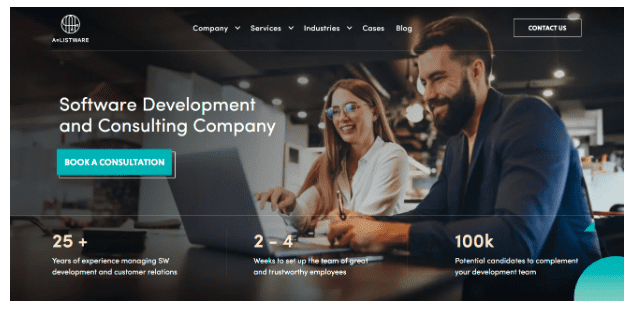
A-listware is a software development company that works with businesses across different industries, including retail. They describe themselves as a team that can either take over full project delivery or support an in-house team through augmentation. In practice, that means a retailer might bring them in to modernize an outdated system, build a custom ecommerce platform, or add extra developers before a seasonal launch when deadlines are tight.
A-listware outlines a structured development process, starting from planning and business case discussions through architecture, MVP launch, testing, and ongoing support. They mention collaboration models such as full outsourcing, dedicated teams, and advisory support. In retail contexts, their experience with ERP, sourcing and stock management, sales and customer service systems suggests they are used to working with operational software, not just customer-facing storefronts.
Key Highlights:
- Works with retailers and other industries on custom and enterprise software
- Offers full outsourcing, dedicated teams, and team augmentation models
- Structured development stages from planning to maintenance
- Experience with ERP, stock management, and business process software
Services:
- Software consulting
- Custom software development
- Enterprise software development
- Cloud application development
- Legacy software modernization
- Software support and maintenance
Contact Information:
- Website: a-listware.com
- E-mail: [email protected]
- Facebook: www.facebook.com/alistware
- LinkedIn: www.linkedin.com/company/a-listware
- Address: North Bergen, NJ 07047, USA
- Phone: +1 (888) 337 93 73
2. Itransition
Itransition offers retail software creation for physical stores, online shops, and those combining both. They offer advice and hands-on building, usually beginning by checking the current computer setup before suggesting either a platform-based fix or custom build. Their past work includes online shopping sites, business intelligence systems for fashion sellers, and systems to create product feeds for online marketplaces.
A key part of Itransition’s retail work involves platform setups. They work with Adobe Commerce, Salesforce, SAP Commerce, Shopify, and Odoo, setting them up and adding them to wider business processes. Besides storefronts, they create supporting systems like inventory control, shipping software, CRM links, and data analysis tools. Their plan is well laid out, from start to finish, which suits stores that want clear project phases. Some examples show them building internal BI platforms and customization systems, pointing to a focus on retail run by data, not just sales websites.
Key Highlights:
- Delivers retail software for online, offline, and hybrid stores
- Works with major commerce platforms such as Adobe Commerce, Salesforce, SAP Commerce, Shopify, and Odoo
- Develops ecommerce, BI, CRM, and logistics solutions
Services:
- Retail software consulting
- Custom retail software development
- Ecommerce platform development
- System integration
- Software modernization
- Quality assurance and testing
3. Intellias
Intellias works with retailers that are trying to rethink how all their systems fit together. They focus on digital transformation, but in practical terms that usually means connecting the dots – ecommerce platforms, mobile apps, in-store tools, and the data sitting behind everything. Instead of jumping straight into building something new, they seem to start by looking at what is not working well today. Maybe the supply chain feels disconnected. Maybe customer data lives in too many places. From there, they introduce tools like AI, IoT, or analytics, but only where they actually solve a problem.
In retail projects, Intellias mentions work around supply chain management, indoor positioning, forecasting, and improving user experience. Some of their case examples involve redesigning order and return systems or building cloud-based ecosystems to keep operations running without disruption. Compared to firms that mainly build online stores, Intellias appears to take on broader change programs. That might mean restructuring a retailer’s data setup before entering a new market, or using analytics to understand why customers drop off before checkout. Their work leans more toward operational improvement and long-term efficiency than surface-level redesign.
Key Highlights:
- Focuses on omnichannel retail and customer-centric digital strategies
- Applies AI, Big Data, IoT, and indoor positioning in retail environments
- Works on supply chain, forecasting, and behavioral analytics solutions
- Supports cloud-based digital ecosystems
Services:
- Retail software development
- Mobile and web application development
- AI and data analytics solutions
- Supply chain management software
- UX and UI design
4. N-iX
N-iX works with retailers that have outgrown basic systems and need something more connected. Their projects usually stretch across different parts of the retail chain, not just the online store. They talk about pricing intelligence, demand forecasting, supply chain automation, and even computer vision inside physical stores. So instead of only building a checkout flow, they often deal with questions like how to adjust prices based on competitor data or how to predict stock needs before shelves go empty.
A noticeable part of N-iX’s retail work revolves around AI and analytics. They build tools for recommendation engines, route optimization, automated replenishment, and product placement analysis. In practical terms, that could mean helping a retailer understand why certain items sell better in one region than another, or using data to reduce overstock in warehouses. Compared to companies that focus mainly on ecommerce builds, N-iX seems to treat retail as a full ecosystem where logistics, customer data, in-store tech, and pricing strategy all influence each other. It feels more like operational engineering than surface-level redesign.
Key Highlights:
- Develops pricing intelligence and demand forecasting systems
- Works on AI-driven and computer vision retail tools
- Covers supply chain and in-store automation
- Supports enterprise retail and commerce projects
Services:
- Ecommerce and omnichannel solutions
- Pricing optimization platforms
- Demand planning and replenishment systems
- Supply chain automation tools
- In-store computer vision applications
5. SDSol
SDSol, a software company in Miami, helps retailers link their systems and upgrade their operations. They work with both physical stores and online shops, focusing on creating or improving key systems like POS, inventory management, portals, and mobile apps. Often, SDSol helps retailers who’ve outgrown their initial tech. For example, a business might start with a basic online store but then find that inventory, CRM, and accounting do not sync well. SDSol usually steps in to fix these issues.
They offer various services, from consulting and audits to custom development and upgrading older platforms. Integration is key to their approach. SDSol frequently mentions linking ERPs, CRMs, supply chain tools, and older systems, suggesting they are used to working with different setups where rebuilding everything is not viable. Their process covers planning, design, development, testing, and continuous support, making them a good fit for retailers needing long-term maintenance and initial builds.
Key Highlights:
- Works with brick-and-mortar, ecommerce, and hybrid retail models
- Offers consulting, integration, modernization, and support
- Experience building POS, inventory, ERP, and CRM systems
- Focus on connecting new platforms with existing business tools
- Provides ongoing monitoring and post-launch updates
Services:
- Custom retail web and mobile development
- POS system development
- Retail software consulting and business analysis
- ERP and CRM customization
6. EffectiveSoft
EffectiveSoft positions itself as a software development company that builds systems covering everyday retail functions. Their services span billing, accounting, loyalty programs, employee management, and supply chain tools. Instead of concentrating only on customer-facing ecommerce apps, they appear to invest heavily in back-office systems that keep stores running. For a retailer dealing with payroll inconsistencies or stock mismatches, that kind of internal tooling is not glamorous, but it matters.
They also develop omnichannel platforms, CRMs, ecommerce websites, and mobile apps. In some of their descriptions, EffectiveSoft references technologies such as machine learning, IoT, blockchain, and biometric systems. That suggests they sometimes work on projects where retailers want to experiment with more advanced capabilities like indoor location services or AI-assisted forecasting. At the same time, much of their core work still centers on POS and ERP integrations, which are the foundation of most retail operations.
Key Highlights:
- Develops POS and ERP-integrated platforms
- Works on omnichannel retail software
- Offers mobile app and ecommerce development
Services:
- CRM development
- Ecommerce platform development
- Mobile retail app development
- Indoor location-based systems
- Cloud migration and cloud development
7. SysGears
SysGears works with retailers that need custom systems. They build web and mobile applications that cover different parts of retail operations, from supply chain and warehouse management to ecommerce and CRM. A retailer might approach SysGears when inventory tracking feels disconnected from order management, or when their online store does not fully reflect what is happening in physical locations. SysGears tends to focus on connecting those moving parts into one working system.
Their retail offering includes forecasting tools, POS solutions, logistics software, and integrations with existing platforms. They also provide consulting and modernization services, which suggests they often work with companies that already have some form of software in place but need to update or expand it. SysGears highlights collaboration and transparency in their process. From discovery and planning through development and long-term support, they seem to position themselves as a steady engineering partner rather than a short-term vendor.
Key Highlights:
- Offers both web and mobile retail app development
- Provides consulting and modernization of legacy software
- Focus on integration with existing retail ecosystems
- Works with marketplaces, retail chains, and ecommerce enterprises
Services:
- Retail web application development
- Retail mobile app development
- POS system development
- Order and inventory management software
- CRM solutions
8. DataArt
DataArt works with retail and consumer goods companies on custom digital systems, but their focus goes well beyond just building an online store. A lot of what they do sits under the surface – data platforms, cloud migrations, and modernization projects that fix how everything connects behind the scenes. So instead of redesigning a homepage, they might be replatforming an ecommerce system, setting up a customer intelligence hub, or helping a retailer get clearer visibility into supply chain operations through analytics and automation.
They also talk about things like personalization, AI, machine learning, and logistics optimization. In plain terms, DataArt tends to work with retailers that feel their systems are fragmented and need to be stitched together properly. Planning, inventory, sales, marketing – all that data needs to move cleanly between teams. Their case examples include ERP migrations, client portals, and loyalty platforms. Compared to smaller development shops, DataArt seems more comfortable in enterprise settings where there are multiple systems in place and several departments involved, which usually means more coordination and less room for shortcuts.
Key Highlights:
- Works on ecommerce replatforming and customer intelligence systems
- Applies AI, ML, cloud, and data analytics in retail operations
- Experience with supply chain and logistics software
Services:
- Custom retail software development
- Ecommerce platform development and migration
- Data and analytics solutions
- AI and machine learning implementation
- Cloud application development and migration
9. Experion Technologies
Experion Technologies offers custom retail software creation as a part of their product engineering and digital change services. Their retail work often touches on logistics and operations management. For instance, they built a cloud platform for logistics and transportation for a US company that runs several warehouses. The project aimed to replace old systems that didn’t have central dashboards or real-time tracking.
Experion starts with a discovery phase to document and refine needs before starting development. Their retail and logistics solutions stress clear operations, automated processes, and teamwork. Though they work in many sectors, their retail and e-commerce services usually tackle backend issues like warehouse traffic, shipment planning, and route prediction. It’s less about fancy customer apps and more about keeping operations organized and able to grow.
Key Highlights:
- Develops cloud-based retail and logistics platforms
- Focus on warehouse and transportation management systems
- Emphasizes structured discovery and requirement definition
- Works with stakeholders across retail and logistics ecosystems
Services:
- Cloud platform development
- Logistics and transportation management systems
- Application modernization
- Digital transformation consulting
10. Evinent
Evinent helps retail businesses that require systems built just for them, instead of using standard, ready-made software. They create software and also upgrade older systems that aren’t performing well. Usually, this involves e-commerce platforms, internal systems, mobile apps, and linking with ERP or CRM tools. Evinent often talks about projects where they’ve modernized systems, especially when retailers have old software that doesn’t work with how they do things now.
Their past projects show Evinent is skilled at working with operational systems, such as HR platforms for retail chains, CRM tools for managing staff, mobile apps for front-office tasks linked to ERP systems, and expandable e-commerce platforms. They also mention projects where security and data control were key. In retail, this suggests they’re familiar with situations where data accuracy, system reliability, and integration are more important than fancy designs.
Key Highlights:
- Develops custom retail software and ecommerce platforms
- Works on legacy modernization and system migration
- Builds CRM, inventory, HR, and ERP-connected retail tools
- Handles cloud infrastructure and secure data integration
Services:
- Custom retail software development
- Ecommerce platform development
- Retail mobile application development
- Inventory management systems
- Custom CRM for retail
- Point-of-Sale software development
11. Waverley
Waverley creating retail and e-commerce software, and it’s apparent in their service offerings. They handle e-commerce platforms, PoS systems, retail mobile apps, and cloud setups. Their retail studies often center on improving the integration of sales systems with logistics, franchise networks, or analytics tools. Their work goes beyond basic online shops, focusing more on building systems for wider retail functions.
They also say they work with IoT, blockchain, chatbots, and analytics, suggesting they can manage intricate retail settings. For instance, setting up a PoS system for a global franchise is not the same as building a simple checkout page. Waverley to take on projects where growth and integration are important, especially for companies that plan to keep changing their tech setup.
Key Highlights:
- Builds custom PoS systems and integrates them with cloud platforms
- Works with established ecommerce platforms such as Magento and Shopify
- Offers full-cycle development from architecture to support
- Covers analytics, IoT, blockchain, and chatbot solutions
Services:
- Ecommerce platform development
- PoS software development
- Retail mobile app development
- Cloud migration and infrastructure setup
- CRM and marketing software development
- Chatbot development
12. Zoolatech
Zoolatech looks at retail software through a broader transformation lens. Instead of just building an online store and calling it a day, they talk a lot about cloud-native systems, AI-driven analytics, and updating legacy infrastructure that may be holding companies back. Their retail work seems to revolve around connecting everything – ecommerce, in-store systems, supply chains, pricing engines – into one ecosystem. It feels less like launching a single tool and more like reworking how the whole operation runs behind the scenes.
They also bring up predictive analytics, automation, and cloud migration quite a bit. In real retail terms, that usually means things like seeing inventory in real time, predicting demand with fewer surprises, or adjusting prices based on what is happening in the market. Zoolatech often references large-scale projects with sizable engineering teams, which suggests they are used to complex environments where multiple departments need to align. A recurring theme in their messaging is cleaning up fragmented data and making sure information flows properly across the organization – something many retailers quietly struggle with, even if they do not always say it out loud.
Key Highlights:
- Develops AI-based personalization and pricing tools
- Works on inventory intelligence and supply chain optimization
- Supports predictive analytics and automation
Services:
- Legacy system migration
- AI-driven demand planning
- Predictive retail analytics
- Cloud-native modernization
- Mobile commerce application development
- Security and fraud prevention solutions
13. HDWEBSOFT
HDWEBSOFT helps retail companies by creating the systems they need for everyday tasks. Instead of using templates, they build custom software, like inventory and warehouse tools, CRM platforms, and POS systems, to match a company’s specific way of doing things. They also offer e-commerce integrations, which shows they often assist retailers in linking their physical stores to online sales.
They also supply analytics and data management services, with dashboards and business intelligence apps. This could give store managers a clearer view of stock levels or help teams figure out which products aren’t selling well. Since HDWEBSOFT works with cloud platforms and various tech, they can integrate with current systems instead of requiring a total system replacement.
Key Highlights:
- Provides custom retail software development
- Builds inventory, warehouse, and product management systems
- Develops retail CRM and POS solutions
- Supports eCommerce integration for physical stores
- Offers analytics dashboards and BI tools
Services:
- Inventory management software
- Warehouse management systems
- Retail CRM development
- Supply chain management software
- POS system development
14. Dualboot
Dualboot works with consumer and retail companies that are building digital products from the ground up or refining existing ones. Their retail focus centers on custom platforms such as digital marketplaces, subscription systems, and eCommerce solutions. They working with both startups and established retail brands, which suggests their projects can range from early-stage MVP builds to more structured enterprise tools.
A noticeable theme in Dualboot’s retail approach is product design and user experience. They describe a process that moves from discovery to deployment and then ongoing improvement. In practice, that could mean helping a direct-to-consumer brand redesign its checkout flow or building an internal tool for a retail chain to manage inventory across locations. They also refer to AI-driven personalization and IoT-connected products, which points toward retailers experimenting with connected devices or data-driven customer engagement rather than basic storefronts.
Key Highlights:
- Develops custom retail and marketplace platforms
- Works with startups and established retail brands
- Focus on UX and product design
- Supports subscription and loyalty-based business models
Services:
- eCommerce platform development
- Inventory management systems
- Subscription platform development
- IoT-enabled consumer applications
15. Devox Software
Devox Software looks at retail software more through the lens of systems and data than storefront visuals. They spend a lot of time talking about AI-driven forecasting, pricing engines, and syncing inventory in real time. So instead of redesigning a checkout page, they are more focused on how demand forecasts connect to pricing, how stock levels update across locations, and how staff scheduling ties into what is actually happening on the floor. In practical terms, that might mean prices shifting automatically when demand spikes, or store associates getting task alerts when queues start building up.
They also put noticeable weight on data infrastructure and compliance. Devox discusses integrating POS, WMS, CRM, and ERP systems rather than replacing everything from scratch. That usually signals they work with retailers who already have a stack in place but need it to function as one system instead of five separate ones. Their process – from signal mapping to feedback loops – sounds less like a one-time build and more like ongoing tuning. It gives the impression that they expect the system to keep learning and adjusting over time, not just go live and stay frozen.
Key Highlights:
- Focuses on AI-driven retail analytics and automation
- Develops demand forecasting and dynamic pricing systems
- Integrates with ERP, POS, WMS, and CRM platforms
- Works on data pipelines and retail data warehousing
- Embeds compliance considerations into system design
Services:
- AI-powered demand forecasting
- Dynamic pricing engine development
- Inventory and supply chain analytics
- Retail data warehousing and ETL
- Business intelligence dashboards
Conclusion
Retail software is rarely about one shiny feature. Most of the time, it is about fixing friction that quietly drains time and money – stock that does not sync, systems that do not talk to each other, reports that arrive too late to matter. That is where retail software development services companies in the USA tend to step in. Some focus on building strong ecommerce foundations. Others lean into data, automation, and AI. A few concentrate on modernization, helping retailers move away from legacy systems without breaking daily operations.
There is no single right choice for every business. A growing direct-to-consumer brand will need something different than a regional retail chain juggling warehouses, stores, and online orders. In my experience, the real difference shows up in how well a development team understands retail workflows. Not just the technology stack, but how a store actually runs on a busy Saturday afternoon.
If you are evaluating retail software development partners, it usually helps to look beyond feature lists. Pay attention to how they approach integration, how they handle ongoing support, and whether they talk about real operational scenarios instead of abstract innovation. Retail moves fast, and systems that cannot adapt quickly become a burden. The right partner will not promise magic. They will help you build something stable, practical, and flexible enough to keep up with how your business evolves.