
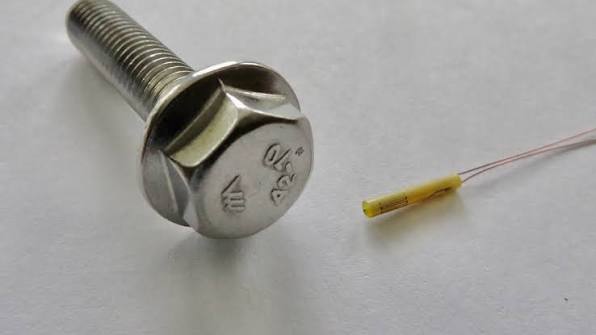
Few names in stress measurement are as widely recognised as Kyowa. The Japanese manufacturer Kyowa Electronic Instruments has long supplied strain gauges and related transducers to laboratories and industry around the world. For engineers who value consistency and a broad product range, Kyowa is a familiar and trusted choice. This article looks at what makes these gauges popular and how to get the best results from them.
A Reputation Built on Consistency
In strain measurement, repeatability matters just as much as raw accuracy. Engineers need gauges that behave predictably from one batch to the next so that test results can be compared across projects, teams and years. Consistent manufacturing quality reduces uncertainty, saves time troubleshooting and gives engineers confidence in the data they report.
That reliability is a major reason Kyowa products are used in research institutions, testing laboratories and industrial settings. When a measurement supports a safety decision or a design approval, dependable components make a real difference.
Understanding the Range
Kyowa offers a wide selection of gauges to suit different jobs. Typical categories include:
- General-purpose foil gauges for everyday structural and mechanical testing.
- Gauges for specific materials, such as steel, aluminium, concrete or composites.
- Rosette and multi-axis patterns for analysing complex stress fields.
- High-temperature and cryogenic options for demanding environments.
- Gauges for transducer manufacture used in load cells and pressure sensors.
- Long-term monitoring gauges designed for stability over extended periods.
Having this variety means engineers can often find a gauge that suits their exact test conditions rather than compromising on a general option.
Matching Gauge to Material
One of the most important factors in gauge selection is thermal expansion. Temperature changes can create apparent strain that is not caused by load. Self-temperature-compensated gauges are designed to minimise this effect when used on a particular material, such as steel or aluminium. Choosing the correct compensation for your test material is a simple step that significantly improves accuracy.
Where They Are Used
Kyowa gauges appear in a wide range of fields, including civil engineering and structural monitoring, automotive and aerospace component testing, load cell and transducer manufacturing, materials research, and machine design validation. Their breadth makes them useful for both one-off experiments and ongoing production use.
Sourcing in Australia
Local availability makes a practical difference to project timelines. Shorter lead times, local technical advice and support with selecting accessories all help keep work on schedule. Engineers looking at Kyowa strain gauges through an Australian supplier can get guidance on matching the right gauge to the right adhesive, lead wire and instrumentation for their application.
This matters because a strain gauge is rarely used in isolation. Adhesives, coatings, terminals, cables and data acquisition equipment all affect the quality of the final result. A supplier who understands the whole system can help you avoid compatibility problems that only become apparent mid-test.
Selecting the Right Kyowa Gauge: A Simple Checklist
- Identify the material you are testing and its expected temperature range.
- Decide whether you need single-axis, rosette or bridge patterns.
- Consider the available mounting area and surface curvature.
- Check the required gauge resistance for your instrumentation.
- Choose compatible adhesives and protective coatings.
- Plan wiring, terminals and strain relief before installation.
Installation Tips for Reliable Results
Good installation is just as important as good product selection. Follow the surface preparation procedure carefully, ensuring the area is clean, lightly abraded and free of contaminants. Use the adhesive recommended for the gauge type and operating conditions, and apply even pressure during curing. Protect the finished installation with suitable coatings, particularly for outdoor, humid or chemically exposed environments.
After installation, check resistance values and insulation resistance before testing. These quick checks can reveal poor bonding, damaged lead wires or moisture ingress.
Long-Term Monitoring Considerations
For projects that run for months or years, such as monitoring bridges, dams or heavy machinery, stability becomes a priority. Gauge selection, waterproofing, cable routing and regular checks all influence how reliable the data remains over time. Planning for these factors at the start is far easier than trying to solve drift or moisture problems after installation.
Building a Reliable Measurement Chain
Even the best gauge can only perform as well as the system around it. Use quality cabling, minimise electrical noise, ground and shield wiring correctly and calibrate the complete measurement chain. Keep records of gauge types, installation dates and test conditions so that results remain traceable.
Training Your Team and Documenting Your Process
Consistent results also depend on consistent people. If several engineers or technicians install gauges in your organisation, write down a standard procedure covering surface preparation, adhesive selection, curing times and inspection checks. Short training sessions and a simple installation checklist reduce variation between operators, make audits easier and help new team members get reliable results quickly.
Conclusion
Kyowa strain gauges have earned their place in laboratories and workshops through consistent performance and a wide range of options. With the right selection, careful installation and local technical support, they can help you collect the precise, repeatable data your projects depend on. Whether you are running a single experiment or building a long-term monitoring system, taking the time to match the gauge to the application will pay off in better results.