
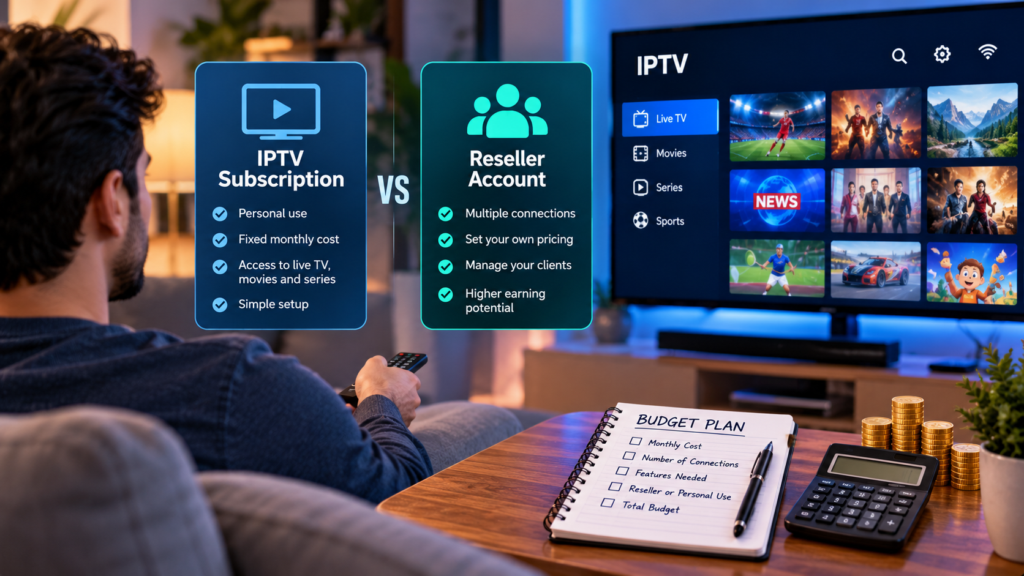
An IPTV budget becomes easier to understand when you decide whose viewing you are paying for. A household subscription is a purchase for your own use under its account terms. A reseller arrangement is a commercial relationship that may involve supplying accounts and supporting customers. Treating those as the same product makes both the cost comparison and the eventual responsibilities unclear.
Start with the account you actually need
Write a short description of the intended use before comparing packages. Include who will watch, the devices involved and whether anyone expects to watch at the same time. Keep this separate from the names of applications already installed. A player application and access to a viewing service can have different charges and different support routes.
When researching Trex IPTV, use that description to frame your questions. Ask which account category addresses your situation and what information the seller needs to confirm it. A product name, picture or headline is not a substitute for written account terms, permissions and conditions. If the answer changes halfway through a conversation, clarify the difference before proceeding.
Compare the same period and conditions
Subscription prices only make a useful comparison when the underlying terms are comparable. Check the currency, covered period, renewal arrangement and relevant connection limits. Keep introductory offers separate from ordinary renewal costs. A larger upfront payment might reduce the apparent monthly equivalent while still increasing the amount committed before you understand the service.
Use the Trex IPTV pricing page as the designated reference for subscription information, then confirm the current terms directly. Record the date of the quote and any conditions that affect it. Do not combine an old screenshot with a new verbal promise and assume they describe one offer. Your budget should reflect the purchase actually available to you.
Separate the bills that belong to different products
Draw up a simple list of potential costs: the viewing account, internet connection, player licence and any hardware you genuinely need. Some of those may already be paid for. Others might be optional. Keep each charge with the organisation responsible for it so a separate software payment does not become confused with a subscription renewal.
The useful question is what changes because of this decision. An existing internet bill is part of your household spending, but buying another device is a new commitment. Compare the extra cost with the problem it solves. Avoid replacing equipment simply because a package description makes a different setup look more impressive.
Understand what reseller credits represent
A credit balance is not automatically a number of months, customers or completed sales. Its meaning depends on the supplier’s published conversion rules and any restrictions. Ask how credits are consumed, whether different account durations use different amounts and what happens when an account is changed or renewed.
The Trex IPTV reseller information is the relevant starting point for those business questions. Obtain the current credit mapping before calculating a package’s practical value. Work through one example using the supplied rules, then ask the supplier to confirm your interpretation. Do not import another brand’s arithmetic because its panel or package names appear similar.
Include the work behind a customer account
A reseller budget needs room for the tasks that happen after a sale. Someone may need help identifying their player, understanding a renewal date or describing a playback problem. Decide which questions you can answer and which require the upstream supplier. This is an operating decision, not proof that a particular support arrangement is included.
Estimate your own time honestly. A small margin can look different when it involves repeated conversations and administrative work. Keep a record of the types of questions customers ask, without collecting unnecessary private information. That record can show where clearer instructions would help and where you need a better answer from the supplier.
Test the arithmetic without predicting profits
Build a basic worksheet with separate fields for purchase cost, confirmed credit usage, any payment charges and your own operating costs. Label every assumption. If the supplier has not confirmed a rule, leave the resulting calculation unresolved instead of filling the gap with an attractive estimate.
Run a conservative example in which sales take longer than expected and support requires more time. The purpose is to understand exposure, not to forecast guaranteed earnings. Money committed to unused credits remains committed even when an optimistic sales plan does not happen. Keep personal viewing decisions separate from any proposed business investment so each can be assessed on its own terms.
Give every unresolved cost its own line in the worksheet. Do not quietly treat an unanswered question as a confirmed zero. A blank fee, an unknown renewal amount and a charge confirmed as absent are different pieces of information. Keeping those differences visible helps you compare offers fairly.
Ask what would happen in a specific support case before relying on broad assurances. For example, identify who handles a payment query and who investigates an account problem. Record the route for each task, including any information needed to raise the question without exposing customer credentials.
Keep a clear record of the agreement
Before paying, save the applicable offer, account category, billing period and answers to important questions. Keep receipts and support references somewhere private. Record what was confirmed rather than relying on a broad phrase such as full access or unlimited use. Those expressions need context to mean anything useful.
If you are dealing with customers, explain your own role accurately. Distinguish the viewing service, player developer, payment handler and reseller. Do not promise rights, availability, refunds or response times that have not been established. Clear expectations are easier to manage than a confident sales message that nobody can reliably support later.
Make the smaller decision first
Finish with the questions that would change your answer. Is this for personal viewing or customer supply? Are the relevant conditions understood? Can you identify each charge and the party responsible for it? A useful budget should let you answer those questions without translating a sales pitch.
Choose a commitment that matches verified needs and your ability to manage it. Revisit the decision when your circumstances or the supplier’s terms change. The value of the exercise is clarity: knowing what you are buying, what remains uncertain and what work or cost follows after the initial payment.