
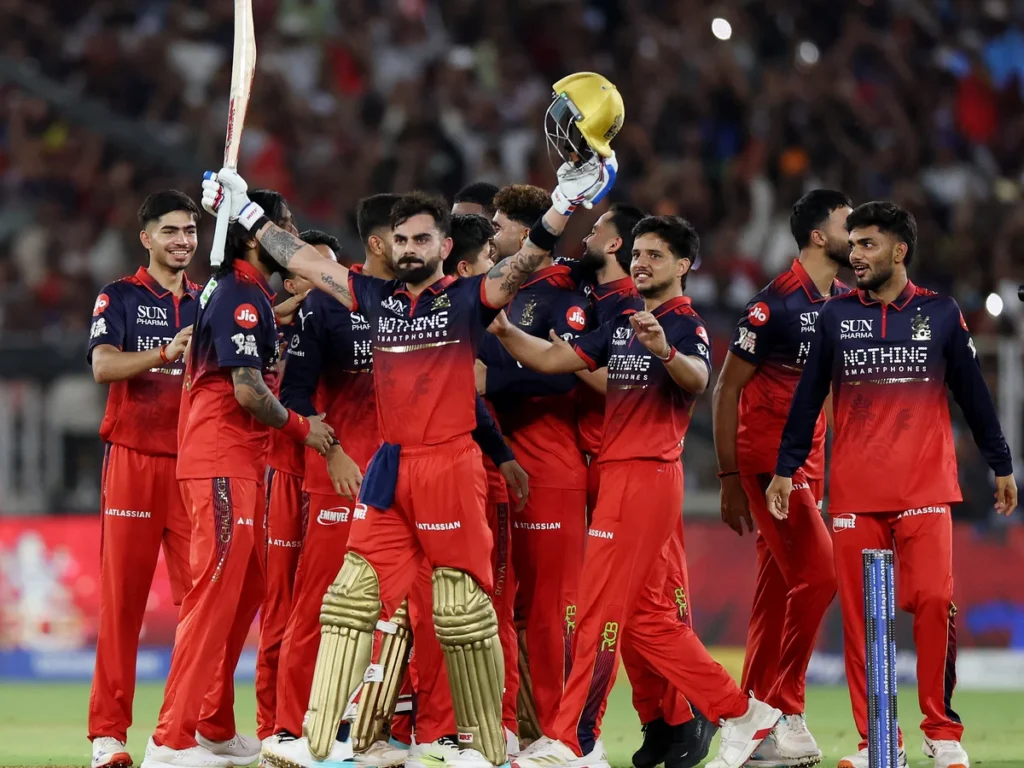
The IPL’s estimated business value reached US$20.6 billion in 2026, while Royal Challengers Bengaluru led the individual franchise brand rankings at US$312 million. These figures show the scale of the league’s commercial growth, but they should not be treated as identical measures. The IPL’s overall business value, a team’s brand value and the price paid in an ownership transaction describe different parts of the same sports-business ecosystem.
The IPL’s US$20.6 Billion Business Value
According to a 2026 Houlihan Lokey assessment reported by Cricbuzz, the IPL’s business value rose from US$18.5 billion to US$20.6 billion over the preceding 12 months. That represented growth of 11.4% and marked the competition’s second consecutive year of double-digit business-value growth. The estimate covers the league as a commercial property rather than simply adding up the values of its 10 franchises.
A league-level valuation reflects the economic value attached to rights, sponsorship demand, audience reach, the competition’s intellectual property and its ability to generate revenue over time. It is therefore broader than the price of a club or the strength of a team’s consumer brand. The league began in 2008 and has developed into a major revenue source for the Board of Control for Cricket in India, with a short annual season that attracts substantial attention.
Houlihan Lokey’s 2026 findings also placed the IPL second only to the NFL in per-match brand value globally. That comparison is useful because it focuses on the commercial pull of an individual fixture rather than the length of a sporting calendar. A compact season can still command significant media and sponsorship interest when audiences, players and advertisers are concentrated around each match.
Brand Value Is Not the Same as Franchise Sale Price
The term “IPL franchise value” often causes confusion because it can refer to at least three distinct measurements. Brand value estimates the economic value associated with a team name, fan connection, commercial appeal and related intangible assets. Business value describes the wider league as an enterprise. An acquisition valuation, meanwhile, is the price implied when investors buy an ownership stake in a franchise.
Royal Challengers Bengaluru demonstrate the difference clearly. Their brand value was estimated at US$312 million in 2026, yet a consortium comprising Blackstone, Bolt Ventures, the Aditya Birla Group and the Times of India Group acquired the franchise at a valuation of US$1.78 billion. The larger transaction figure can account for factors beyond brand strength, including control of the business, expected future cash flows and the strategic value investors attach to IPL ownership.
Rajasthan Royals offer another illustration. The franchise changed hands in a transaction reported at US$1.65 billion after the Mittal family and Adar Poonawalla took control. That does not mean Rajasthan’s brand value was automatically US$1.65 billion. The transaction and the brand valuation answer different questions: one reflects what investors agreed to pay for an ownership asset, while the other isolates the value of the brand itself.
IPL Franchise Brand Values in 2026
The following franchise figures are the 2026 brand-value estimates reported by Cricbuzz from the Houlihan Lokey assessment. They represent team brands, not team purchase prices or annual revenues.
| Rank | Franchise | Estimated 2026 brand value |
| 1 | Royal Challengers Bengaluru | US$312 million |
| 2 | Mumbai Indians | US$264 million |
| 3 | Kolkata Knight Riders | US$245 million |
| 4 | Chennai Super Kings | US$244 million |
| 5 | Sunrisers Hyderabad | US$168 million |
| 6 | Rajasthan Royals | US$161 million |
| 7 | Punjab Kings | US$158 million |
| 8 | Gujarat Titans | US$157 million |
| 9 | Delhi Capitals | US$156 million |
| 10 | Lucknow Super Giants | US$122 million |
Royal Challengers Bengaluru’s US$312 million figure was 16% higher than its US$269 million brand value a year earlier. The team also became the first cricket side to pass the US$300 million brand-value mark in this assessment. Its two consecutive IPL titles in 2025 and 2026, along with its large and highly engaged fanbase, formed part of the commercial context around that rise.
Mumbai Indians ranked second at US$264 million, up 9.1% from US$242 million in 2025. Kolkata Knight Riders followed at US$245 million after a 7.9% increase, while Chennai Super Kings were fourth at US$244 million, up 3.8%. The small gap between the third- and fourth-ranked teams indicates that established fan communities and commercial histories can sustain strong brand positions even when on-field narratives differ from season to season.
What Drives a Cricket Franchise’s Brand Value?
Winning is important, but it is only one part of the valuation picture. A title can increase visibility, deepen fan engagement and make commercial partnerships more attractive. RCB’s 2026 position shows how sustained sporting success can align with a strong existing identity. However, teams with long-established support can also retain considerable value during periods when results are less consistent.
Audience loyalty is another crucial element. A franchise with a recognisable identity, strong regional relevance and an active digital following has more opportunities to build partnerships and maintain interest outside the playing window. Chennai Super Kings, Mumbai Indians and Kolkata Knight Riders have all built recognisable identities that extend beyond a single season’s results.
Commercial partnerships matter because the IPL offers brands access to a concentrated national and global cricket audience. Sponsorship inventory includes shirts, team content, stadium visibility and digital campaigns. For people following the sporting calendar alongside the business story, a today toss prediction can be one example of the match-day information that keeps attention focused on team selection and conditions before play begins.
Ownership confidence can influence the wider perception of a franchise as well. The RCB and Rajasthan Royals transactions in 2026 showed that investors were willing to attach substantial enterprise valuations to IPL assets. Such deals do not establish a universal price for every team, but they can signal confidence in long-term media, entertainment and fan-engagement opportunities connected to the competition.
Why Different IPL Valuation Reports Can Conflict
IPL valuation reports can produce sharply different totals because the scope, timing and methodology may vary. A 2025 Brand Finance assessment, for example, valued the IPL ecosystem at US$9.6 billion, down from US$12.0 billion in 2024. Its team-brand ranking put Mumbai Indians first at US$108 million, followed by Royal Challengers Bangalore at US$105 million and Chennai Super Kings at US$93 million.
Those figures should not be combined directly with the 2026 Houlihan Lokey estimates. They were produced in different periods and use different valuation frameworks. The 2025 assessment also discussed geopolitical tensions, venue changes, security concerns, overseas-player departures for national duty and auction decisions as factors affecting momentum during that season.
For readers, the key discipline is to identify what exactly is being measured before comparing numbers. A US$20.6 billion IPL business value is not a sum of the 2026 team brand values. Similarly, a US$1.78 billion RCB transaction valuation is not equivalent to RCB’s US$312 million brand value. Each figure can be meaningful, but only within its stated scope.
The Broader Significance for Indian Sports Business
The IPL’s commercial scale reflects how cricket teams are increasingly viewed as year-round sports and entertainment businesses rather than sides that play only during a limited tournament window. Team brands can support content, merchandise, fan communities and commercial partnerships long after the final match of a season has been played.
The league’s ecosystem also sits alongside the growth of women’s cricket. In the 2025 Brand Finance assessment, the Women’s Premier League reached 103 million television viewers in 15 matches and drew more than 70 sponsors. The report said franchise sponsorship revenues increased by 10% to 20%, while central deals rose by around 10%, indicating expanding commercial interest across Indian cricket’s franchise landscape.
Conclusion
IPL brand value is best understood as a set of related but separate measures. In 2026, the league’s estimated US$20.6 billion business value underlined its global commercial standing, while RCB’s US$312 million brand value led the franchise rankings. Comparing these figures carefully helps explain both the power of the IPL platform and the individual strengths of its teams.