
The demand for self-storage facilities has surged in recent years, driven by urbanization, e-commerce growth, and the need for flexible storage solutions. For property owners or developers looking to enter this lucrative market, installing and fitting out self-storage units is a critical process that requires careful planning and execution. This guide outlines the key steps, considerations, and best practices to ensure a successful self-storage fit-out.
1. Initial Planning and Site Assessment
The foundation of any successful fit-out begins with thorough planning and an understanding of the site’s potential.
a. Site Assessment
Evaluate the existing space to determine its suitability for a self-storage facility:
- Structural Integrity: Ensure the building can support the proposed modifications, including mezzanines if needed.
- Access and Layout: Assess loading areas, access points, and potential flow of traffic within the facility.
- Utilities: Verify the availability of electrical, plumbing, and HVAC systems.
b. Market Research
Understand the local demand for self-storage, including the most sought-after units (e.g., climate-controlled, large or small units).
c. Regulatory Compliance
Ensure the project adheres to local building codes, zoning regulations, and fire safety standards. This may include permits for modifications and occupancy.
2. Designing the Layout
A well-planned layout maximises space efficiency and customer convenience.
a. Unit Sizes and Configuration
Offer a mix of unit sizes to cater to different storage needs. Common sizes include:
- Small: 25 sq. ft.
- Medium: 50-100 sq. ft.
- Large: 150+ sq. ft.
b. Flow and Accessibility
- Plan for wide corridors to accommodate trolleys and large items.
- Include clear signage for easy navigation.
- Ensure units near entrances and elevators cater to higher demand for accessibility.
c. Mezzanine Floors
If ceiling height allows, install mezzanine levels to maximise vertical space, effectively doubling storage capacity.
3. Partitioning and Construction
Installing partitions and securing the structure are critical steps in the fit-out process.
a. Materials Selection
- Metal Partitions: Durable, fire-resistant, and easy to clean.
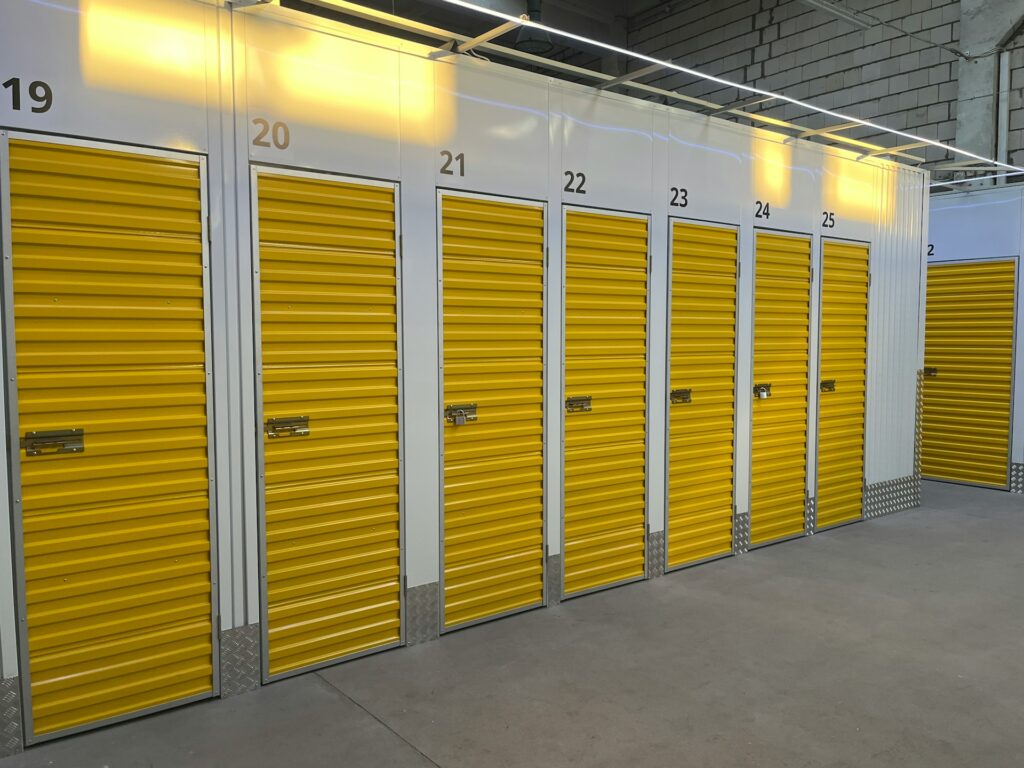
- Roll-Up Doors: Space-saving and highly secure, suitable for self-storage units.
- Flooring: Use robust, non-slip materials like epoxy or concrete for high traffic areas.
b. Installation Process
- Measure and mark unit boundaries accurately.
- Assemble partitions and doors as per the design plan.
- Reinforce walls and ceilings where needed to ensure safety and stability.
c. Security Features
Integrate advanced locking mechanisms, such as disc locks or cylinder locks, directly into the doors for added security.
4. Security and Technology Integration
Security is a top concern for customers, making it a priority during the fit-out process.
a. CCTV Installation
- Position cameras to cover all entry points, corridors, and communal areas.
- Opt for high-definition cameras with night vision and motion detection.
b. Access Control Systems
- Install electronic keypad entry systems or card readers for controlled facility access.
- Consider biometric scanners for high-security areas.
c. Alarm Systems
Integrate motion sensors, door alarms, and facility-wide alerts to deter unauthorised access.
d. Lighting
- Use LED lights for energy efficiency and durability.
- Install motion-activated lights in corridors and individual units for convenience and security.
5. Climate Control and Ventilation
For units storing sensitive items, climate control is essential.
a. HVAC Systems
- Install heating, ventilation, and air conditioning systems tailored to the facility’s size and layout.
- Use zoned systems to optimise energy efficiency.
b. Ventilation
- Ensure adequate airflow to prevent moisture buildup, which can damage stored items.
6. Finishing Touches and Amenities
Enhance the customer experience with additional features and amenities.
a. Signage and Branding
- Use professional signage for unit numbers, directions, and facility rules.
- Include branding elements to create a cohesive look.
b. Customer Convenience
- Install lifts for multi-level facilities.
- Provide trolleys and carts for easy movement of items.
- Offer well-lit, secure parking spaces near loading areas.
c. Technology Upgrades
- Enable online reservations and payment systems.
- Offer smart unit locks with app-based access for tech-savvy customers.
7. Inspection and Handover
Before opening to customers, conduct a thorough inspection of the facility.
a. Safety Checks
- Verify fire safety compliance, including extinguishers, alarms, and escape routes.
- Ensure all security systems are operational.
b. Functional Testing
- Test lighting, HVAC systems, and access controls.
- Address any deficiencies or malfunctions promptly.
c. Customer Readiness
Prepare the facility for launch by cleaning thoroughly, stocking necessary supplies, and training staff on operations and safety protocols.
Conclusion
The installation and fit-out of self-storage units is a meticulous process that requires a balance of strategic planning, quality construction, and customer-centric design. By following these steps, developers and property owners can create secure, functional, and attractive self-storage facilities that meet the growing demand for storage solutions. A well-executed fit-out not only maximises revenue potential but also establishes a strong reputation for reliability and professionalism in the competitive self-storage market.