
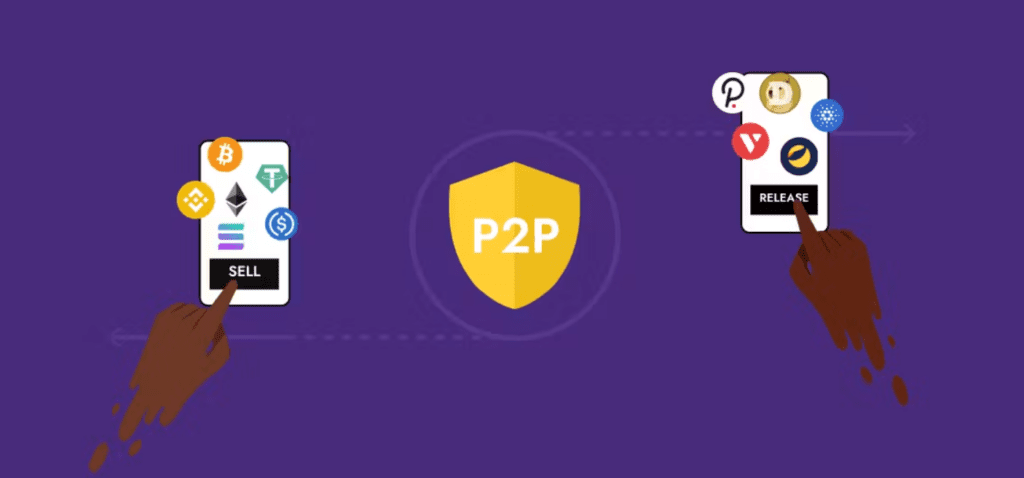
Peer-to-peer (P2P) cryptocurrency trading has completely changed how people purchase and trade virtual assets. It provides more control over trades, independence from centralized exchange costs, and access to specialized tokens that aren’t available anywhere else. But there are also certain risks associated with this new frontier that call for prudence and careful navigation.
Peer To Peer Cryptocurrency Trading
Peer-to-peer, or P2P, cryptocurrency trading is a decentralized technique in which users trade digital currencies directly with one another without the use of middlemen. Individuals are free to choose their trade partners, set their prices, and decide when to execute deals under this trading model. In particular, seasoned traders who want control and flexibility in their trades tend to favor this strategy.
P2P crypto marketplaces act as platforms where users can exchange cryptocurrencies directly. Users have more control over their money and can transact in greater privacy when there is no middleman or central authority.
While the advantages of P2P trading are apparent, it comes with its set of risks that users must be cautious about. Fake proof of payment, chargeback fraud, erroneous transfers, man-in-the-middle assaults, triangulation schemes, and phishing attempts are a few examples of potential dangers. In order to successfully reduce these dangers, P2P traders must be knowledgeable and watchful.
Advantages of P2P Crypto Trading
- Control and Flexibility: Set your prices and terms, tailoring trades to your specific needs and market conditions.
- Direct Access: Trade directly with other individuals, potentially bypassing exchange fees and unlocking wider asset availability.
- Enhanced Privacy: Minimize reliance on third-party intermediaries, potentially increasing privacy and anonymity.
Key Risks and Mitigation Strategies
- Counterparty Risk: Thoroughly research potential trading partners. Utilize platform reputation systems, review histories, and escrow services to minimize the risk of fraud.
- Security Vulnerabilities: Employ robust security measures, including strong passwords, multi-factor authentication, and secure communication channels. Choose platforms with proven security protocols and track records.
- Regulatory Uncertainty: Stay informed about evolving regulations that might impact P2P trading activities. Ensure your chosen platform operates within compliant frameworks.
- Limited Liquidity: Liquidity on P2P platforms can be lower compared to centralized exchanges. Carefully assess price discrepancies and be prepared for potentially longer execution times.
Professional Considerations
- Suitability: Evaluate your risk tolerance and investment goals before engaging in P2P trading. It may not be suitable for all investors.
- Tax Implications: Understand the tax implications of P2P trading in your jurisdiction. Consult with a qualified tax advisor for guidance.
- Compliance Requirements: If operating as a professional trader, ensure you comply with relevant anti-money laundering (AML) and Know Your Customer (KYC) regulations.
Is P2P Trading Secure?
Similar to any form of trading, P2P trading comes with inherent risks, and the safety level varies based on the exchange’s security measures. While older exchanges were more susceptible to theft and scams, recent P2P trading platforms have markedly enhanced their security protocols.
Contemporary P2P exchanges commonly employ an escrow service, regular security updates, and a rigorous identity verification process, among other measures, to ensure user safety.
Nonetheless, it’s important to note that all trading activities, including P2P trading, entail risks despite the implemented safeguards.
What Are Some Common P2P Scams?
The decentralized nature of P2P crypto trading, while offering advantages, also opens the door to various scams. Here are some common ones to be aware of:
1. Fake Payment Scams:
- Fake receipts: Scammers send fake payment confirmations (photoshopped screenshots or fabricated documents) claiming they’ve sent the agreed-upon funds. You release the crypto, but no real payment ever arrives.
- Chargebacks or reversals: Scammers use stolen credit cards or initiate fraudulent chargebacks after receiving your crypto, leaving you empty-handed.
2. Impersonation Scams:
- Phishing: Scammers pose as legitimate platforms or support personnel, tricking you into revealing sensitive information like passwords or private keys, ultimately stealing your crypto.
- Fake profiles: Scammers create fake profiles on P2P platforms, imitating real users with positive reviews to gain trust and lure victims into fraudulent trades.
3. Pump-and-Dump Schemes:
- Hype and misinformation: Scammers artificially inflate the price of a specific token through coordinated buying and spreading false information, encouraging others to buy at the peak before dumping their holdings, crashing the price and leaving others with worthless tokens.
4. Exit Scams:
- Sudden platform shutdown: A seemingly legitimate platform abruptly shuts down, taking user funds with it. This can be a planned exit scam by the platform creators.
- Platform freezes: The platform freezes withdrawals, preventing users from accessing their funds, sometimes under the pretense of technical issues or regulatory intervention.
5. Escrow Abuses:
- Escrow manipulation: Scammers exploit loopholes in escrow systems to gain access to funds before fulfilling their trade obligations.
- Fake escrow services: Fraudulent platforms offer their own “escrow” services but withhold funds or disappear altogether.
How To Avoid These Scams?
Here are some concrete steps you can take to avoid common P2P crypto trading scams:
Before the Trade:
- Choose your platform wisely: Select established platforms with a proven track record, strong security measures, and transparent user reviews. Research their scam protection policies and dispute resolution mechanisms.
- Research your counterparty: Don’t rush into trades. Check their profile, trade history, and reviews on the platform. Use platforms with reputation systems and be wary of new accounts with limited information.
- Never share sensitive information: Never share your private keys, passwords, or personal information with anyone, including platform support. Legitimate platforms will never ask for these details.
- Beware of phishing attempts: Be cautious of unsolicited emails, messages, or links, even if they appear to come from the platform. Verify the sender’s address and avoid clicking suspicious links.
- Understand escrow: Only trade on platforms with secure escrow services and understand how they work. Don’t release your crypto until the other party fulfills their obligation.
During the Trade:
- Double-check everything: Verify payment details (wallet addresses, amounts) multiple times before confirming the trade. Don’t rely solely on screenshots or promises.
- Beware of unrealistic offers: If something seems too good to be true, it probably is. Be wary of promises of high returns or pressure to act quickly.
- Use secure communication channels: Don’t discuss sensitive information on public channels. Use the platform’s secure messaging system or a reputable encrypted communication app.
After the Trade:
- Monitor your transactions: Keep track of your trades and wallet activity. Report any suspicious activity to the platform immediately.
- Stay informed: Educate yourself about common scams and security updates related to P2P trading. Follow reputable sources and security experts for the latest information.
Additional Tips:
- Start small: Begin with smaller trades to gain experience and confidence before investing larger amounts.
- Diversify your holdings: Don’t put all your eggs in one basket. Spread your investments across different platforms, currencies, and asset classes.
- Never invest more than you can afford to lose: P2P trading involves inherent risks. Only invest what you’re comfortable potentially losing.
- Seek help: If you’re unsure about anything, don’t hesitate to seek help from the platform’s support team or experienced traders.
By being vigilant, practicing caution, and following these tips, you can significantly reduce your risk of falling victim to scams and have a safer and more enjoyable P2P crypto trading experience. Remember, due diligence and a healthy dose of skepticism are your best weapons against scammers.
Closing Thoughts
The world of P2P crypto trading beckons with opportunity, but navigating its uncharted waters demands a steady hand and a reliable vessel. Look no further than Coindhan, your trusted partner for secure and rewarding P2P crypto exploration.
Coindhan: Your Secure Harbor
- Established Platform: Boasting a proven track record, Coindhan offers a stable platform for your P2P trades. Their commitment to user safety shines through robust security measures like multi-factor authentication and advanced encryption.
- Dedicated Support: Don’t get lost at sea! Coindhan’s dedicated support team is always available to guide you through any challenges you might encounter. Get assistance in various languages for added peace of mind.
- Transparent Transactions: Every trade is crystal clear with Coindhan’s user-friendly interface and detailed transaction history. No hidden fees or confusing terms – just straightforward trading you can trust.
Charting Your Course with Confidence:
- Diverse Trading Options: Trade a wide range of popular and niche cryptocurrencies on Coindhan’s expansive marketplace. Find the perfect asset for your investment goals and explore new possibilities.
- Advanced Order Types: Take control of your trades with Coindhan’s advanced order types, including limit orders and stop-loss orders. Execute your strategies with precision and manage risk effectively.
- Seamless Escrow Service: Ensure secure and hassle-free transactions with Coindhan’s built-in escrow service. Funds are held securely until both parties fulfill their obligations, minimizing the risk of scams.
Beyond the Basics:
- Engaging Community: Join the vibrant Coindhan community! Connect with fellow traders, share experiences, and stay informed about the latest industry developments. Learn from seasoned veterans and contribute to the collective knowledge base.
- Educational Resources: Coindhan empowers you with comprehensive educational resources, including tutorials, webinars, and blog posts. Equip yourself with the knowledge to make informed investment decisions and navigate the P2P landscape with confidence.
- Regular Updates: Coindhan stays ahead of the curve with regular platform updates and security enhancements. Rest assured, you’re always trading on a platform that prioritizes your safety and experience.
Remember, P2P crypto trading inherently involves risks. Approach it with caution, conduct thorough research, and never invest more than you can afford to lose. With Coindhan by your side and these guiding principles in mind, you can embark on your P2P journey with confidence and unlock the potential of this exciting frontier.
Set sail on your P2P adventure with Coindhan today!