

For many experienced crypto holders, liquidity needs arise without a desire to part with their Bitcoin or other digital assets. Selling can trigger unwanted tax events or force a loss of exposure during potential market appreciation. The solution? Taking a loan against your crypto holdings. This strategy allows access to cash while maintaining ownership of your assets, but navigating the process requires a clear understanding of how crypto backed loans work, associated risks, and financing options available in 2026.
What Happens When You Take a Loan Against Bitcoin?
Borrowing against Bitcoin involves a distinct process compared to traditional loans, emphasizing asset custody and collateral management.
- Collateral Lock-Up:When initiating a bitcoin backed loan, your BTC is transferred to a secure custody solution controlled by the lending platform. This ensures that the collateral remains locked and cannot be sold or moved until the loan is repaid or liquidated.
- Loan Issuance:Based on the value of the collateral and agreed Loan-to-Value (LTV) ratio, the lender advances a loan amount, usually in fiat currency or stablecoins. This allows you to access liquidity without selling your Bitcoin.
- Repayment vs. Liquidation:When you repay the loan principal and accrued interest, your BTC collateral is released back to you. Failure to meet repayment deadlines or margin calls due to falling collateral value may trigger liquidation, where some or all of your Bitcoin is sold to cover the outstanding debt.
This workflow provides a controlled borrowing environment, balancing liquidity needs with asset security.
Understanding Loan-to-Value (LTV) in Crypto Lending
Loan-to-Value (LTV) is a critical metric representing the ratio of your loan amount to the current value of your collateral. It directly impacts borrowing capacity and risk exposure.
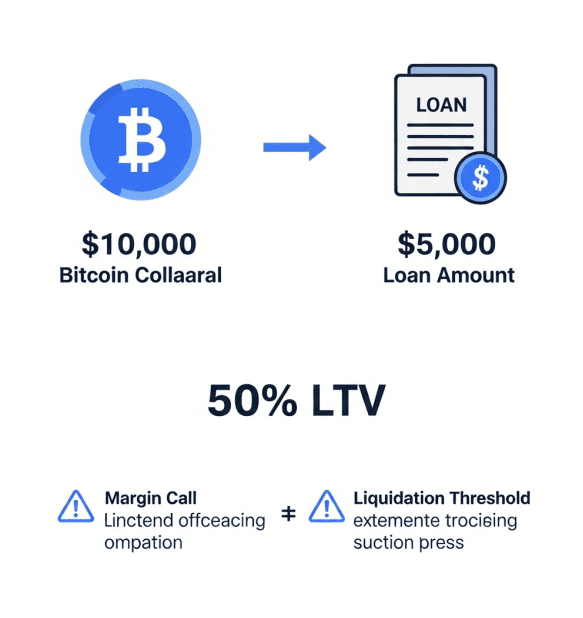
For example, depositing $10,000 worth of Bitcoin with a 50% LTV allows borrowing up to $5,000. This buffer helps protect lenders from volatility but introduces the possibility of margin calls if Bitcoin’s price decreases significantly.
If BTC’s value drops below the liquidation threshold—often around 70-80% LTV depending on the platform—you may be required to provide additional collateral or face automatic liquidation. The margin call mechanism protects both borrower and lender from excessive losses but requires active monitoring.
What Assets Can You Use as Crypto Collateral?
While Bitcoin remains the most common collateral asset for crypto lending, many platforms accept a broader range of cryptocurrencies, each with unique risk profiles:
- Bitcoin (BTC):The most liquid and widely accepted collateral with comparatively lower volatility.
- Ethereum (ETH):Also frequently accepted but with slightly higher price swings.
- Stablecoins (USDC, USDT, etc.):Due to their price stability, stablecoins are sometimes accepted to reduce liquidation risk, though they may come with lower loan values.
Volatility is a key consideration. High fluctuations in asset prices increase liquidation risk, so lenders typically adjust LTV limits accordingly. Experienced holders should carefully evaluate which assets best align with their risk tolerance and liquidity needs when borrowing against crypto.
How Interest Works in Crypto Loans
Interest rates on crypto backed loans can vary widely depending on the loan structure and market conditions:
- Fixed Interest Rates:Offer predictable repayment amounts over the loan term, allowing for easier budgeting and financial planning. These loans are suitable for borrowers prioritizing stability and certainty.
- Variable Interest Rates:These fluctuate with market dynamics and demand, often starting lower but carrying the risk of increases over time. Variable rates can be beneficial if market rates trend downward but require careful risk management.
Repayment flexibility also varies. Some lenders provide the option to repay early without penalties, while others impose fixed terms. Understanding these factors is essential for managing the total cost of borrowing strategically.
For those evaluating options, platforms like betterlending.net offer transparent terms and detailed insights into their crypto lending practices, making them a solid choice for borrowers seeking trustworthy bitcoin backed loans.
Fixed vs Flexible Crypto Loans Explained
When selecting a loan type, borrowers generally choose between fixed and flexible options, each with distinct advantages and drawbacks.
Fixed Loans:
- Set principal and interest over an agreed term.
- Best for borrowers with known repayment timelines or those wishing to hedge interest rate risk.
- Example: Using a bitcoin backed loan to finance a planned purchase or investment with a fixed timeline.
Flexible Loans:
- Allow for variable repayments and often have variable interest rates.
- Provide liquidity and adaptability but introduce uncertainty in total repayment cost.
- Example: Borrowers seeking ongoing access to funds without strict deadlines may prefer this option.
Choosing between fixed and flexible loans depends on your financial goals, market outlook, and tolerance for uncertainty.
Platforms offering crypto backed loans emphasize transparent processes and robust security measures. Reviewing their proof of payouts and security protocols can provide additional confidence in selecting a reliable lender.
In summary, borrowing against Bitcoin and other cryptocurrencies offers an effective avenue for experienced holders to access liquidity without sacrificing asset ownership. Understanding the loan process, LTV implications, acceptable collateral types, and interest structures enables informed decision-making that balances financial flexibility with risk management. Approaching crypto lending as a strategic financial tool rather than a quick fix ensures it complements your broader investment strategy with prudence and foresight.