
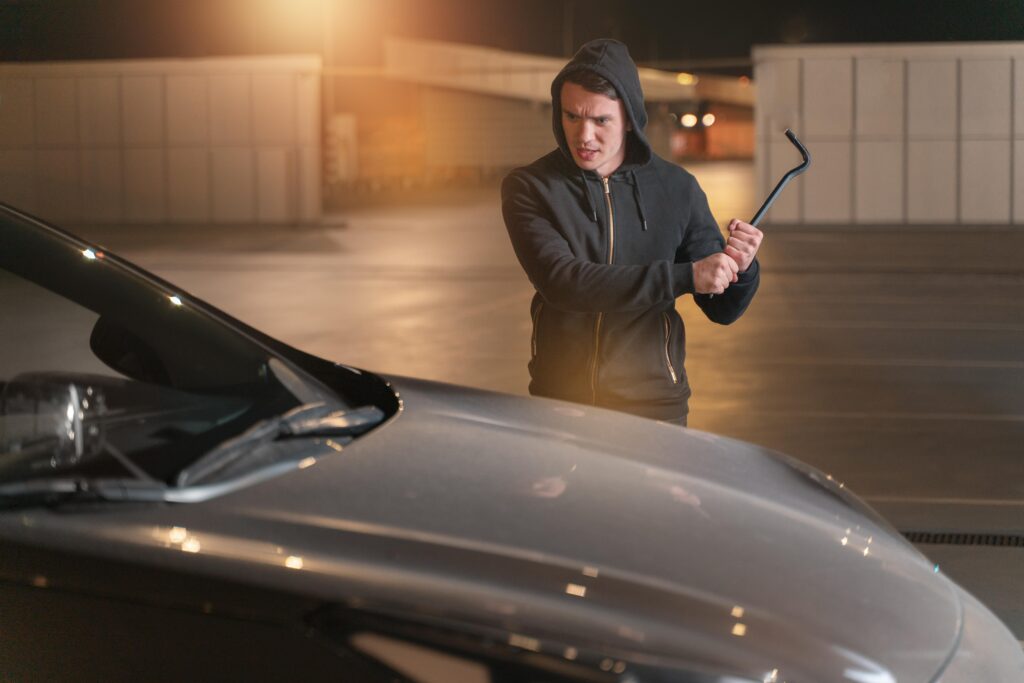
The National Insurance Crime Bureau’s 2025 vehicle theft analysis, released in March 2026, counted 659,880 vehicles stolen in the U.S. in 2025, a 23% drop from the year before. That’s genuinely good news. It’s also still roughly one vehicle every 48 seconds.
And for most drivers, the riskiest stretch of the day is the one they’re not around for. Overnight, cars sit for hours in driveways, streets, and parking lots with nobody watching, which is exactly the window thieves look for.
Many vehicle thefts aren’t high-tech heists; they’re crimes of opportunity. This guide covers why overnight parking is so risky, where and how to park, which anti-theft devices are worth it, how thieves target keyless cars and valuable parts, and what to do if the worst happens.
Why Are Vehicles Most at Risk When Parked Overnight?
Vehicles are most at risk overnight because thieves get darkness, quiet streets, and hours of uninterrupted time before anyone notices. A car taken at 2 a.m. may not be reported missing until the owner walks outside the next morning.
That delay matters. The longer it takes to report a theft, the more time thieves have to strip the car, switch plates, or move it out of the area.
Several overnight conditions work in a thief’s favor:
- Darkness hides faces, tools, and unusual activity
- Fewer witnesses on residential streets and in parking lots
- Predictable routines, since most cars sit in the same spot every night
- Owners asleep, so alarms and noises are easier to miss or ignore
The goal isn’t to make your car impossible to steal; it’s to make it harder and slower to steal than the one parked nearby. Every layer of protection adds time, noise, or risk that pushes a thief to move on.
How to Protect Your Vehicle From Theft With Smarter Parking
The easiest way to protect your vehicle from theft is to park where a thief would feel seen: inside a locked garage, or in a bright, busy, camera-covered spot. Location costs nothing and does a surprising amount of the work.
Use a Locked Garage Whenever Possible
A locked garage removes your car from view entirely. A thief can’t target a car they can’t see.
If your garage is full of storage, clearing space for the car is one of the best security upgrades you can make. Keep the garage door locked and the remote out of the car, since a stolen opener gives access to your home too.
Choose Bright, Visible Spots
When street or lot parking is your only option, look for spots under lights, near building entrances, or facing windows. Avoid dark corners, spots behind large vehicles, and areas hidden by hedges or walls.
In parking lots and garages, park close to attendant booths, elevators, or security cameras whenever you can.
Make Your Driveway Harder to Work In
Motion-activated lights over the driveway startle thieves and make them easier to spot. Outdoor security cameras pointed at where you park add another layer, especially if they send alerts to your phone or are monitored live.
When you have two cars, park the one that’s harder to steal behind the more vulnerable one, so it blocks the way out.
Which Anti-Theft Devices Actually Work?
The anti-theft devices that work best are the ones that either make a thief’s job visibly harder or help you recover the car fast. Combining one visible deterrent with one hidden protection covers both bases.
| Device | How it helps | Best for | Limitation |
| Steering wheel lock | Visible deterrent that slows thieves down | Older cars and street parking | Can be cut with enough time |
| Engine immobilizer | Stops the engine starting without the right key | Cars without factory immobilizers | Needs professional installation |
| GPS tracker | Helps police locate a stolen car | Recovery after theft | Doesn’t prevent the theft itself |
| Signal-blocking key pouch | Blocks key fob signals from relay attacks | Keyless entry vehicles | Only works if you use it every time |
| Kill switch | Cuts power to fuel or ignition | Frequently targeted models | Must be hidden well |
| Car alarm with alerts | Draws attention and notifies you | Driveways and nearby parking | Often ignored if it goes off often |
| VIN etching | Makes parts harder to resell | Cars and catalytic converters | Deters, but doesn’t stop, theft |
Layering is what makes the difference. A steering lock tells a thief to keep walking, while a hidden tracker or kill switch protects you if they don’t.
How Do Thieves Target Keyless and Newer Cars?
Thieves often target keyless and newer cars through electronic tricks, such as boosting the signal from a key fob inside your home, rather than by breaking windows. These methods can be quiet and quick, which makes overnight parking especially risky.
Relay Attacks
In a relay attack, one device picks up the signal from a key fob near your front door, and a second device near the car passes it along. The car thinks the key is right there, unlocks, and starts.
The fix is simple: keep key fobs in a signal-blocking pouch or metal box overnight, and store them away from doors and windows. Many cars also let you switch off the fob’s keyless feature in the settings or with a button sequence.
Diagnostic Port and Wiring Attacks
Some thieves access a car’s diagnostic port or wiring to program a new key or bypass the system. These attacks need physical access, so a car alarm, a steering lock, and a well-lit spot all help.
Keeping your car’s software up to date matters too. Manufacturers regularly release updates that close known security gaps, so check for recalls and updates with your dealer.
What Parts and Items Do Thieves Steal From Parked Cars?
Even when the whole car stays put, thieves often take catalytic converters, wheels, and anything valuable left inside. These thefts can be expensive to repair, and they’re easy to overlook when you plan your security.
Catalytic Converters
Catalytic converters contain precious metals, and a practiced thief with a battery-powered saw can remove one in minutes. Trucks, SUVs, and hybrids are frequent targets because they sit higher or have converters that are easier to reach.
Good catalytic converter theft prevention starts with parking: a garage, a well-lit driveway, or a spot where the underside is hard to reach. Beyond that, a few add-ons help:
- A metal shield or cage bolted over the converter
- Etching your VIN onto the converter so it’s harder to sell
- A car alarm set to detect tilting or vibration
Ask your mechanic which catalytic converter theft prevention option fits your model, since some shields work better on certain vehicles.
Wheels, Tires, and Accessories
Wheel locks with a unique key pattern make tires much harder to remove quickly. Roof racks, tailgates, and exterior accessories can be secured with locking hardware too.
Valuables Left Inside
Anything visible through the window is an invitation to smash it. Take bags, electronics, and chargers with you, or at least move them out of sight before you arrive, not after you park.
How Can You Build a Nightly Routine That Prevents Vehicle Theft?
A short nightly routine closes the gaps thieves rely on most, and it takes less than two minutes once it becomes a habit. Run through these steps every time you park for the night:
- Close every window and the sunroof. Even a small gap makes it easier to reach inside or tamper with the locks.
- Lock the doors and confirm it. Listen for the beep or check that the mirrors fold in, especially with keyless cars that lock automatically.
- Take everything valuable inside. Remove bags, electronics, garage openers, and spare keys from the car.
- Store your key fob safely. Put it in a signal-blocking pouch or metal box, away from the front door.
- Engage your visible deterrent. Put on the steering wheel lock or any other device you use.
- Check your lights and cameras. Make sure driveway lights work, and any cameras covering the car are online.
- Never leave the engine running unattended. Even a quick warm-up on a cold morning gives a thief an easy opportunity.
What’s the Most Effective Way to Protect Your Vehicle From Theft?
The most effective protection is making your car the harder target: thieves look for speed and low risk, so every layer that adds time, light, or noise sends them elsewhere. No single device stops everyone, but a combination usually does.
Start with what costs nothing: park in the safest spot available, lock up, and take your valuables and keys inside. Then add the layers that fit your car and neighborhood, such as a steering lock, a signal-blocking pouch, a shield for parts, and lighting or cameras over where you park.
A few minutes of habit each night is a small price compared with the cost, stress, and hassle of a stolen car.
Frequently Asked Questions
How can I protect my car from theft if I don’t have a garage?
Park in a well-lit, visible spot, ideally near windows, entrances, or security cameras. Add a visible steering wheel lock, keep valuables out of sight, and store your key fob in a signal-blocking pouch.
Do steering wheel locks really stop car thieves?
They don’t make theft impossible, but they make it slower and more visible. Many thieves will simply move on to a car without one.
How can I stop thieves from stealing my keyless car?
Keep your key fob in a signal-blocking pouch or metal box overnight and away from doors and windows. Check whether your car lets you turn off keyless entry, and keep its software updated.
What can I do to stop my catalytic converter from being stolen?
Park in a garage or well-lit area, and consider a metal shield, VIN etching, or a vibration-sensitive alarm. Ask your mechanic which catalytic converter theft prevention option suits your vehicle.
Will a GPS tracker help me get my stolen car back?
A GPS tracker can help police locate your car quickly, which improves the chance of recovery. It won’t prevent the theft, so pair it with visible deterrents.