
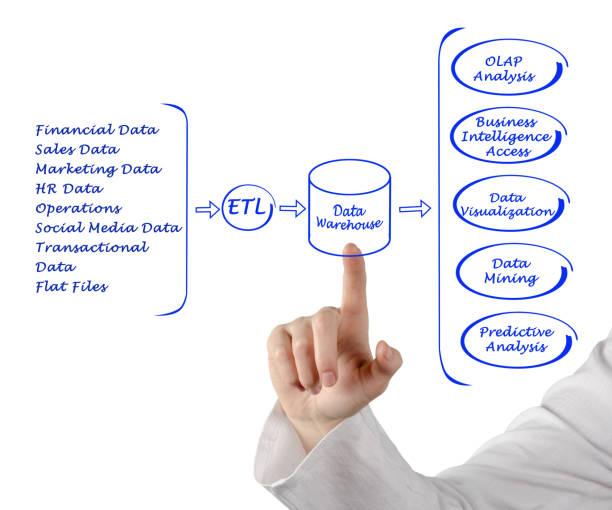
Most marketers deal with a growing stack of software and platforms.
Each produces valuable data, but it is rarely in the same structure, creating silos and making it difficult to collect everything together. Relying on manual data exports and creating messy spreadsheets ruins the value of real-time data analysis and delays decision-making.
Dealing with these obstacles is possible with the right tool, which is ETL (Extract, Load, Transform) software. Despite its reputation as a tech solution, ETL is available for marketers, helping them achieve streamlined data management and proactive analytics.
Let’s explore the benefits and how to choose a marketing ETL platform.
Benefits of Marketing ETL
Automating marketing data management and analytics with the help of ETL provides professionals with substantial benefits. When you adopt ETL, the impact is immediate:
- Time and resource savings: You’ll spend less time on manual exporting and spreadsheet maintenance and more time on analysis and strategy. This will also reduce dependency on the tech team to help with analytics flows.
- Automated data flows: You need to set everything once, and pipelines keep running without ongoing maintenance.
- Real-time data access: You don’t need to wait or request reports; you see what’s happening now.
- Improved accuracy: You eliminate error-prone manual data processing.
- Multi-channel data analysis: With automated flows, you can collect more data from various platforms, which is critical for campaign optimization, target audience understanding, and comprehensive marketing performance evaluation.
These benefits of ETL for marketing give you an opportunity to create a unified view of your marketing activities and improve business growth.
How to Choose ETL for Marketers?
Not all ETL solutions are created equal. Some are designed for enterprise IT teams, while others focus on marketing workflows.
Four simple evaluation factors can help you choose the most suitable ETL solution.
Data integrations
Does the ETL tool support the tools and platforms you have in your stack?
Make a list of platforms you use today and those you might add in the following months.
In most cases, your ETL tool should have integrations with:
- CRM: HubSpot, Pipedrive, GoHighLevel, etc.
- Ad platforms: Google Ads, Microsoft Ads, Facebook Ads, etc
- Social media: LinkedIn, Instagram, etc.
- SEO and web analytics tools: Google Analytics, Google Search Console, etc.
- Email software: Mailchimp, Klaviyo, etc.
Regarding destinations, Google Sheets, Microsoft Excel, Looker Studio, and Power BI would cover most of the needs. The more complete the coverage, the fewer workarounds you’ll need. But the factor of pricing remains.
Pricing
Some ETL providers charge per connector, others per row of data, and some per user.
Pricing can escalate quickly if your campaigns scale. Look closely at whether the tool’s pricing matches your growth model. A predictable cost model is better than hidden overages.
Focusing on solutions with free trials is a good option for testing the product.
Transformation capabilities
In the concept of ETL, there’s an integral part of the transformation functionality.
The real value comes when the ETL platform lets you clean, organize, filter, append, and blend it. Can you adjust namings, calculate metrics, or combine spend from different ad networks?
If not, you’ll end up doing the heavy lifting outside the ETL, which defeats the purpose.
Additional features
Many ETL tools go beyond integrations and offer extra features. While not essential, these can make life easier for teams without dedicated analysts.
Some of them, like built-in dashboards or reporting templates, may be good add-ons. Moreover, the AI features of data interpretation are valuable and growing trends. This way, you’ll have reporting and analysis features within one platform, saving resources.
The best solution is one that integrates smoothly into your existing stack without requiring constant babysitting.
Example of ETL for Marketers
Based on the factors above, an example of ETL for marketers is Coupler.io.
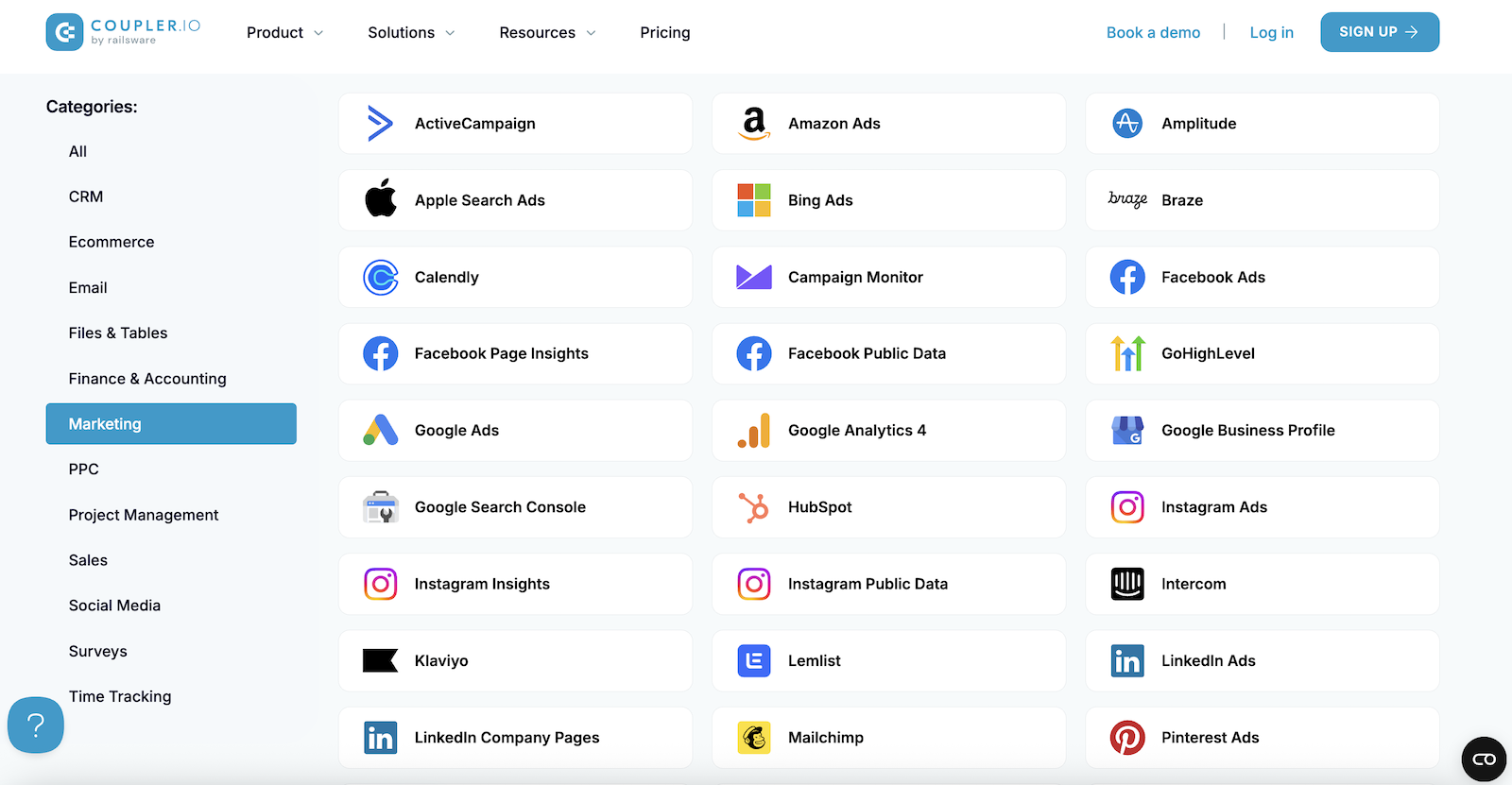
This platform provides over 100 integrations with popular marketing software and several transparent pricing plans for teams of various sizes. The transformation module includes data set templates and data modification functions, from filtering to blending.
Additionally, they provide an MCP Server to bring data into AI data destinations like Claude, ChatGPT, and similar to enable analytics via conversations. Dashboards for tracking ad campaigns and templates for other marketing analytics are available as well.
Final Words: Marketing Data Management with ETL
Marketing data will only get more fragmented. ETL provides a structured way to collect, clean, and prepare it for analysis.
By evaluating data sources, pricing, transformations, and extra features, you can find an ETL tool that speeds up reporting, sharpens insights, and makes decisions more reliable.