
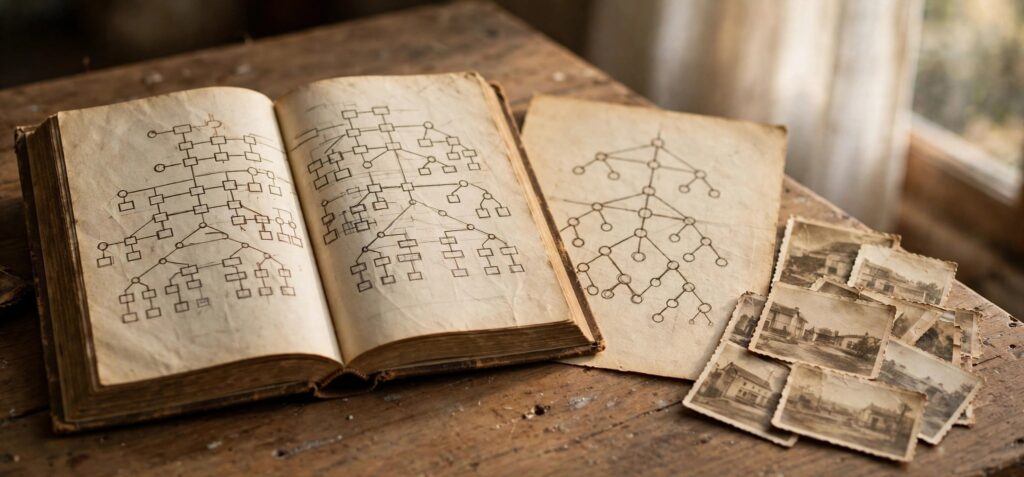
Every family, every tradition, and every generation has a tale to tell. However, there are very few among them who are able to find the right medium and the right audience to narrate those stories of family tradition. It is essential to note here that preserving these memories requires more than collecting old photographs and organizing family records. It involves turning scattered information into a meaningful story that future generations can understand and appreciate.
It is therefore an inevitable choice to look for a published genealogy book that can make this possible. It brings together historical records, personal memories, photographs, and family connections in one carefully organized collection. Choosing the right publishing partner, however, is an important part of the process. With several genealogy book publishers offering different services, understanding what to look for can help families make a confident decision.
1. Look for Experience in Family History Publishing
Not every book publisher understands the specific requirements of genealogy projects. Family history books often involve complicated family trees, historical documents, multiple generations, and stories that need careful verification.
Look for a publisher with experience handling genealogy and legacy projects. The right team should understand how to organize historical information, maintain consistency across family branches, and present research in a way that readers can follow.
Ask potential publishers about their previous family history projects and request examples of completed books. Reviewing their work can help you evaluate their storytelling approach, research quality, and overall presentation.
2. Evaluate Their Research and Fact-Checking Capabilities
Accuracy is essential when documenting family history. A small mistake in a name, date, location, or family relationship can create confusion for future generations.
Reliable genealogy book publishers should understand the importance of historical research and organized documentation. They should be able to work with different sources, including birth certificates, census records, immigration documents, photographs, newspaper archives, and family correspondence.
It is equally important to distinguish between verified historical information and personal recollections. When certain details cannot be confirmed, they should be presented carefully rather than treated as facts.
3. Choose a Publisher That Offers Professional Writing and Editing
Collecting historical information is only one part of creating a meaningful genealogy book. The information must also be presented in a clear and engaging narrative.
Some families have extensive research but struggle to turn it into readable content. Others have interesting stories but lack the time or writing experience to organize them.
A professional publishing team should offer services such as:
- Story development: Turning historical information and personal memories into a connected narrative.
- Interviewing: Gathering meaningful stories from relatives who can share firsthand experiences.
- Copyediting: Correcting grammar, spelling, and sentence structure.
- Substantive editing: Improving organization, clarity, and storytelling flow.
- Historical research: Exploring additional records to provide context and fill information gaps.
Before selecting a publisher, clarify which services are included in the package and which may involve additional costs.
4. Pay Attention to Book Design and Printing Quality
A family history book is often created to be preserved for decades. Therefore, its physical quality deserves as much attention as its written content.
Look for publishers who offer customized layouts, readable typography, attractive covers, and appropriate printing materials. The design should complement the family's history without making the pages difficult to read.
Photographs, handwritten letters, family trees, historical maps, and important documents can also make the book more meaningful. However, these elements should be carefully selected and arranged to support the narrative.
5. Consider Digital Publishing and Distribution Options
Families are often spread across different cities and countries. Producing printed copies for everyone may not always be practical.
Digital publishing provides another way to make family history accessible. An electronic version can be shared with relatives, preserved alongside digital archives, and accessed through compatible devices.
Some publishers also offer print-on-demand services, allowing families to order additional copies when needed rather than maintaining large quantities of printed books.
When comparing genealogy book publishers, ask whether they can provide both printed and digital editions. Also, clarify how files will be delivered, stored, and shared after publication.
6. Understand the Publishing Process and Costs
A genealogy book can involve months of research, writing, editing, and design. Choosing a publisher with a clear process helps prevent misunderstandings and keeps the project organized.
Before signing an agreement, discuss the following:
- Project timeline: How long will research, writing, editing, and printing take?
- Pricing structure: What services are included in the quoted cost?
- Revision policy: How many opportunities will you have to review and approve content?
- Communication: How frequently will you receive project updates?
- Ownership: Who retains the rights to the manuscript, photographs, and finished book?
A transparent publisher should explain these details before work begins. Requesting a written estimate and understanding the project milestones can help you plan accordingly.
Why Consider Legacy Books for Your Family History Project?
When evaluating publishing options, Legacy Books is a name worth exploring for families looking to create personalized family history books.
The company emphasizes a personalized approach rather than relying on identical templates for every project. Its team works with clients to understand their goals, organize available materials, and develop books that reflect the stories and experiences being preserved.
Legacy Books also offers different publishing possibilities, including printed books, digital editions, and print-on-demand arrangements. This range of services can be useful for families who want a professionally developed book without managing every stage independently.
Give Your Family History a Lasting Place
Preserving family history is an investment in future generations. A well-researched and thoughtfully designed book can help children, grandchildren, and relatives understand where their family came from and appreciate the experiences that shaped their heritage.
When comparing genealogy book publishers, prioritize research accuracy, professional storytelling, quality design, transparent pricing, and personalized support. Most importantly, choose a publishing partner that understands the importance of your family's story.