
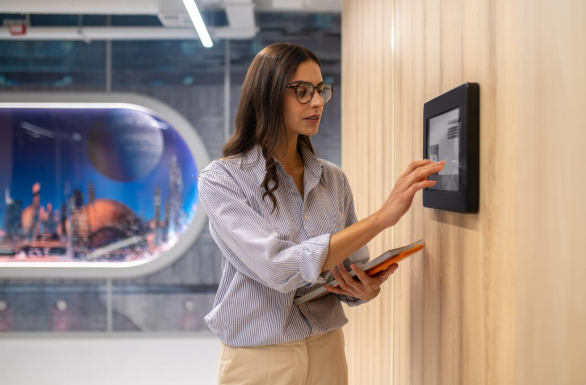
Business security has evolved far beyond traditional locks and keys. Today, organizations need smarter, faster, and more reliable ways to protect employees, assets, and sensitive information while ensuring only authorized individuals can access restricted areas.
This is why businesses across Dubai are increasingly investing in Biometric Access Control Systems. Unlike conventional access methods that rely on keys, PINs, or access cards alone, biometric authentication uses unique physical characteristics such as fingerprints or facial recognition to verify a person’s identity.
Whether you manage a corporate office, healthcare facility, educational institution, manufacturing plant, or government organization, choosing the right Biometric Access Control System Dubai solution can significantly improve workplace security while simplifying day-to-day operations.
In this guide, we’ll explain how biometric access control works, explore its key benefits, compare different authentication technologies, and help you choose the right solution for your business.
Key Takeaways
- Learn how biometric access control improves workplace security.
- Understand the differences between fingerprint, facial recognition, and RFID authentication.
- Discover how biometric systems integrate with access control, visitor management, and attendance solutions.
- Learn what to consider before choosing a system.
- Find out why businesses across Dubai are adopting biometric access technologies.
Why Traditional Access Control Methods Are No Longer Enough
Many businesses still rely on traditional access methods such as physical keys, PIN codes, or access cards.
While these methods remain useful in some environments, they present several challenges:
- Lost or stolen access cards
- Shared PIN codes
- Unauthorized access
- Manual user management
- Difficulty tracking entry and exit records
- Limited visibility into building activity
As organizations grow and security requirements become more demanding, these traditional methods often struggle to provide the level of control businesses need.
A Biometric Access Control System Dubai solution addresses these challenges by verifying identity using unique biological characteristics that cannot be easily shared, duplicated, or forgotten.
What Is a Biometric Access Control System?
A biometric access control system is a security solution that grants or denies access based on a person’s unique biological characteristics.
Instead of relying solely on cards or passwords, users authenticate themselves using technologies such as:
- Fingerprint recognition
- Facial recognition
- Iris recognition
- Palm recognition (where supported)
Once verified, the system automatically unlocks the authorized door while recording the event for future reporting and security audits.
Many organizations also integrate biometric authentication with their existing Access Control System to centralize employee identity management and improve workplace security across multiple locations.
How Biometric Access Control Works
Although the technology is sophisticated, the user experience is simple.
A typical workflow includes:
- An employee presents their fingerprint or face at the reader.
- The biometric template is securely compared with the enrolled credentials.
- The system verifies the identity.
- Access permissions are checked.
- The authorized door unlocks automatically.
- The event is recorded in the system dashboard.
This entire process typically takes only a few seconds while providing significantly greater security than traditional authentication methods.
Types of Biometric Authentication
Different businesses have different operational requirements. Understanding the available authentication methods helps organizations choose the most suitable solution.
Fingerprint Recognition
Fingerprint authentication remains one of the most widely used biometric technologies.
Benefits include:
- High accuracy
- Fast authentication
- Cost-effective implementation
- Proven reliability
- Easy enrollment
Fingerprint readers are commonly deployed in offices, factories, educational institutions, and healthcare facilities.
Facial Recognition
Facial recognition provides a contactless authentication experience.
It is particularly suitable for:
- Corporate offices
- Healthcare environments
- Government facilities
- High-security locations
- Smart buildings
Advantages include:
- Contactless authentication
- Faster user experience
- Improved hygiene
- Enhanced convenience
- High security
Modern facial recognition systems can accurately verify users even while wearing glasses or under varying lighting conditions, depending on the device capabilities.
RFID and Smart Card Authentication
While biometric authentication provides stronger identity verification, many organizations continue using RFID or smart cards alongside biometric readers.
RFID credentials remain valuable because they offer:
- Fast authentication
- Simple user management
- Flexible deployment
- Compatibility with existing infrastructure
Businesses often combine biometric verification with Access Card Readers to implement multi-factor authentication, providing an additional layer of security for sensitive areas.
Why Businesses Are Choosing Biometric Access Control
Organizations across Dubai are adopting biometric technologies because they solve many of the challenges associated with traditional access methods.
- Stronger Security
Unlike keys or access cards, biometric credentials are unique to each individual.
This makes unauthorized access significantly more difficult while improving overall workplace security.
- Eliminate Shared Credentials
Employees sometimes share access cards or PIN codes intentionally or accidentally.
Biometric authentication removes this risk because fingerprints and facial characteristics cannot be shared between users.
- Improve User Accountability
Every access event is linked directly to the individual who entered.
This creates reliable audit trails that support investigations, compliance requirements, and workplace security policies.
- Faster Employee Access
Modern biometric readers authenticate users within seconds.
This reduces congestion at entrances while improving employee convenience during busy periods.
- Centralized Security Management
Administrators can manage user permissions, access schedules, departments, and locations from a centralized platform.
This simplifies security administration for organizations operating multiple offices or facilities.
- Seamless Integration with Other Security Systems
One of the greatest advantages of a modern biometric solution is its ability to integrate with complementary workplace technologies.
For example, businesses can combine biometric authentication with a Time Attendance System in Dubai to eliminate duplicate employee registrations while automatically recording attendance data.
Similarly, integrating a Visitor Management System allows organizations to manage employees and visitors through a unified security platform, improving reception efficiency while maintaining strict access control.
Organizations that issue employee credentials can also integrate biometric authentication with secure ID card issuance, ensuring printed employee cards work seamlessly alongside biometric verification where dual authentication is required.
Biometric Access Control vs Traditional Access Methods
| Feature | Traditional Access | Biometric Access Control |
|---|---|---|
| Authentication | Keys, PINs, Cards | Fingerprint, Face, Biometrics |
| Lost Credentials | Common | Not Applicable |
| Shared Access | Possible | Virtually Impossible |
| Identity Verification | Limited | Highly Accurate |
| Audit Trail | Basic | Comprehensive |
| Security Level | Moderate | High |
| Administrative Effort | Higher | Lower |
| Scalability | Moderate | Excellent |
For organizations seeking stronger workplace security and improved operational efficiency, biometric access control offers clear advantages over conventional access methods.
Choosing the Right Biometric Access Control System for Your Business
Selecting the right biometric access control solution involves more than choosing a fingerprint reader or facial recognition device. Every organization has different security requirements, operational workflows, and future expansion plans.
Before investing in a system, consider the following factors.
Understand Your Security Requirements
Start by identifying the level of security your facility requires.
For example:
- Corporate offices may require secure employee authentication with scheduled access permissions.
- Healthcare facilities often need controlled access to laboratories, pharmacies, and patient records.
- Educational institutions must manage access for staff, students, and visitors.
- Manufacturing facilities require secure entry to production areas and warehouses.
- Government organizations may need multi-layer authentication for highly restricted zones.
Choosing the right solution begins with understanding which areas require different levels of access control.
Select the Right Authentication Technology
Different biometric technologies serve different business needs.
Fingerprint Recognition
Best suited for:
- Offices
- Schools
- Manufacturing
- Warehouses
Advantages:
- Cost-effective
- Highly accurate
- Quick authentication
- Easy enrollment
Facial Recognition
Ideal for:
- Corporate headquarters
- Healthcare facilities
- Government buildings
- Premium commercial properties
Advantages:
- Contactless verification
- Faster user experience
- Improved hygiene
- Enhanced convenience
Multi-Factor Authentication
Organizations protecting sensitive assets often combine biometric authentication with Access Card Readers or RFID credentials.
This layered approach significantly improves security by requiring more than one authentication method before granting access.
Consider Integration Capabilities
Modern security systems work best when they operate as a connected ecosystem rather than independent solutions.
Your biometric solution should integrate seamlessly with your existing:
- Access Control System
- Visitor Management System
- Time Attendance System
- CCTV monitoring
- Alarm systems
- Employee identity management platform
An integrated environment reduces administrative effort while providing centralized visibility across your entire security infrastructure.
Plan for Future Growth
Security requirements rarely remain the same.
As businesses expand, they often introduce:
- Additional office locations
- New departments
- More employees
- Higher visitor volumes
- Remote branch offices
Choosing a scalable biometric solution ensures your investment continues supporting your organization as it grows.
Cloud-enabled management platforms make it easier to administer users, permissions, and access policies across multiple facilities from a single dashboard.
Industries That Benefit Most from Biometric Access Control
Almost every industry benefits from stronger identity verification and controlled access.
Corporate Offices
Protect confidential business information while simplifying employee access and visitor management.
Healthcare
Secure sensitive areas such as laboratories, pharmacies, operating theatres, and medical record departments while maintaining strict access control.
Educational Institutions
Protect students, staff, research facilities, and administrative offices through centralized access management.
Manufacturing
Restrict access to production lines, hazardous areas, warehouses, and equipment rooms while maintaining complete access records.
Government Organizations
Strengthen physical security with highly accurate biometric authentication and comprehensive audit trails.
Financial Institutions
Protect sensitive customer information and secure restricted departments with enterprise-grade biometric authentication.
Hospitality
Manage employee-only zones, administration offices, storage facilities, and service entrances while maintaining a smooth experience for guests.
Common Mistakes Businesses Make When Implementing Access Control
Many organizations invest in new technology without fully evaluating their operational requirements.
Some of the most common mistakes include:
- Choosing solutions based only on price.
- Using standalone systems that cannot integrate with other security technologies.
- Failing to plan for future business growth.
- Ignoring visitor access management.
- Using outdated authentication technologies.
- Not defining user access levels properly.
- Delaying software updates and system maintenance.
- Overlooking employee training.
Avoiding these mistakes helps maximize the value of your investment while strengthening long-term security.
Why Businesses Across Dubai Choose BCFargo
Choosing the right Biometric Access Control System Dubai solution requires more than selecting hardware it requires an experienced technology partner that understands physical security, identity management, and system integration.
With more than 30 years of experience, BCFargo has been helping organizations across the UAE and the wider MENA region implement enterprise-grade identity and security solutions.
As a Platinum HID Distributor, BCFargo delivers technologies from globally recognized brands including HID, Suprema, Entrust, Zebra, Thales, and Vanderbilt by Acre, providing businesses with reliable and scalable access control solutions.
Our expertise includes:
- Biometric Access Control Systems
- Fingerprint Authentication
- Facial Recognition Solutions
- Access Card Readers
- Visitor Management Systems
- Time Attendance Solutions
- Mobile Identity Solutions
- Enterprise Identity Management
- Professional consultation
- System integration
- Ongoing technical support
Whether you’re upgrading an existing system or deploying biometric security for a new facility, BCFargo helps you implement a solution tailored to your operational and security requirements.
Frequently Asked Questions
What is a Biometric Access Control System?
A biometric access control system verifies a person’s identity using unique physical characteristics such as fingerprints or facial recognition before granting access to secured areas.
Is biometric access control more secure than traditional access cards?
Yes. Unlike keys, PINs, or access cards, biometric credentials cannot easily be shared, copied, or lost, making them one of the most secure authentication methods available.
Can biometric access control integrate with existing security systems?
Yes. Modern biometric solutions integrate with Access Control Systems, Visitor Management Systems, Time Attendance Systems, CCTV platforms, and identity management software to create a unified security ecosystem.
Which biometric technology is best for offices?
The ideal solution depends on operational requirements. Fingerprint authentication is cost-effective and highly accurate, while facial recognition offers fast, contactless authentication for modern workplaces.
Can biometric systems manage multiple office locations?
Yes. Many enterprise platforms support centralized management of users, permissions, and reports across multiple branches from a single interface.
How long does it take to implement a biometric access control system?
Implementation timelines vary depending on the size of the organization, number of access points, and integration requirements. Small offices can often be deployed quickly, while enterprise projects may require phased implementation.
Final Thoughts
As organizations continue to modernize their security infrastructure, biometric authentication has become an essential component of effective access control.
A well-designed Biometric Access Control System Dubai solution improves workplace security, eliminates many of the risks associated with traditional credentials, strengthens accountability, and provides organizations with greater control over who can access their facilities.
By selecting a scalable solution that integrates with visitor management, time attendance, and identity management technologies, businesses can build a secure, efficient, and future-ready workplace.
Ready to Strengthen Your Workplace Security?
If you’re planning to upgrade your existing access control system or implement a new biometric solution, BCFargo can help you choose the right technology for your organization’s unique requirements.
Our specialists work closely with businesses across the UAE to design and implement integrated security solutions that improve operational efficiency while protecting people, assets, and facilities.
Contact BCFargo today to discuss your security requirements and discover how a modern Biometric Access Control System can help create a smarter, safer, and more secure workplace.