
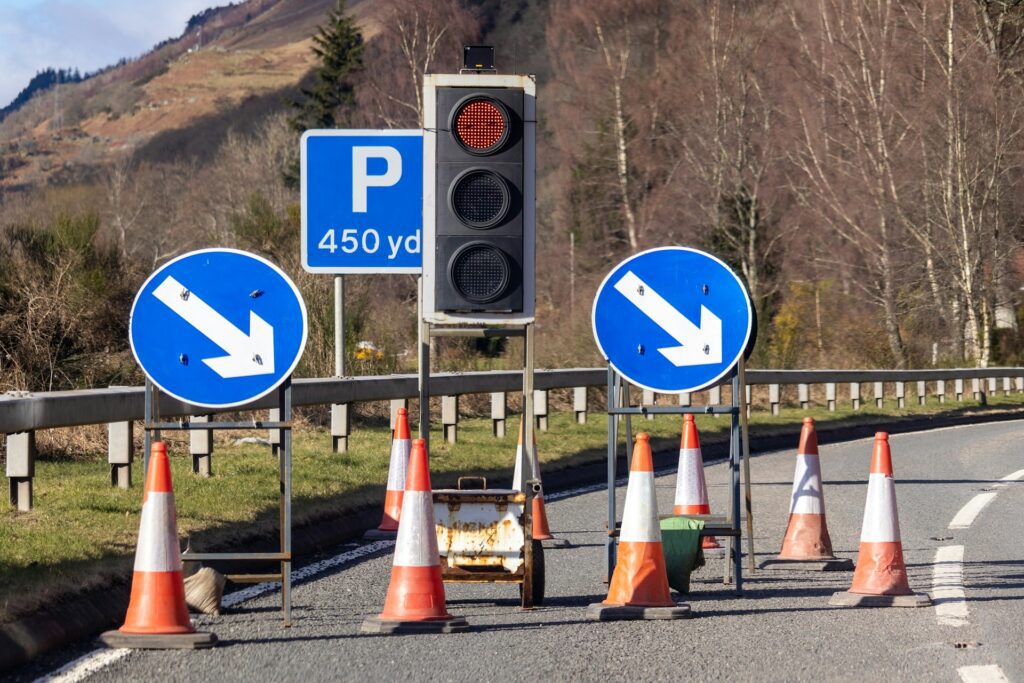
Technology is reshaping road safety and legal responsibility by converting roads, vehicles, and enforcement into a tightly connected, data‑rich ecosystem where crashes are anticipated, recorded, and analyzed in real time rather than treated as isolated events. This shift is forcing courts, regulators, and practitioners to rethink who owes what duty of care, how fault is allocated between humans and systems, and what “reasonable behavior” looks like in an era of automation, connectivity, and algorithmic decision‑making.
From Human Error To System-Centric Safety
For decades, the analysis of road safety has found that most serious crashes come down to human error: distraction, speeding, impairment and bad judgment. Technology isn’t just layering convenience on top of that; it’s actively erasing many opportunities for error, and by doing so dragging responsibility into questions of design and configuration around vehicles and infrastructure.
Modern vehicles now integrate:
- Advanced Driver Assistance Systems (ADAS) such as automatic emergency braking, lane‑keeping assist, adaptive cruise control, and blind‑spot monitoring that intervene before drivers react, cutting classic rear‑end collisions and lane‑departure crashes.
- Intelligent speed and distance control that helps keep vehicles within limits, maintain safe following gaps, and stabilize traffic flow, especially on high‑speed corridors.
- AI‑supported perception using cameras, radar, lidar, and sensor fusion to detect pedestrians, cyclists, and obstacles in low visibility or complex urban conditions, where human eyes and reaction times are weakest.
Each of those features alters the baseline legal question from “What did the driver do wrong?” to “Why did the system not stop this, based on what it could see and compute?” If a vehicle equipped with automatic emergency braking plows into a stationary vehicle, courts no longer focus solely on inattention by the driver; they investigate whether that system was designed, calibrated, maintained and updated at state of the art. As much code and sensors now carry the duty of care
Connected Vehicles, Smart Roads, And Shared Duties
The next layer of change comes from connectivity. Road safety is no longer just a function of each individual vehicle; it depends on how rapidly and reliably information moves through the network.
Key building blocks include:
- Vehicle‑to‑Vehicle (V2V) communication, where cars broadcast speed, position, and braking events to each other to enable earlier, automated collision avoidance.
- Vehicle‑to‑Infrastructure (V2I) links, where traffic signals, variable message signs, and roadside units talk directly with vehicles about signal phase and timing, temporary speed limits, or lane closures.
- Integrated traffic management platforms that ingest data from cameras, loop detectors, connected vehicles, and weather feeds to optimize signal timing, incident response, and rerouting at city or corridor scale.
In this environment, a crash can result not only from a driver’s misjudgment or a vehicle defect but also from a failure in communication: a broken roadside unit that never sent the lane‑closure message, a misconfigured signal that gave conflicting indications, or a backend algorithm that prioritized throughput over safety in a known blackspot. Responsibility becomes layered and systemic. Highway agencies, city traffic operations centers, telecom providers, navigation platforms, and software vendors all sit closer to the line of potential liability if their part of the chain contributed to a foreseeable risk.
Courts and insurers are beginning to treat this as a socio‑technical system: when a crash happens, the question becomes which combination of human, hardware, software, and network choices made it likely, and whose duties were triggered at each step.
Autonomous Vehicles And The Reallocation Of Fault
Autonomous vehicles (AVs) sharpen these issues by explicitly moving driving decisions from human reflexes to algorithms. Traditional negligence doctrines assume a human driver who perceives, decides, and acts. AVs fracture that assumption.
Several structural changes follow:
- Levels of automation define who is “in control.” At lower levels, the system merely assists; the human remains primary. At higher levels, the system is effectively the driver within its operational design domain, and the human is a fallback or even a passive passenger.
- When an AV operating within its intended domain crashes, legal analysis must dig into perception algorithms, path‑planning logic, training data, sensor placement, handling of edge cases, and transition‑of‑control design rather than simply asking whether the person in the driver’s seat was careless.
- Product liability and software‑centric responsibility come to the foreground. Fault may lie with a defective perception module, a poorly validated over‑the‑air update, an inadequate warning architecture, or a failure to restrict automated operation in conditions the system cannot safely handle.
Insurance is already adapting. Instead of treating every crash primarily as a matter of individual driver negligence, policies are moving toward manufacturer‑backed, fleet‑based, or operator‑centric coverage in which companies that design, deploy, and maintain automated driving stacks bear a larger share of the risk. For practitioners, that means accident reconstruction increasingly leans on log files, simulation, and expert testimony on AI behavior rather than only skid marks and witness statements.
Data, Evidence, And The New Litigation Toolkit
Technology’s most under‑appreciated effect on road safety and legal responsibility is the explosion of machine‑generated evidence. Modern crashes are surrounded by a halo of data before, during, and after impact.
Common sources include:
- Event Data Recorders (EDRs) and telemetry logs capturing speed, brake application, steering angle, seatbelt use, and system warnings over the final seconds and minutes.
- Dashcams, in‑cabin cameras, and external CCTV providing visual documentation of behavior, environment, and potential impairments such as distraction or intoxication.
- Smartphone location traces, navigation routes, and usage logs that can reveal aggressive driving patterns, handheld phone use, or last‑minute rerouting decisions.
- Backend infrastructure logs showing signal states, queue lengths, traffic control decisions, and prior incidents at the same location.
For litigators, this data reshapes discovery strategy and causation analysis. It can corroborate or contradict eyewitness accounts, show whether ADAS emitted a warning the driver ignored, or prove that a signal was green when a driver entered an intersection. It can also reveal long‑standing hazardous patterns a road authority failed to address, opening the door to claims based on systemic negligence.
At the same time, this datafication raises significant privacy and cybersecurity obligations. Operators and manufacturers must define who owns vehicle data, who can access it after a crash, how long it is retained, and how it is protected from unauthorized use. Failures here can generate separate liability independent of the underlying collision.
Enforcement Technology, Impaired Driving, And Defensive Lawyering
Enforcement has evolved with the same technological intensity. Police and regulators now rely on an arsenal of tools that both strengthen road safety and complicate the legal terrain.
Common technologies include:
- Automated license plate readers and speed cameras generating high‑volume, time‑stamped violation records.
- Roadside breath‑testing devices, field sobriety screening tools, and body‑worn cameras documenting DWI stops, tests, and officer‑driver interactions.
- Patrol‑vehicle dashcams and in‑car telematics feeding objective evidence into DWI and serious‑injury prosecutions.
For drivers facing impaired‑driving charges, these technologies cut both ways. They provide detailed factual records that can support prosecution, but they also create multiple technical attack surfaces: calibration of devices, adherence to testing protocols, timing and chain of custody of digital evidence, and correct interpretation of sensor‑based metrics.
In practice, this means that legal defense in impaired‑driving cases is increasingly a hybrid of criminal procedure, traffic law, and digital forensics. For example, a driver in New Hampshire charged with an alcohol‑related offense after an incident captured on dashcam and breath‑testing equipment may need counsel who can scrutinize both the human and technical aspects of the stop. In such situations, working with an experienced New Hampshire DUI attorney can be critical to evaluating device reliability, challenging the admissibility of digital records, and assessing whether enforcement technology was deployed in compliance with statutory and constitutional standards. By anchoring the defense strategy in a precise understanding of how the technology works, where it can fail, and how that intersects with DWI law, counsel can often uncover issues that would be invisible in a purely human‑witness case.
Regulation, Standards, And Emerging Duties Of Care
Lawmakers and regulators are steadily aligning legal expectations with technological capabilities. The key trend is that “reasonable safety” is no longer defined purely by traditional mechanical maintenance and basic compliance; it now includes reasonable deployment and configuration of available safety technologies.
This evolution appears in:
- Mandates that certain safety features be standard on new vehicles once they reach maturity, shifting them from optional extras to baseline obligations.
- Rules that treat vehicles, infrastructure, and control centers as an integrated system, allocating responsibilities across road authorities, manufacturers, and service providers for functions such as automated emergency braking, traffic management, and secure V2X communication.
- Development of technical standards for communication protocols, data formats, cybersecurity practices, human‑machine interfaces, and over‑the‑air updates so that systems remain interoperable, auditable, and safe over the lifecycle of vehicles and infrastructure.
Regulators are also grappling with ethics in automation. Questions about how algorithms should behave in unavoidable crashes, how transparent decision logic must be, and whether certain risk trade‑offs are acceptable are increasingly treated as regulatory issues rather than purely academic debates. The answers will define not just liability after events but the contours of what systems are allowed to be deployed in the first place.
Changing Responsibilities For Everyday Road Users
For ordinary drivers and road users, AI & technology does not eliminate responsibility; it refines it. The law is starting to expect that people:
- Understand at least the basic capabilities and limitations of ADAS and automation in their vehicles, including when supervision is mandatory and when hands‑off operation is prohibited.
- Use available safety features reasonably, such as keeping systems enabled unless there is a legitimate reason to disable them and following clear on‑screen safety prompts.
- React appropriately to system warnings and handover requests, rather than treating automation as a license to disengage from the driving task.
Similarly, pedestrians, cyclists, and micromobility users are interacting with geofenced zones, connected crosswalks, and digital signaling that create a parallel layer of “rules of the road” enforced not just by police but by automated infrastructure. As these systems mature, courts will increasingly examine what a reasonable user should have understood from digital cues (for example, smartphone alerts or signal indicators) alongside traditional signage and markings.
Practical Takeaways For Legal And Safety Professionals
For professionals operating in this space, several patterns are clear:
- Accident investigation is becoming more technical, requiring fluency in vehicle data logs, communication traces, and software updates alongside classical reconstruction.
- Liability is diffusing from individual drivers to a wider constellation of actors, including OEMs, suppliers, software vendors, connectivity providers, and road authorities.
- Proactive design, validation, and governance of safety technologies are turning into core risk‑management tools; a failure to adopt or properly configure mature safety features can itself be framed as negligence.
- Defense and prosecution strategies must explicitly address how technologies behaved before and during an incident and whether that behavior met evolving regulatory and industry standards.
In other words, technology is not simply reducing crash counts; it is redrawing the map of legal responsibility around the entire road transport ecosystem. For anyone involved in road safety, law, or enforcement, staying ahead of that curve is rapidly becoming a professional survival skill.
Previously in Technology: Abandoned Cart Emails That Get Opened: The Authentication Angle No One Talks About