
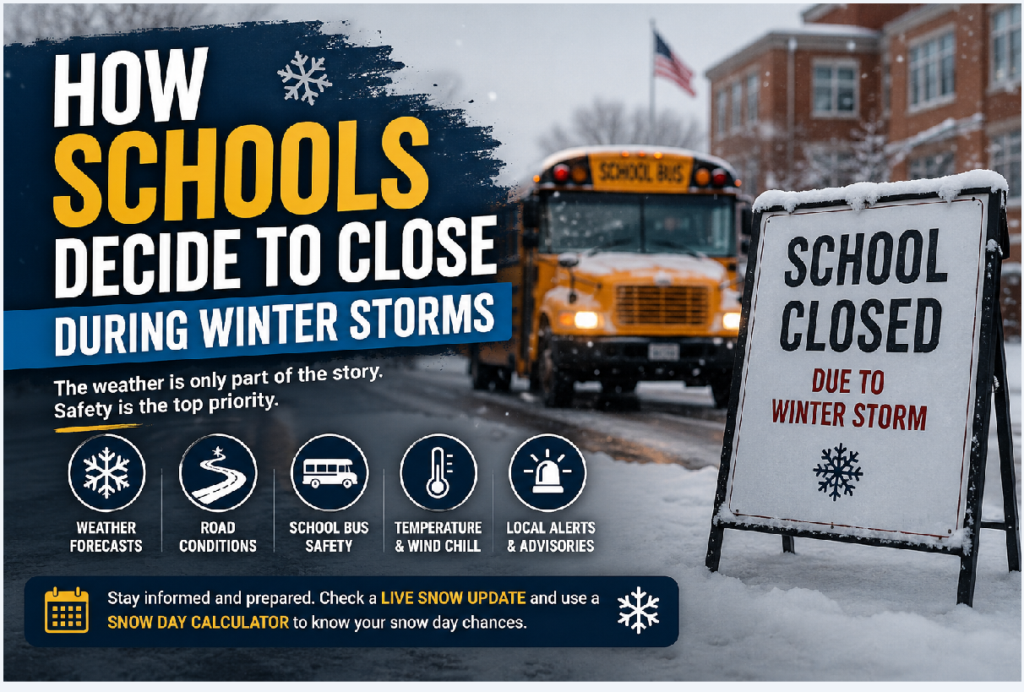
Winter storms can turn a normal school day into a safety concern within hours. Heavy snowfall, freezing rain, black ice, and poor visibility all create risks for students, school buses, and staff.
While many people assume schools close only because of heavy snow, the decision is actually based on several factors. School districts work closely with weather experts, transportation officials, and emergency services before making a final call.
This guide explains how those decisions are made and what families should expect during severe winter weather.
Why School Closures Are Necessary
The main goal of every school district is to protect students and staff. Even a moderate winter storm can make roads dangerous, especially during the early morning commute.
School officials consider whether students can travel safely rather than simply measuring snowfall totals.
Some of the biggest concerns include:
- Snow-covered roads
- Black ice on streets and sidewalks
- Poor visibility from blowing snow
- Extremely low temperatures
- Unsafe conditions for school buses
- Delays in emergency response if accidents occur
A closure is often made to reduce these risks before they become serious.
Weather Conditions Schools Monitor
Snowfall Amount
Snow accumulation is one of the first things schools monitor. However, the total amount of snow isn’t the only factor.
For example:
- 2–3 inches may close schools in areas that rarely receive
- Northern regions may remain open after 6 inches because they have better snow removal equipment.
Local conditions always matter more than national averages.
Ice and Freezing Rain
Ice is often more dangerous than snow.
A thin layer of freezing rain can make roads extremely slippery, increasing the risk of vehicle accidents and falls.
Because ice is difficult to remove quickly, many districts choose to delay or cancel classes even when snowfall is limited.
Wind and Visibility
Strong winds can reduce visibility to just a few metres during heavy snowfall. Officials monitor:
- Wind speed
- Blowing snow
- Whiteout conditions
- Travel advisories
If drivers cannot safely see the road, transportation becomes a major concern.
Extreme Cold
Very low temperatures can also affect school operations.
Children waiting at bus stops for extended periods may face health risks when temperatures drop well below freezing, especially with strong wind chills.
Road Conditions Matter as Much as Weather
Weather forecasts provide only part of the picture.
School administrators also review current road conditions before making a decision. They often receive updates from:
- Road maintenance departments
- Transportation officials
- Local police
- Emergency management agencies
Even if snowfall has stopped, untreated roads may still be unsafe for buses and parents.
School Bus Safety Is a Top Priority
School buses travel hundreds of miles every day across neighbourhood streets, highways, and rural roads.
Officials carefully evaluate whether buses can operate safely before approving transportation.
Some common concerns include:
- Icy intersections
- Snow-covered rural roads
- Limited visibility
- Delayed braking distances
- Blocked bus stops
If buses cannot complete routes safely, schools are much more likely to cancel classes.
How Weather Forecasts Support Decisions
Modern forecasting technology gives schools much more information than they had in the past.
Instead of relying on a single prediction, districts review multiple weather models and monitor changing conditions throughout the day.
Many parents also check a snow day calculator to estimate the likelihood of a school closure before any official announcement. While these tools are not official sources, they can help families understand how forecast conditions may affect the next school day.
Forecasts continue to update as new weather data becomes available, so decisions may change overnight.
Why Closure Decisions Vary Between School Districts
Two neighbouring districts can experience the same storm but make different decisions. Several local factors influence the outcome, including:
- Available snow removal equipment
- Road maintenance speed
- Number of rural bus routes
- Local geography
- Previous weather impacts
- Community infrastructure
Because every district faces different challenges, there is no universal snowfall threshold for closing schools.
How Parents Can Stay Prepared
Winter weather can change quickly, making preparation important for every family. Here are a few simple ways to stay informed:
- Check official school announcements
- Monitor local weather
- Follow emergency alerts from your
- Prepare an alternative childcare plan if
- Keep emergency supplies available at
- Watch a reliable live snow update before the morning commute to understand changing weather conditions.
Planning ahead helps reduce stress when unexpected closures occur.
Final Thoughts
School closure decisions involve much more than watching snow fall outside. District leaders evaluate weather forecasts, road conditions, transportation safety, visibility, temperatures, and advice from local authorities before deciding whether students can safely attend school.
Although every winter storm is different, the goal remains the same: protecting students, staff, and families. Understanding the process behind these decisions can help parents prepare more confidently whenever severe winter weather is in the forecast.