
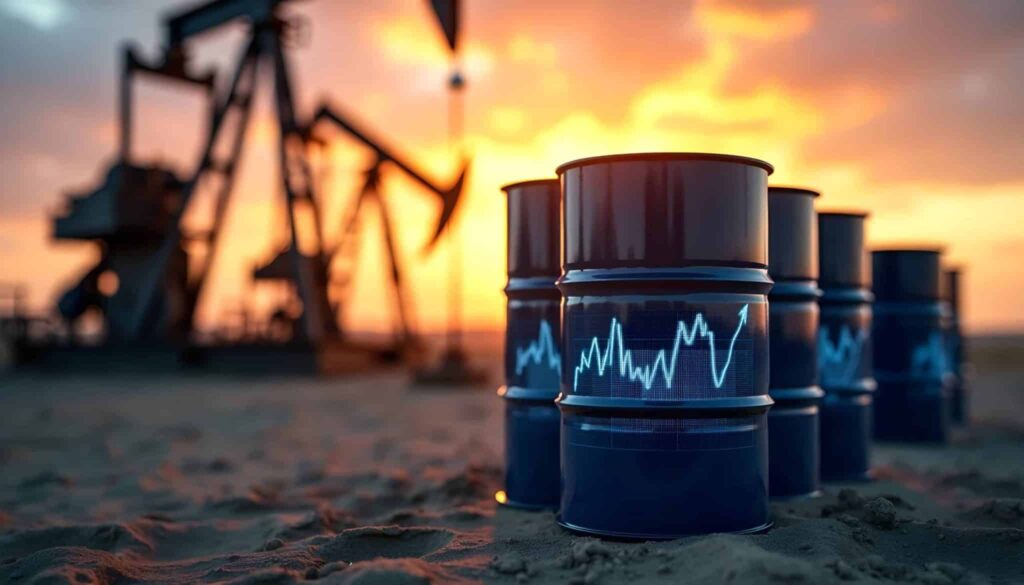
Few prices travel as far as the price of crude oil. It shows up most visibly at the fuel pump, but it is also embedded in the cost of groceries, airline tickets, delivery fees, building materials and the plastic packaging around almost everything we buy. When oil moves sharply, the effect spreads through the economy in waves, some fast and some slow. Understanding that sequence helps explain why inflation can stay stubborn long after oil itself has calmed down.
Why one commodity reaches so far
Oil is both an energy source and a raw material. It powers ships, trucks and aircraft, and it is refined into diesel, jet fuel, lubricants and the petrochemical feedstocks that become plastics, fertilisers and synthetic fibres. Because it sits at the start of so many supply chains, a change in its price becomes a change in costs for thousands of businesses at once. Each of them decides how much of that change to absorb and how much to pass on, which is why the final effect on consumer prices is spread out over months rather than days.
Benchmarks and the price you actually pay
The prices quoted in the news usually refer to benchmarks such as Brent or West Texas Intermediate, which are traded on futures exchanges and reflect the value of specific grades of crude delivered at specific locations. What households pay for fuel is several steps removed from that number. Crude has to be shipped, refined, stored, distributed and taxed, and refining margins can swing independently of crude prices, particularly when refinery capacity is tight. That is why petrol and diesel prices sometimes rise even when crude is falling, and why diesel in particular can become expensive during periods of strong freight demand.
Transport, food and the long tail of plastics
The first ripple reaches transport. Freight companies, airlines and delivery services count fuel among their largest costs, and many add fuel surcharges that adjust automatically. Those surcharges then reach the shelf price of goods that have been shipped, which in a global economy means nearly all of them.
Food is the next link. Modern agriculture relies on diesel for machinery, on natural gas and oil derivatives for fertiliser, and on refrigerated transport to move produce. A sustained rise in energy costs therefore tends to appear in food prices with a lag, sometimes after a full growing season.
The longest tail runs through manufactured goods. Plastics, packaging, paints, synthetic textiles and many chemicals are derived from oil and gas. Their prices adjust slowly, often when supply contracts are renewed, so the effect of an oil price spike can still be working through these products many months later.
Why prices rise faster than they fall
Drivers often notice that fuel prices seem to climb quickly when oil rises but drift down slowly when it falls. Economists have studied this pattern for decades. Part of the explanation lies in inventories bought at older prices, part in retailers waiting for competitors to cut first, and part in the way refiners and distributors rebuild margins after a squeeze. Whatever the mix, the asymmetry means that a temporary jump in oil can leave a more lasting mark on household budgets than the chart of crude alone would suggest.
Currency, taxes and the local story
Because oil is traded in US dollars, the local currency matters a great deal. A country whose currency weakens against the dollar can see fuel costs rise even if global oil prices are unchanged. Fuel taxes also differ widely between countries; where taxes make up a large fixed share of the pump price, swings in crude translate into smaller percentage changes for drivers. Governments sometimes adjust those taxes or offer subsidies during price spikes, which can delay the effect rather than remove it.
Watching the right signals
For anyone trying to anticipate the next shift in living costs, the signals worth watching sit upstream: production decisions by major exporters, inventory reports, refinery outages and shipping disruptions on key routes. Readers who follow commodity price forecasts will notice that energy analysts spend as much time on these supply details as on headline prices, because they show where costs are heading before they reach the shop floor.
The broader point is that oil is less a single price than a current running through the economy. When it surges, the effect does not end at the pump; it reappears months later in the cost of a grocery basket, a plane ticket or a parcel delivery. Seeing those links makes inflation data easier to read and household budgets easier to plan.