
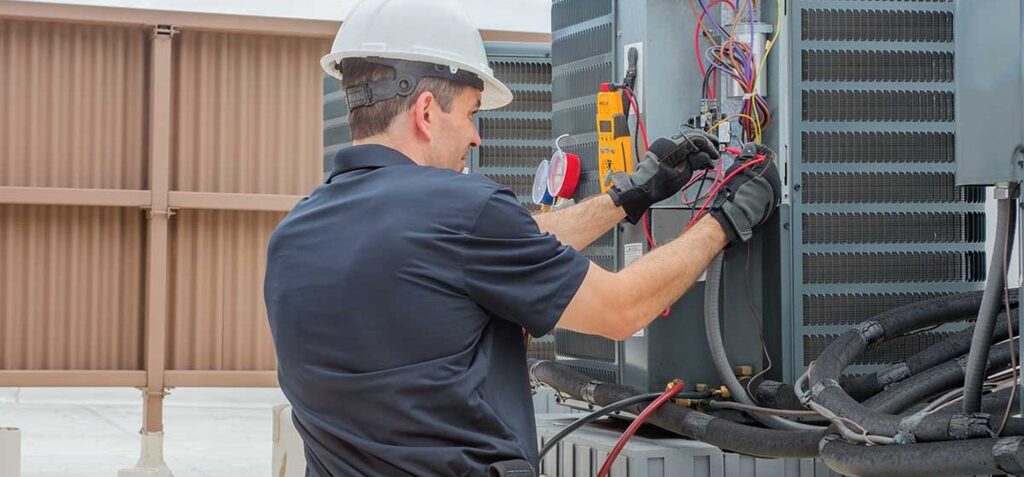
Most homeowners change the air filter when they remember it. In a lot of Astoria basements that means once a year, usually after the furnace starts making noise. The filter protects the blower motor and the evaporator coil. It also controls airflow through the entire duct system. A clogged furnace filter costs more in energy and repair bills than a decade of fresh filters would, and the techs at Queens HVAC Co pull enough of them out of return ducts to know. Here is a straight answer on replacement schedules, MERV ratings, and what actually happens inside the air handler when the filter stays in too long.
The Short Answer on Air Filter Replacement
A standard 1-inch pleated filter needs replacement every 60 to 90 days. A 4-inch or 5-inch media filter lasts 6 to 12 months. Fiberglass filters, the cheap blue ones from the hardware store on Steinway, go 30 days at most. Those numbers assume average conditions. A two-family home with two dogs and a cat is not average. Neither is a kitchen renovation. Drywall dust loads a pleated filter in a week. Check the filter monthly during heating season. Hold it up to the basement light bulb. If no light passes through the pleats, replace it. If the cardboard frame has bowed into the return duct, the static pressure already climbed past where the blower likes it. That bowing is the filter telling you it stayed in a month too long.
What a Dirty Furnace Filter Does to Airflow
Airflow drives every part of a forced-air HVAC system. The blower pulls return air through the filter and pushes it across the heat exchanger in winter or the evaporator coil in summer. A loaded filter raises static pressure in the ductwork. The blower motor fights that resistance. A PSC blower motor just moves less air and runs hot. An ECM motor ramps up to hold its airflow target, and the Con Ed bill shows it. Less air across the heat exchanger means the furnace overheats. The high limit switch opens, the gas valve closes, and the blower keeps running with cool air coming out of the registers. Jackson Heights produces a lot of those calls every January. The homeowner assumes the furnace died and the filter is solid gray. In cooling season the same restriction drops the evaporator coil temperature below freezing. Ice builds on the coil, liquid refrigerant floods back toward the compressor, and the repair involves a lot more than a filter.
What MERV Rating Should a Home Furnace Filter Be
MERV ratings for residential filters run from 1 to 16. MERV 8 catches dust, pollen, and pet dander. MERV 11 adds finer particles like mold spores. MERV 13 catches smoke and some bacteria. Every step up adds resistance. A MERV 13 filter in a 1-inch slot on a 20-year-old furnace with a PSC blower chokes the system. That furnace was engineered around a filter with far less pressure drop. Older ductwork in Queens row houses often has undersized returns already, sometimes a single return grille in a first-floor hallway feeding the whole house. Add a dense filter and the static pressure problem compounds. Anyone who wants MERV 13 filtration for allergies or wildfire smoke should have a media cabinet installed with a 4-inch or 5-inch filter. The thicker filter has several times the surface area, so the pressure drop stays low even at a high MERV.
Air Filter Replacement Schedule by Home Type
Single occupant, no pets, filter in a dry basement: every 90 days on a 1-inch pleated filter. Family of four with a dog: every 45 to 60 days. Anyone with asthma or allergies in the house: every 30 to 45 days, and look at a media filter upgrade. Home near a construction site or a truck route like Northern Boulevard: every 30 days during the project or the dry months. A rental unit where the tenant never goes near the furnace: install a media cabinet and have it swapped twice a year at the tune-up. Landlords in Astoria and Long Island City skip this step and then pay for blower motors. A second-floor system that only runs part of the year follows runtime hours rather than calendar months, and 1,500 to 2,000 blower hours is a reasonable change point for a 1-inch filter.
Signs Your HVAC Filter Is Clogged
Weak airflow at the supply registers comes first. Rooms farthest from the air handler go cold before the others. The furnace runs longer cycles and the thermostat takes forever to satisfy. Dust collects on the return grille and on furniture faster than usual. The furnace cabinet pulls air in around the door seams and leaves dark streaks on the sheet metal. On a high-efficiency condensing furnace, a restricted filter can trip the pressure switch and the control board flashes a fault code. If the evaporator coil froze during a summer cycle, water drips inside the air handler after shutdown and sometimes overflows the drain pan onto the basement floor. Any of these point to the filter. Pull it and look before anyone quotes a repair.
Take a Woodside homeowner whose furnace short cycles every few minutes in December. The filter has been in since the previous owner closed on the house. A fresh filter stops the limit switch trips on the spot, and that exact scenario repeats a few times every heating season across the borough. Airflow problems are not always that simple, undersized returns and crushed flex duct need real ductwork repair, but the filter is where the diagnosis begins. Keep a stack of filters next to the furnace. Write the install date on the cardboard frame in marker. Then check it when the Con Ed bill comes.
Queens HVAC Co
32-07 30th Ave., Astoria, NY 11102
(929) 702-2132
NY
11102