
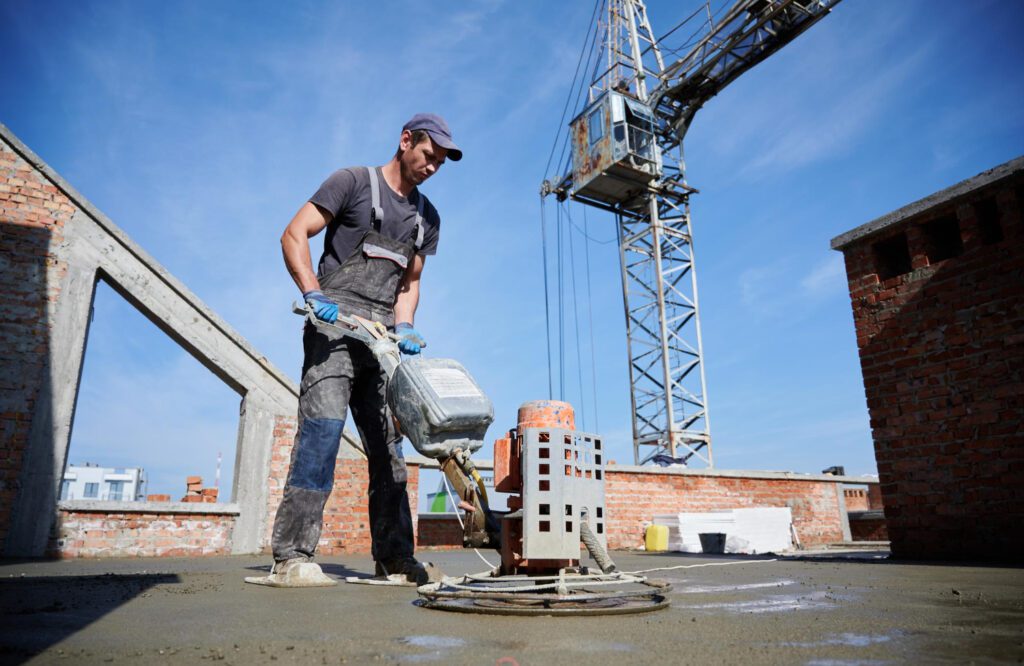
The old image of a tradesperson with a bottle jack under your house is becoming a relic. Foundation repair has evolved into a precision engineering discipline powered by data and measurement rather than instinct.
If you think restumping still means blocking and propping, you are missing a transformation that delivers stronger, faster, and more predictable results.
Technology has replaced guesswork with scientific accuracy, and here is how modern innovations are redefining every stage of the process.
Spot Early Movement With Sensors
IoT sensors enable real-time structural health evaluation and monitor multiple parameters with data stored on cloud platforms. These devices attach to stumps and track tilt, vibration, and moisture changes continuously.
By combining industrial IoT sensors with advanced analytics, organizations shift from reactive repairs to proactive maintenance strategies. You receive smartphone alerts the moment unusual movement begins.
Predictive Data Saves Money
Vibration sensors detect changes in patterns that signal bearing wear or misalignment, with even subtle shifts indicating developing problems weeks before they become critical.
Most people only call when doors jam or floors sag. IoT sensors allow predictive maintenance by constantly tracking equipment health, preventing unplanned malfunctions and lowering long-term operating expenses.
Fixing a minor settlement issue now costs hundreds, not tens of thousands later when plumbing lines fracture.
Map Floor Levels With LiDAR
3D laser scanners capture highly accurate representations in three-dimensional coordinates as point clouds, positioned on tripods around the perimeter without interfering with work.
Traditional water levels take hours and miss subtle deviations. The advent of 3D laser scanning allows contractors to easily identify issues and reduce errors with millimeter-accurate data.
You get color-coded heat maps showing stress patterns across the entire floor plate in minutes.
- Millions of Data Points: High-resolution LiDAR scanners collect millions of data points representing the floor’s geometry with millimeter accuracy.
- Rapid Acquisition: Manual methods requiring grid creation and measurements every foot are labor intensive, while scanning completes entire surveys quickly.
- Historical Comparisons: Overlaying new scans on previous ones proves exactly how much movement occurred over time.
- CAD Integration: Point cloud data generates architectural drawings, elevation views, color maps, and 3D models for contractors.
- Verification Standards: Detailed information about existing conditions is documented accurate to within millimeters, with 2D and 3D models created to design correction plans.
This level of documentation removes doubt from every diagnosis. If your contractor cannot show you a detailed scan, they are estimating rather than measuring.
Lift Evenly Using Synchronized Hydraulics
Synchronized jacking systems precisely control multiple hydraulic jacks simultaneously to realize movement and positioning of large structures with advantages of high precision and controllability.
Old methods cranked one jack at a time, creating uneven pressure that cracks cornices and twists frames. Imagine three people lifting a piano without counting to three together. The structure suffers instantly from that imbalance.
Computer-Controlled Precision
Synchronized hydraulic jacking systems lift any heavy structure with all points lifting simultaneously through calculations by a central computer, reducing the risk of bending or tilting.
Synchronous lifting pumps utilize high-pressure hydraulics and PLC controls for centralized monitoring, achieving 0.040-inch accuracy between lifting points.
Companies like Geotech Built understand this synchronization protects heritage homes with fragile lath and plaster walls. The structure moves as one unit without racking forces.
Choose Stump Depth Using Soil Models
Digging until it “feels right” is negligent. Accuracy can be affected by various factors including equipment quality, environmental conditions, and altitude from which the scan is conducted.
Soil conditions change drastically within a single property, requiring sophisticated analysis. Digital penetrometers measure resistance at exact depths, telling you precisely where load-bearing ground begins.
- Resistance Measurement: Tools determine exactly where hard ground capable of supporting loads starts.
- Moisture Mapping: Three-dimensional moisture content mapping identifies reactive clay zones that swell and shrink.
- Shear Strength Data: Models calculate exactly how much weight the soil can hold, dictating precise footing size.
- Settlement Prediction: Algorithms simulate how soil will compress over ten years, allowing design to counteract predicted movement.
- Cost Optimization: You pour exactly what engineering models require, not arbitrary amounts.
When you rely on data rather than intuition, your project gains mathematical certainty that prevents future sinking. Soil analysis is not optional for quality work.
Relevel Fast With Adjustable Steel
Concrete stumps were the standard for decades. However, they are heavy, brittle, and difficult to adjust once installed.
If ground moves again, releveling a concrete stump involves digging it out in a labor-intensive process. Adjustable steel stumps function like permanent car jacks supporting your floor structure.
Galvanized Durability
Some worry about rust. This misconception comes from cheap untreated steel used decades ago. Modern hot-dip galvanized steel is rated to last as long as concrete in most soil types. It is engineered for harsh environments.
The speed of installation is also superior because steel stumps are lighter and easier to maneuver in tight crawl spaces. You save on labor hours while getting a system that is easily adjustable with a wrench.
Cut Carbon With Low Carbon Concrete
Portland cement accounts for 8% of human-made CO2 emissions, contributing significantly to climate change. Traditional cement is a massive carbon emitter.
For eco-conscious homeowners, dumping tons of standard concrete underground is hard to justify.
Around a 43% reduction in carbon emissions is observed for manufacturing geopolymer concrete, aligning with findings showing a feasible range of 30-60% carbon reduction.
- Geopolymer Alternatives: Geopolymer concrete does not require high-temperature processing and reduces CO2 emissions by 70% to 80% relative to traditional cement.
- Faster Cure Times: Eco-mixes often set faster than standard cement, allowing stumps to be loaded sooner and speeding up projects.
- Chemical Resistance: Low carbon concrete is often more resistant to soil acids, protecting footing integrity longer.
- Reduced Water Usage: Specific mixes require less water to cure, vital in drought-prone areas where water is scarce.
- Marketing Advantage: Documented low-carbon renovations increase property appeal as buyers increasingly ask for green credentials in building reports.
You do not sacrifice strength for sustainability. Modern chemical engineering has made green concrete just as tough as the old formulations.
Verify Recycled Steel Certifications
Using steel stumps does not mean supporting massive mining operations. The construction industry is moving toward high-content recycled steel.
We are seeing steel products produced with electric arc furnaces powered by renewables, drastically lowering embodied energy of the material.
You should ask for the Environmental Product Declaration. This document traces the lifecycle of steel from scrap to stump.
No Performance Penalty
Recycled steel is chemically identical to virgin steel. It undergoes the same rigorous structural testing and galvanization processes.
There is no performance penalty whatsoever. You get the same load-bearing capacity and the same lifespan warranty. Contractors who source certified recycled steel are often more organized and care about supply chain transparency.
Supporting this supply chain drives costs down over time, making sustainable building practices accessible to more residential projects.
Demand Millimeter Tolerances In Reports
The phrase “good enough” has no place in structural leveling. Loose tolerances lead to cracking plaster and sticking doors within months.
Synchronous lifting systems achieve 0.040-inch accuracy between lifting points. Digital readouts showing levels within millimeter tolerances across the floorplate are now standard.
- Digital Verification: Don’t accept “it looks straight” without digital proof of millimeter accuracy.
- Accountability Logs: Modern levels log data automatically, creating timestamped records that contractors cannot alter later.
- AS 2870 Compliance: This Standard specifies performance criteria for footing systems, placing particular emphasis on design for reactive clay sites susceptible to significant ground movement due to moisture changes.
- Baseline for Renovations: Services like Geotech Built use these precise reports to ensure the sub-floor is perfect before expensive tiling begins.
- Resale Confidence: Handing a buyer digital certification of floor levels builds immense trust, proving the bones of the house are solid.
You are paying for a level floor. Ensure you get a report that proves it is level to a distinct mathematical standard.
Reduce Injuries With Remote Controls
Restumping is dangerous work. Crawling under a suspended house with hydraulic jacks poses significant crushing risks to workers.
Remote-controlled jacking systems allow the operator to stand safely outside the perimeter, controlling the lift from a handheld console.
This improves decision-making because the operator has a better vantage point to see the entire structure rather than one dark corner.
Insurance and Liability
Safety technology lowers insurance premiums for contractors. Smart businesses pass these savings on to you in their quote.
It also protects you from liability because accidents on your property can lead to legal nightmares even if the contractor is insured.
Protect Value With Certified Foundations
A physically sound foundation is only half the battle. In the modern real estate market, documentation is just as valuable. Uncertified work is a red flag for banks and can stop a potential buyer from getting a mortgage on your property.
Digital certification platforms now compile all the data we discussed into one file. Sensors, LiDAR maps, and load reports are bundled into one transferrable file.
Audit-Proof Your Asset
Insurance companies are becoming stricter. They often deny claims for subsidence if there is no proof of professional maintenance. A certified foundation report is your proof, demonstrating that work was done to code by qualified engineers.
The initial savings are wiped out the moment you try to sell. Invest in certification because it turns your foundation repair from a sunken cost into a verifiable value-add for your home.
The Future Is Data-Driven Construction
Technology has transformed restumping from a brute-force trade into a precision engineering discipline. The tools available today offer speed, safety, and accuracy that were impossible a decade ago.
Do not settle for outdated methods because demand for sensors, data, and digital reports from your contractor is now the baseline.
Your home is likely your biggest asset and it deserves a foundation built on modern science rather than yesterday’s guesswork.
The shift to measurement-based work protects your investment and provides documentation that increases property value when you eventually sell.
Sources and Verifications
- Resensys – Structural Health Monitoring Trends Using Industrial Wireless Sensors, December 2025, https://www.resensys.com/Blog/structural-health-monitoring-trends-using-industrial-wireless-sensors/
- Urban Lifeline – Use of IoT for Structural Health Monitoring of Civil Engineering Structures, November 2024, https://link.springer.com/article/10.1007/s44285-024-00031-2
- Davra Networks – IoT Sensor Types & Their Applications 2025, October 2025, https://www.davra.com/resources/iot-sensor-types-applications/
- Strainlabs – Predictive Maintenance: IoT Sensors to Prevent Industrial Downtime, December 2025, https://strainlabs.com/predictive-maintenance-iot-sensors/
- GP-RADAR – Guide to 3D Laser Scanning for Concrete Construction, August 2024, https://www.gp-radar.com/article/guide-to-3d-laser-scanning-for-concrete-construction
- Arrival3D – 3D Laser Scanning Services for Floor Flatness & Levelness, May 2025, https://arrival3d.com/floor-flatness-3d-scan/
- TorcStark – Jacking System For Ship/Building/Bridge/House/Structure/Aircraft, June 2025, https://torcstark.com/synchronous-lifting-system/
- Hydraulic Jack Rentals – Synchronous Lifting Systems, October 2024, https://hydraulicjackrentals.com/synchronous-lifting-systems/
- TorcStark – Introduction of Synchronous Jacking System, February 2022, https://torcstark.com/introduction-of-synchronous-jacking-system/
- MDPI – Carbon Footprint and Uncertainties of Geopolymer Concrete Production, July 2025, https://www.mdpi.com/2311-5629/11/3/55
- Scientific Reports – Mix Proportion Design and Carbon Emission Assessment of High Strength Geopolymer Concrete, October 2024, https://www.nature.com/articles/s41598-024-76774-3
- ASME – 5 Ways to Reduce CO2 Emissions in Concrete Manufacturing, 2024, https://www.asme.org/topics-resources/content/5-ways-to-reduce-co2-emissions-in-concrete-manufacturing
- Intertek Inform – AS 2870:2011 Residential Slabs & Footings Standard, 2024, https://www.intertekinform.com/en-au/resources/blog/as-2870-2011-residential-slabs-and-footings-standard/
- Standards Australia – AS 2870-2011 Residential Slabs and Footings, 2011, https://store.standards.org.au/product/as-2870-2011