
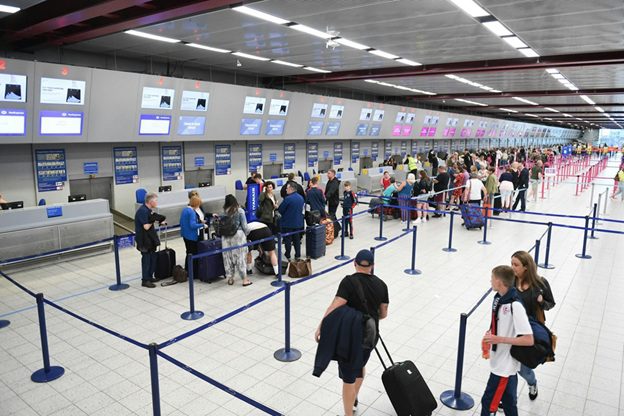
Airports are built for volume, not comfort. That’s why even simple trips can turn into a chain of lines: check-in, bag drop, security, passport control, boarding. A “Fast Track” service is designed to shorten or smooth out those friction points, usually by pairing you with a staff member who guides you through priority channels and handles small logistics along the way.
If you’re trying to picture what that looks like in real life, providers such as Sky VIP typically structure Fast Track around meet-and-greet support plus guided routing through available priority processes, depending on the airport and package.
It’s not a magic pass through every process, and it doesn’t bypass security screening rules. But when it’s set up well, it can noticeably reduce time spent wandering and waiting.
What “Fast Track” Typically Includes
Fast Track is an umbrella term. Different airports and providers bundle different features, but most services fall into a few common components:
- Meet-and-greet: A representative meets you at the terminal entrance, curbside, check-in, gate, or sometimes off the aircraft (arrivals).
- Assisted check-in and bag drop: Help locating the right counter and moving through it efficiently.
- Priority security lane access: Entry to a faster lane where the airport offers one (availability varies).
- Immigration/passport control support: Guidance to priority counters where permitted, or simply navigating the correct lanes quickly.
- Terminal navigation: Walking you to lounges, gates, or connecting flights without guesswork.
- Connection support: For tight layovers, a guide can help coordinate the quickest route and timing.
Some packages also add “VIP” elements like lounge access, buggy rides inside large terminals, porter services, or private transfer coordination, but those are add-ons rather than the core idea.
How It Works Step by Step
1) Booking and sharing your travel details
You usually book online (sometimes through airlines, sometimes through third-party providers). You’ll provide:
- Full name (matching passport)
- Flight number(s) and dates
- Arrival/departure/connection details
- Any special needs (mobility support, traveling with kids, etc.)
This matters because the service times their staff presence around your flight and the airport’s operating flow.
2) Meeting point and identification
For departures, meet points are commonly:
- Outside the terminal at a designated door
- Airline check-in area
- A specific column/zone (big airports love these)
For arrivals, the meet point might be:
- At the gate/jet bridge (where allowed)
- After you exit into the terminal
- Near immigration entrances
The representative will usually have a sign with your name or a code.
3) Guided movement through priority lanes
This is where Fast Track can save the most time. The representative guides you to the appropriate priority lanes for:
- Security screening
- Passport control (where available)
Important nuance: priority lanes are an airport facility. The service can guide you to them, but if a priority lane is closed or restricted, nobody can invent one.
4) Handling the awkward parts (so you don’t have to)
A good rep does the small things that quietly drain time:
- Directing you to the right counter before you queue wrong
- Explaining what documents to have ready
- Walking the fastest routes through terminals
- Helping re-check bags or locate transfer desks
- Coordinating with airport staff when there’s confusion
5) Getting you to your endpoint
For departures: gate (and sometimes assistance with boarding location changes).
For arrivals: baggage claim, exit, and sometimes hand-off to a driver.
Who Benefits Most
Fast Track is most useful when “minutes matter” or the airport experience is high-friction:
- Tight connections (especially in unfamiliar airports)
- Business travelers who can’t risk delays
- Families juggling kids, strollers, multiple bags
- Elderly travelers who want less walking and confusion
- First-time international flyers who get stressed by airport flow
- Peak travel periods (holidays, summer weekends, big events)
If you’re flying at off-peak times with carry-on only, you may not feel much difference.
What Fast Track Does Not Do
This is where expectations can go wrong:
- It doesn’t skip security screening. You still follow the same rules.
- It doesn’t guarantee immediate immigration clearance (officer availability matters).
- It can’t override airline policies (like check-in cutoffs).
- It doesn’t replace travel documents. Visas, passports, and entry requirements are still on you.
Choosing a Service Without Getting Burned
Before booking, look for clear answers to these questions:
- Which exact steps are included: check-in, security, immigration, baggage?
- Is priority lane access included, and at which terminal?
- What happens if my flight is delayed or rescheduled?
- Is there a refund or rebooking policy?
- Is the rep with me the whole way, or do they hand off mid-process?
Practical Takeaways
- Fast Track is a logistics service, not a rule-breaker. It smooths the path; it doesn’t rewrite procedures.
- The biggest value is avoiding wrong turns and dead-end lines, especially in large or unfamiliar airports.
- It’s most worth it when time pressure is real: tight connections, peak season, or high-stakes business trips.
- Always check what’s actually included at your specific terminal and airport, because “Fast Track” can mean different things in different places.