
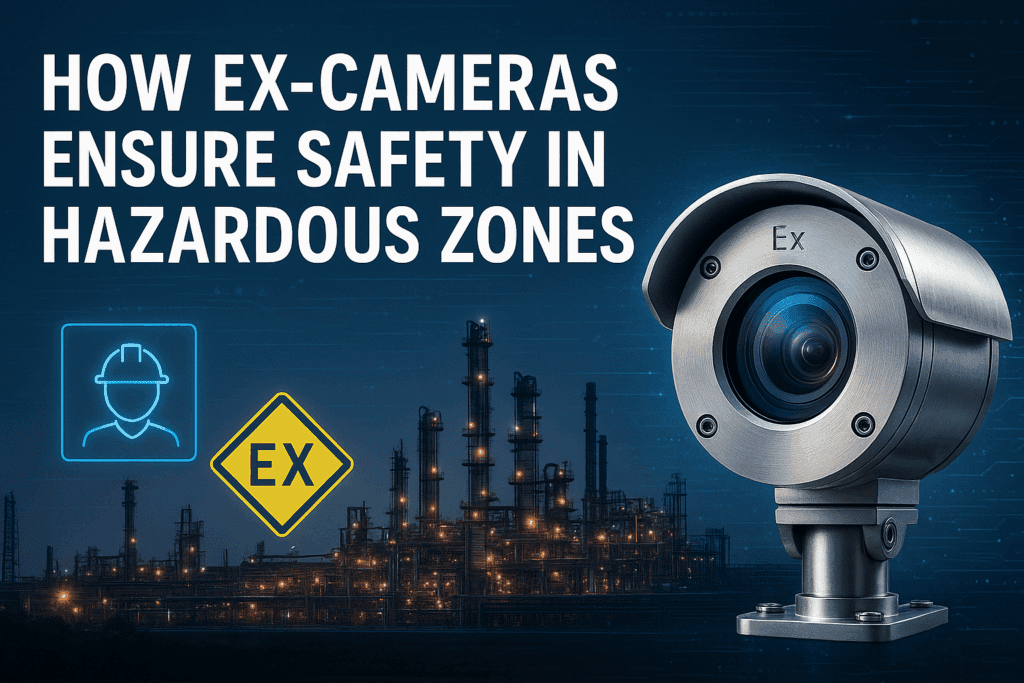
In the industrial world, safety isn’t just a buzzword; it’s a critical operational imperative, especially when working in environments laden with flammable gases, vapors, dusts, or fibers. These “hazardous zones” pose significant risks, ranging from minor incidents to catastrophic explosions. Traditional electronic equipment, designed for standard environments, can generate sparks or heat that, in such volatile atmospheres, could trigger a disaster. This is where specialized technology, particularly ex cameras, steps in, providing an indispensable layer of safety and surveillance without compromising operational integrity.
The very concept of a hazardous zone dictates that any equipment introduced must meet stringent safety standards. A single spark from an uncertified device could ignite a volatile mixture, leading to devastating consequences for personnel, assets, and the environment. This article delves into the crucial role of ex cameras in mitigating these risks, exploring their design principles, applications, and the peace of mind they offer in the most challenging industrial settings.
Understanding the Peril: What Makes a Zone Hazardous?
Before we explore the solution, it’s essential to grasp the nature of the problem. Hazardous zones are classified based on the type and probability of explosive atmospheres being present. These classifications, often governed by international standards like ATEX (Europe) and IECEx (international), dictate the level of protection required for equipment.
- Gases and Vapors: Industries dealing with oil and gas, chemical processing, pharmaceuticals, and paint manufacturing frequently encounter flammable gases and vapors.
- Dusts: Sectors like grain processing, flour mills, woodworking, and coal mining face risks from combustible dusts, which can be just as explosive as gases when suspended in air.
- Fibers: Certain textile manufacturing and material handling operations can generate ignitable fibers.
The danger lies in the “explosion triangle” – the simultaneous presence of fuel (flammable substance), oxygen (from the air), and an ignition source (spark, heat, static electricity). Ex cameras are specifically engineered to eliminate the ignition source from the equation.
The Engineering Behind Safety: How Ex-Cameras Work
The core principle behind ex cameras is to prevent them from becoming an ignition source. This is achieved through various protection techniques, each designed to isolate potential spark-generating components or limit surface temperatures.
Ingress Protection (IP Ratings)
While not solely an “ex” rating, a high IP rating (e.g., IP68) is crucial for ex cameras. It signifies protection against dust and water ingress, which can not only damage the electronics but also introduce conductive pathways that might lead to sparking.
Explosion Protection Methods
The “ex” in ex cameras refers to “explosion protection.” Several methods are employed:
- Flameproof Enclosures (Ex d): This is one of the most common methods. The camera’s electronics are housed within a robust enclosure designed to withstand the pressure of an internal explosion and prevent the transmission of flames or hot gases to the surrounding explosive atmosphere. Any internal spark or explosion is contained.
- Increased Safety (Ex e): This method focuses on preventing sparks or hot surfaces in normal operation by using robust construction, increased creepage distances, and enhanced insulation. It’s often used for terminal boxes and junction boxes.
- Intrinsic Safety (Ex i): Considered the safest method, intrinsic safety limits the electrical energy within the device and its associated wiring to a level incapable of causing ignition, even under fault conditions. This is ideal for instruments and sensors where very low power is sufficient.
- Pressurized Enclosures (Ex p): This technique involves maintaining a positive pressure of clean air or inert gas inside the enclosure, preventing the ingress of the hazardous atmosphere.
- Encapsulation (Ex m): Electrical parts are completely embedded in a compound, making it impossible for sparks or hot surfaces to come into contact with the explosive atmosphere.
Each of these methods is rigorously tested and certified by independent bodies to ensure compliance with international safety standards. When selecting ex cameras, understanding these protection types is paramount to matching the right equipment with the specific hazardous zone classification.
Applications and Benefits: Beyond Just Monitoring
The deployment of ex cameras extends far beyond simple visual monitoring. They are integral to:
- Process Monitoring: Continuously observing critical equipment, pipelines, and reaction vessels in chemical plants, refineries, and pharmaceutical facilities. This allows operators to detect anomalies early, preventing potential failures or hazardous leaks.
- Remote Inspection: Conducting visual inspections in areas that are difficult or dangerous for human entry, such as confined spaces or areas with high temperatures or toxic fumes. This reduces human exposure to risk.
- Security and Surveillance: Providing surveillance in hazardous areas of industrial sites, ensuring the security of valuable assets and monitoring access points without introducing ignition risks.
- Waste Management: Monitoring waste storage and processing areas, particularly those dealing with flammable materials or organic waste that can generate methane.
- Emergency Response: Supplying crucial visual information to control rooms during emergencies, allowing for better-informed decision-making and safer response efforts.
A study by the Health and Safety Executive (HSE) in the UK highlighted that proper equipment certification and maintenance significantly reduce the incidence of explosions in hazardous environments. The use of certified ex cameras directly contributes to this reduction, offering peace of mind and tangible safety improvements.
Choosing the Right Ex Camera: Actionable Tips
Selecting the appropriate ex camera requires careful consideration:
- Zone Classification: First and foremost, identify the exact hazardous zone classification (e.g., Zone 0, 1, 2 for gases; Zone 20, 21, 22 for dusts) where the camera will be deployed. This dictates the required “Ex” rating.
- Environmental Conditions: Consider factors like temperature extremes, humidity, vibrations, and corrosive atmospheres. Ensure the camera’s IP rating and material construction can withstand these conditions.
- Application Needs: Determine the required resolution, field of view, night vision capabilities, zoom functions, and connectivity options (e.g., wired, wireless, fiber optic).
- Integration: Assess how the camera will integrate with existing surveillance systems, control rooms, and power infrastructure.
- Certification: Always verify that the camera possesses valid certifications from recognized bodies (e.g., ATEX, IECEx, UL) for the specific hazardous zone and protection method.
Conclusion: Unwavering Vigilance in Volatile Environments
In industries where the air itself can be a hazard, vigilance is paramount. Ex cameras are not merely surveillance tools; they are fundamental safety devices, meticulously engineered to operate without introducing the slightest risk of ignition. By providing critical visual data from the most volatile environments, they empower industries to maintain operational continuity, protect personnel, and safeguard valuable assets. Investing in certified ex cameras is not just a regulatory compliance measure; it’s a commitment to an uncompromising safety culture, ensuring that even in the face of danger, operations can proceed with confidence and control. Their role is indispensable, ensuring that progress in hazardous zones never comes at the cost of safety.
Author Bio:
The author is a seasoned industrial safety consultant with over 15 years of experience specializing in hazardous area classification and equipment compliance. With a deep understanding of international safety standards and a passion for risk mitigation, their work focuses on helping organizations implement robust safety protocols and deploy appropriate technologies to protect personnel and assets in challenging environments. They regularly contribute insights on best practices in industrial safety and explosion protection.
Read More From Techbullion