
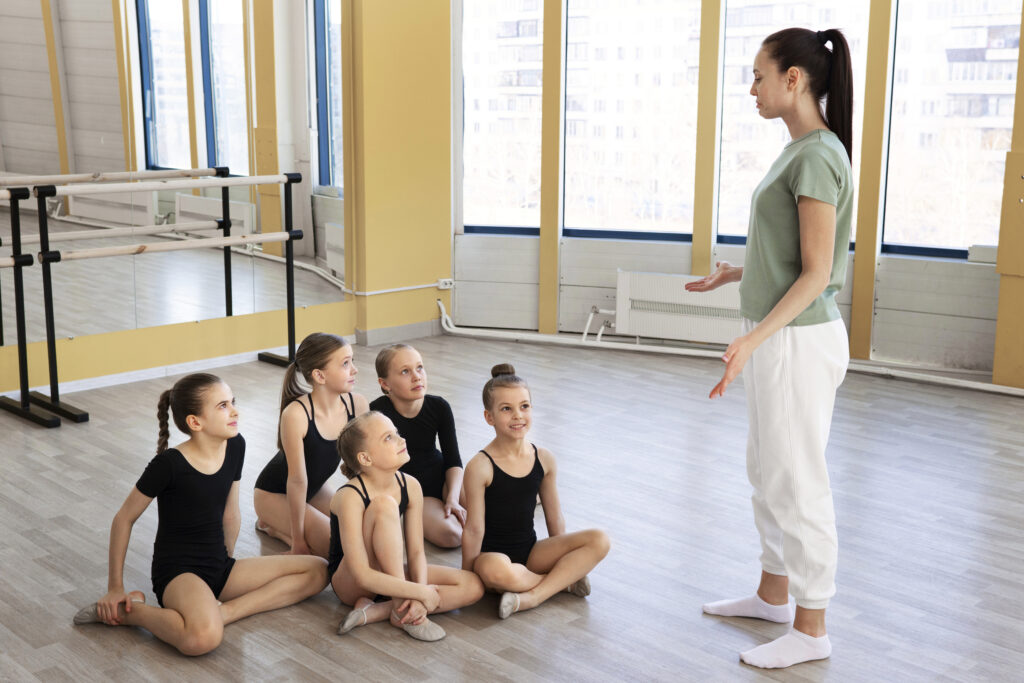
Walk into any well-run studio on a Saturday morning, and you’ll notice something right away: the three-year-olds are not in the same room as the eight-year-olds. This is not simply about convenience or scheduling. It reflects a deliberate, research-informed approach to teaching movement that matches instruction to a child’s physical, cognitive, and emotional stage of growth. An age-based preschool dance program is built around this principle, and the results show up not just in a child’s dancing, but in how they think, interact, and carry themselves throughout daily life.
Parents often ask why dance classes are split so precisely by age rather than grouped more loosely. The answer lies in how children develop. A two-year-old’s brain and body are working through entirely different milestones than a five-year-old’s. Movement programs that respect these differences give children the best chance to build skills at a pace that feels natural, rather than frustrating or boring.
Why Age Matters More in Dance Than in Many Other Activities
Dance is unusual among childhood activities because it demands so much at once: balance, memory, listening skills, spatial awareness, emotional expression, and social cooperation. Few other pursuits ask a young child to coordinate all of these simultaneously. Because of this complexity, even a one- or two-year age gap can represent a significant difference in readiness.
A three-year-old is still developing basic gross motor control and may struggle to stand still long enough to follow a multi-step instruction. A five-year-old, by contrast, can usually hold a pose, remember a short sequence, and begin to understand counts like “five, six, seven, eight.” Lumping these two children into the same class often means one group is bored while the other is overwhelmed.
Age-based preschool dance programs solve this by building curriculum around developmental windows. Teachers trained in early childhood movement understand which skills are achievable at which stage, and they build lesson plans that meet children exactly where they are rather than where a generic curriculum assumes they should be.
Physical Development: Building the Body from the Ground Up
The most visible benefit of a preschool dance program is physical. Dance naturally develops gross motor skills such as balance, coordination, strength, and flexibility. For toddlers aged eighteen months to three years, classes typically focus on large, simple movements: marching, swaying, reaching, and basic jumping. These movements help build the foundational strength and body awareness that more complex skills will later depend on.
As children move into the three- to five-year-old range, instructors introduce more refined motor tasks: pointing toes, holding arm positions, skipping instead of just running, and transferring weight from one foot to the other with control. This is also the stage where fine motor skills start to matter more, as children learn to coordinate finger and hand positions alongside larger body movements.
By the time children reach five to seven years old, many are ready for structured technique: basic ballet positions, simple turns, and movement combinations that require sustained balance. An age-based preschool dance program paces this physical progression carefully, ensuring that children are not asked to attempt skills before their bodies are ready, which helps prevent frustration and reduces the risk of improper movement patterns becoming habitual.
Cognitive Growth Through Structured Movement
Dance is far more mentally demanding than it looks. Children must listen to music, remember sequences, process verbal and visual cues, and adjust their movement in real time. This makes dance class a surprisingly rich environment for cognitive development.
For the youngest dancers, cognitive goals are simple: recognizing left from right is still developing, so instructors use props, colors, or animal imagery instead of complicated directional language. A toddler might be asked to “reach up like a giraffe” rather than “extend your right arm diagonally.”
As children age into the four and five-year-old range, memory and sequencing become central. Learning a short combination of three or four steps and performing it in order is a meaningful cognitive challenge at this age. Teachers often break choreography into small chunks, repeating each piece until it becomes familiar before linking it to the next.
By six and seven years old, children can typically hold longer sequences in memory, understand musical counts, and begin connecting steps to the rhythm of the music rather than relying solely on a teacher’s verbal cues. This growing independence reflects real gains in working memory and attention span, skills that carry over directly into classroom learning and other structured activities.
Social and Emotional Development in the Studio
Dance class is often a child’s first experience in a structured group setting outside the home or daycare. For toddlers, this might mean learning to wait for a turn, follow a leader, or move alongside peers without bumping into them. These seem like small achievements, but they represent genuine milestones in social development.
As children grow older, the social elements of a dance class become more sophisticated. Preschoolers begin to understand the concept of working together to create a group shape or pattern, and they start to notice when a peer needs help getting back in line. By kindergarten age, many children can participate in simple partner work, learning to coordinate their movement with another child’s.
Emotional development runs alongside this social growth. Dance gives children a safe, structured outlet for expressing feelings through movement. A child who is shy might find it easier to express excitement or joy through a dance combination than through words. Dance also builds confidence in a very direct way: a child who successfully performs a sequence they have practiced experiences a tangible sense of accomplishment, often in front of peers, parents, or both.
Age-appropriate instruction matters enormously here too. Expecting a three-year-old to perform confidently in front of an audience may create anxiety rather than joy, while a seven-year-old who has had several years of gradual stage experience often thrives in that same setting. A well-designed age-based preschool dance program introduces performance opportunities gradually, matching the emotional readiness of each age group.
How Curriculum Changes Across Age Groups
A thoughtfully designed program does not simply slow down the same lesson plan for younger children and speed it up for older ones. Instead, the entire approach to teaching shifts at each stage.
For toddlers (roughly eighteen months to three years), classes are often framed as guided play. Parents may even participate alongside their child, since very young children rely heavily on a trusted adult for reassurance in new environments. Music, props, and imaginative themes, such as pretending to be animals or weather, dominate the class structure.
For preschoolers (three to five years), classes begin to look more like traditional dance instruction, though still playful in tone. Short attention spans are respected through frequent changes in activity, and instructors build in movement breaks, imaginative storytelling, and simple technique work in small doses.
For early elementary-aged children (five to seven years), structure increases. Children in this range can typically follow a more traditional class format: warm-up, technique work, combination practice, and a cool-down. This is often the stage where children begin choosing a specific style, such as ballet, tap, or creative movement, based on their own developing interests.
This gradual increase in structure and complexity ensures that children are always being challenged just enough to grow, without being pushed past what their developmental stage can reasonably handle.
The Role of Trained Instructors
None of this developmental matching happens by accident. It requires instructors who understand early childhood development, not just dance technique. A teacher working with toddlers needs patience, simple language, and the ability to turn abstract concepts into relatable images. A teacher working with seven-year-olds needs to balance encouragement with increasing expectations for focus and technical accuracy.
Studios that invest in age-based preschool dance programs often provide specific training for instructors working with each age bracket, recognizing that teaching a two-year-old successfully requires a fundamentally different skill set than teaching a seven-year-old. This specialization is part of what separates a high-quality program from one that simply divides children by age without adjusting the substance of instruction.
Choosing the Right Program for Your Child
Parents evaluating dance programs should look beyond class names and consider how curriculum actually shifts across age groups. A few questions can help clarify whether a program is genuinely age-based or just labeled that way. Does the class size and structure change as children get older? Are instructors trained specifically in early childhood movement, not just general dance technique? Is there a clear, age-appropriate justification for each decision, such as when performances are introduced or when technical correction begins?
It also helps to observe a class before enrolling. Watching how an instructor manages transitions, handles a child who is struggling to follow along, or adjusts a combination on the fly can reveal a great deal about whether the program is truly built around developmental needs.
Frequently Asked Questions
At what age can a child start a preschool dance program?
Most programs accept children starting around eighteen months to two years old, often in a parent-and-child format. Independent classes without a parent present typically begin around age three.
How long are classes for young children?
Class length is usually matched to attention span. Common formats include:
- Toddler classes: twenty to thirty minutes
- Preschool classes: thirty to forty-five minutes
- Early elementary classes: forty-five minutes to one hour
Will my child be ready to perform in a recital?
This depends on the program and the child’s age. Many studios introduce low-pressure, short performances for preschoolers and build toward more traditional recitals as children reach five or six years old.
What dance styles are appropriate for young children?
Creative movement and basic ballet are the most common starting points, since both emphasize body awareness, rhythm, and simple positions. Tap and other styles are often introduced slightly later, once fine motor coordination has developed further.
How do I know if my child is in the right class?
A good sign is that your child is engaged but not overwhelmed. If they seem consistently confused or anxious, a younger class level may be a better fit. If they seem bored or unchallenged, it may be time to move up.
Do boys benefit from dance programs in the same way?
Yes. The physical, cognitive, and social benefits of age-based movement instruction apply regardless of gender. Many programs are seeing increased enrollment from boys, particularly in creative movement and tap classes.
Final Thoughts
Choosing an age-based preschool dance program means choosing an approach built on how children actually grow, not a one-size-fits-all curriculum. From toddlers taking their first guided steps to seven-year-olds mastering their first real combinations, each stage of a well-designed program supports physical coordination, cognitive sharpness, and emotional confidence in ways that are specifically calibrated to a child’s current abilities. For parents searching for a program that will genuinely support their child’s development, understanding this age-based structure is one of the most important factors to consider.