
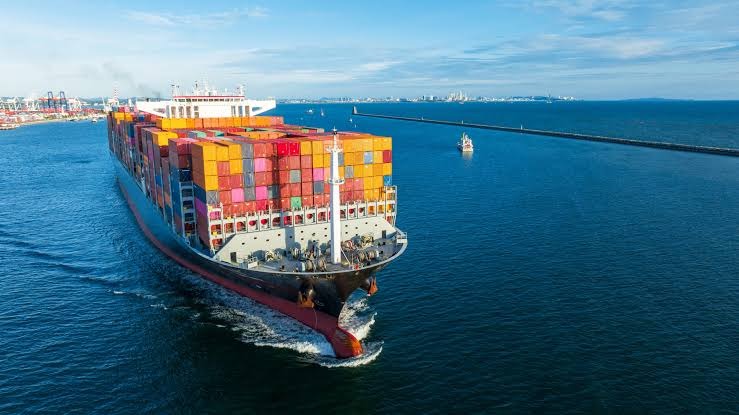
Choosing how to move goods internationally used to rely heavily on familiar rules: urgent shipments went by air, large orders travelled by sea, and unusual cargo required specialist transport. Those principles still matter, but companies now have far more information available when making the decision.
Shipment history, freight rates, transit times, inventory levels, product margins and delivery performance can all help businesses choose a transport method based on the needs of a particular shipment rather than habit.
For companies shipping regularly, this can improve both cost control and supply-chain performance.
Shipping Decisions Start With the Cargo
The characteristics of the goods narrow the available transport options immediately.
Weight and dimensions matter because air and sea freight are priced differently. Air freight frequently uses chargeable weight, which considers both actual weight and the space occupied by the shipment. Ocean freight may be priced according to container size, volume or the particular handling requirements of the cargo.
Product value adds another dimension. High-value electronics or components needed urgently for production may justify the higher cost of air transport. Heavy products with lower value per kilogram often suit sea freight more naturally.
Flexport’s comparison of air and ocean freight explains how factors such as product value, weight, cost and transit time can influence mode selection.
The key is to capture accurate shipment data before requesting transport. Dimensions, weight, commodity type and packaging configuration give logistics teams a much stronger basis for comparison.
Historical Transit Times Are More Useful Than Assumptions
Published schedules tell businesses how long a shipment is expected to take. Historical data shows what actually happened.
A company importing regularly from the same origin can compare previous shipments to calculate typical port-to-port and door-to-door transit times. It can also identify how often shipments arrived later than originally planned.
Freightos provides freight transit-time data and estimates that illustrate the substantial difference between air, express and ocean shipping times.
For an individual business, its own records can be even more useful.
Suppose sea shipments on a particular lane usually arrive within a predictable window, while another route experiences frequent transshipment delays. The company may decide to hold additional inventory for the second route rather than automatically switching every shipment to a faster mode.
Reliable historical data turns lead-time planning into a measurable process.
Compare Freight Cost With Inventory Cost
The freight invoice is only one part of a shipping decision.
A slower shipment can mean inventory remains in transit for longer. A faster shipment may allow a company to hold less safety stock or replenish an important product before it sells out.
This means transport cost should be considered alongside the commercial value of speed.
Businesses can combine several pieces of information:
- product margin;
- average daily sales;
- current stock;
- expected replenishment date;
- freight cost by mode;
- cost of a potential stockout.
This creates a clearer picture than simply comparing an air freight quote with a sea freight quote.
For example, paying more to fly inexpensive, slow-moving inventory may offer little benefit. Paying more to move a critical component that would otherwise stop production can be economically sensible.
Current air cargo conditions also change over time. IATA publishes regular air cargo market analysis covering demand, capacity and load factors, which can help businesses understand the broader market behind freight pricing and availability.
Measure Reliability Alongside Speed
Fast transport is valuable only when the shipment arrives when the business expects it.
Companies should therefore track schedule reliability as well as average transit time.
A useful dataset might record:
- planned departure;
- actual departure;
- estimated arrival;
- actual arrival;
- customs clearance time;
- final delivery date.
Over several months, this information can show whether a service consistently performs close to schedule.
The World Bank’s Logistics Performance Index treats tracking, tracing and shipment timeliness as important elements of logistics performance. Businesses can apply a similar principle to their own freight records.
A slightly slower transport option with consistent performance can sometimes make inventory planning easier than a theoretically faster service with much greater variation.
Use Data to Decide When Air Freight Is Worth It
Air freight works particularly well when the commercial value of speed outweighs the additional transport cost.
This commonly applies to urgent spare parts, valuable goods, time-sensitive products and shipments required to protect production schedules.
Companies can define their own rules rather than making the decision separately each time.
For example, air freight might be approved when projected inventory will fall below a specified level before the next sea shipment arrives. Another company might use it only when the expected cost of lost sales exceeds the air freight premium.
This creates consistency.
Mode selection becomes a business calculation rather than an emergency reaction.
Inbound Logistics describes freight mode selection as a process that considers product characteristics, urgency, distance and transport cost. Adding internal sales and inventory data makes that decision even more specific to the company.
Cargo Dimensions Can Change the Entire Transport Strategy
Standard cartons and pallets provide relatively straightforward choices between air and sea services. Large industrial cargo requires a different analysis.
Machinery, equipment and structural components may exceed the dimensions or weight limits of standard transport equipment. Accurate technical specifications become essential before the shipment can be planned.
Businesses may need to provide:
- overall length, width and height;
- gross weight;
- centre of gravity;
- lifting points;
- packaging details;
- technical drawings;
- information about detachable components.
Depending on those measurements, the cargo might move on a flat rack, in an open-top container, as breakbulk cargo or through another project logistics solution.
For Australian businesses dealing with equipment that falls outside conventional container dimensions, specialist oversized cargo shipping planning can use this technical data to determine suitable equipment, routing and handling requirements.
Accuracy matters here because an incorrect measurement can affect equipment selection and transport feasibility.
Weight Data Has a Safety Role Too
Shipment data is not only about commercial optimisation.
Accurate weight information contributes directly to transport safety. For containerised sea freight, the International Maritime Organization explains that the verified gross mass of a packed container is required before loading under SOLAS rules.
Incorrect cargo weights can influence vessel stowage and cargo-handling decisions.
Businesses should therefore treat verified dimensions and weights as core logistics data rather than administrative details added shortly before departure.
The same principle becomes even more important with heavy or unusual machinery, where lifting and securing arrangements depend on precise technical information.
Track the Total Shipment Cost
Freight rates can fluctuate, so companies benefit from comparing actual completed-shipment costs rather than relying solely on quoted transport prices.
A shipment record can include:
- international freight;
- origin charges;
- destination charges;
- customs-related costs;
- local delivery;
- storage or detention;
- additional handling.
Over time, these records show the true cost of using different transport arrangements.
A sea service with a low quoted rate may become less attractive if it frequently generates storage costs because of timing problems. A more expensive service may prove competitive when it produces more consistent delivery and fewer exceptions.
This type of analysis is particularly useful for businesses with recurring trade lanes.
Create Different Rules for Different Products
One transport strategy rarely suits an entire product catalogue.
Businesses can segment products according to value, margin, demand volatility, size and urgency.
Fast-moving high-margin items might justify premium transport in some circumstances. Stable replenishment inventory can often travel on predictable ocean schedules. Oversized equipment requires planning based on dimensions, route feasibility and handling capabilities.
The underlying principle is simple: freight mode should reflect the commercial role and physical characteristics of the goods.
Data makes those differences visible.
Turn Shipment History Into Better Decisions
Companies already generate much of the information needed to improve freight decisions. Purchase orders contain quantities and values. Warehouse systems track inventory. Logistics providers record shipment milestones. Finance teams know the actual cost of each movement.
The opportunity lies in bringing these records together.
Businesses that review cost, transit time, reliability and inventory impact can build practical rules for choosing between air freight, sea freight and specialist cargo solutions.
That approach also improves over time. Every completed shipment adds another data point.
International shipping will always involve changing rates, capacity and schedules. Companies cannot remove those variables, but they can make better decisions about them. When transport choices are based on accurate shipment data and actual business priorities, logistics becomes a more deliberate part of supply-chain planning.