
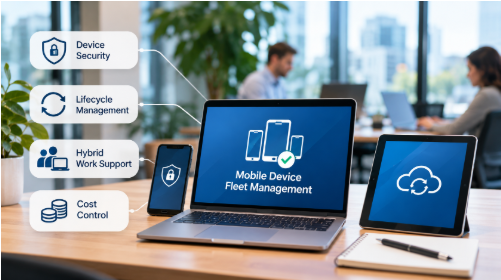
Mobile devices are a key component of today’s Australian business, making it easier for staff to communicate, access information and stay productive from work locations. As organisations expand, however, the management of smartphones, tablets and other connected devices can become challenging.
There are so many aspects of mobile fleet management that need to be addressed, from security and maintenance to connectivity and costs.Businesses require a systematic approach when it comes to managing mobile fleets, and there are many different aspects involved from security to maintenance, connectivity to costs.
The Importance of Centralised Mobile Device Management
Managing multiple devices is more than equipment buying and then handing devices out to employees. Monitoring the device performance, maintaining security settings, managing applications and offering continuous technical support are all part of the equation for businesses.
Managed mobility services can assist organisations in managing the procurement, configuration, monitoring and maintenance of devices. Centralised management also offers greater visibility of device usage and helps companies to detect technical problems, to save administration time and to ensure uniformity of their operations.
This is an effective solution for companies with workers in various parts of the country.
Securing Mobile Devices
A mobile device is often used to gain access to confidential company data, customer records and financial information. An organisation could be vulnerable to security risks and operations downtimes due to lost or compromised devices.
Businesses should implement strong authentication, encryption, regular software updates and appropriate application restrictions. MDM solutions can also help administrators to take all the data or lock the device remotely if the need arises.
The Australian Cyber Security Centre offers a resource for enterprise mobility security guidelines, advising enterprises to safeguard business information with suitable security measures and responsible device management practices.
It is also crucial for employees to be aware of the signs of phishing and steer clear of unsecure networks.
Managing Devices Throughout Their Lifecycle
Mobile fleet management spans from buying the devices to maintaining them and replacing them when necessary.
Consider what the business needs, compatibility and long-term reliability to choose devices. Accurate inventory helps IT teams monitor inventory, schedule updates, and determine when equipment is nearing end-of-life.
Older devices might lower performance or have fewer devices offering manufacturer security support. By using replacement schedules, companies can prevent unexpected failures and prevent unnecessary costs.
Organisations should properly wipe business data from devices before recycling or disposal.
Supporting Hybrid and Remote Workers
Reliable mobile technology has become more critical in the era of hybrid working. Access to communication platforms and business apps must be secure in home offices, traveling or visiting customers.
Centralised device management ensures organisations can manage their devices in a standard manner and offer technical assistance remotely. This cuts down on interruptions and enables staff to work effectively from anywhere.
Businesses should also have policies regarding the use of personally owned devices for business purposes and make sure there is a separation of personal information and company information.
Controlling costs and improving efficiency
Unused connections, inappropriate data plans, repairs and unnecessary equipment replacement are all ways that your mobile expenses can rise.
By regularly checking device inventories and spending on mobile devices, businesses can spot savings opportunities. Centralised reporting ensures more visibility regarding usage and enables enterprises to make informed purchasing and budgeting decisions.
Standardised processes also minimise repetitive administrative work and allow internal IT teams to dedicated more time to wider technology enhancements.
Creating a sustainable mobility strategy
Any mobile management strategy that is considered successful must consider the kind of employees in the organisation, the security needs that it involves and the objectives of the organisations that have it.
With everything in one place, businesses in Australia can keep their mobile fleets reliable and enable flexible working arrangements for their employees, thanks to effective security measures, lifecycle planning, and cost monitoring.
In the end, a proactive strategy can help businesses mitigate technology risks, boost productivity and build a mobile infrastructure that enables future business growth.