
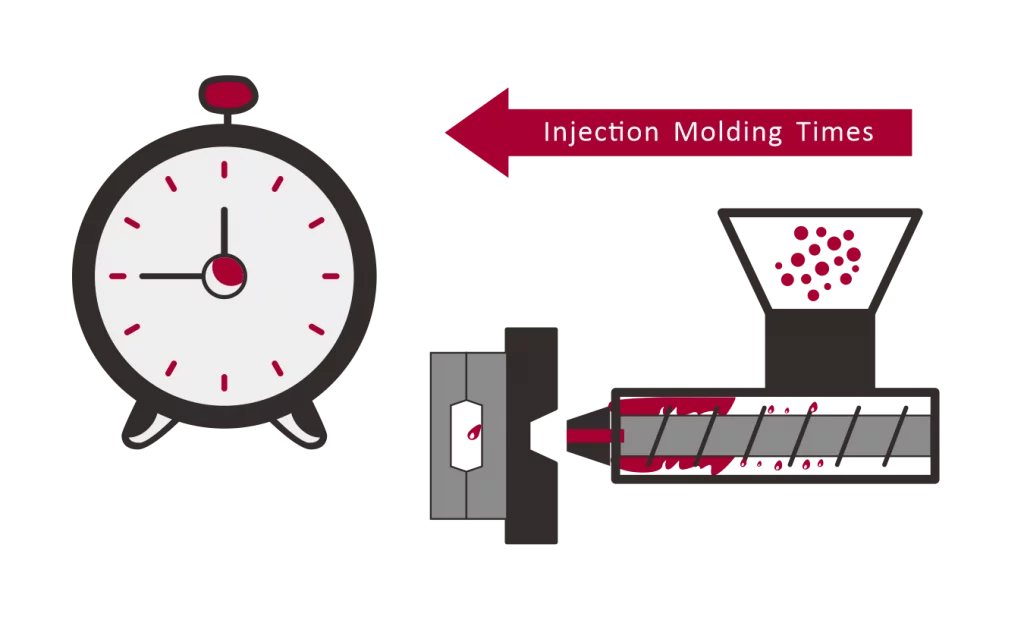
In the competitive world of plastic manufacturing, the efficiency and quality of production are non-negotiable. As industries demand faster turnaround and higher quality with tighter tolerances, one often overlooked component of the injection molding machine plays a critical role in meeting these expectations: the injection molding screw.
Recent innovations in injection molding screw design are revolutionizing how manufacturers approach cycle time and defect reduction. From advanced mixing sections to specialized materials and geometries, the evolution of screw technology is setting new benchmarks for productivity and product quality.
Understanding the Role of Injection Molding Screws
An injection molding screw is the heart of the plasticizing unit in an injection molding machine. It performs three essential tasks:
- Melting the plastic resin through shear and conduction.
- Mixing the melt for uniformity in temperature and color.
- Pumping the melt forward for injection into the mold cavity.
A well-designed screw ensures efficient plasticization, consistent melt quality, and rapid filling of the mold, all of which directly influence cycle time and product quality.
Historical Limitations in Screw Design
Traditional three-zone screws—comprising feed, transition, and metering zones—were long the industry standard. While robust and versatile, these designs often fell short in demanding applications:
- Poor mixing could lead to inconsistent color or temperature gradients.
- Shear-sensitive materials like PVC or certain elastomers suffered degradation.
- Cycle times were not optimized, particularly for high-cavitation molds or complex geometries.
These challenges prompted engineers to rethink the fundamentals of screw design, seeking ways to tailor screw geometries for better control over the melt process.
How Modern Screw Designs Improve Cycle Times
- Barrier Screws: Faster, More Consistent Melting
Barrier screws incorporate an additional flight—a “barrier”—that separates solid plastic pellets from the already molten material. This controlled separation allows for:
- Faster melting, reducing the time required in the heating phase.
- Lower energy consumption, as heat transfer is more efficient.
- Reduced back pressure, which speeds up the recovery phase.
These enhancements directly reduce cycle times, especially in applications requiring high throughput.
- Mixing Sections for Enhanced Homogeneity
Modern injection molding screws now often feature static mixers or distributive mixing elements such as:
- Egan mixers
- Zig-zag mixers
- Maddock or spiral mixers
These mixers homogenize color and temperature while minimizing shear stress. This allows manufacturers to:
- Run faster fill and pack phases due to uniform melt behavior.
- Reduce hold times thanks to consistent crystallization and shrinkage.
By delivering a melt of superior quality at faster rates, these innovations shave seconds off each molding cycle—accumulating to significant productivity gains over thousands of parts.
- Optimized Compression Ratios
Screw compression ratio—the relationship between feed and metering zone depths—has a major impact on plasticization. Modern custom-designed screws now feature optimized, material-specific compression ratios:
- Lower ratios for heat-sensitive materials (e.g., PC, PVC)
- Higher ratios for high-flow thermoplastics (e.g., PP, PS)
Correctly matching compression ratio to material leads to:
- Shorter plasticizing times
- Reduced cycle durations
- Fewer stoppages due to degraded or unmelted material
- Shorter Recovery Times via Screw Profile Optimization
Recovery time (the period during which the screw rotates and retracts) often bottlenecks production speed. Today’s advanced screw designs focus on:
- High-volume throughput profiles
- Low friction zones with coated surfaces
- Optimized pitch angles to accelerate material conveyance
Together, these refinements cut recovery time substantially, allowing faster mold cycles without compromising melt quality.
Reducing Defects Through Screw Innovation
In addition to speed, defect prevention is another major advantage of modern screw designs.
- Improved Melt Quality = Fewer Flow Marks and Weld Lines
Uneven melt temperature and poor mixing are frequent causes of visible defects like flow lines, weld lines, or burn marks. Screws that feature:
- Distributive and dispersive mixing zones
- Barrier flight configurations
- Temperature-sensing inserts
can provide a uniform melt profile, greatly reducing these issues. As a result, manufacturers achieve:
- Fewer visual blemishes
- Higher dimensional stability
- Consistent part integrity, especially critical in medical or automotive components
- Material-Specific Screws to Avoid Degradation
Using a generic screw for a sensitive material often leads to:
- Off-gassing
- Color shift
- Reduced impact strength
Today’s injection molding screws are often engineered for specific polymers. For example:
- Low-shear screws for flame-retardant plastics
- Vent-equipped screws for hygroscopic materials like nylon
This targeted approach ensures that materials are processed within optimal parameters, reducing internal stress and increasing part lifespan.
- Minimizing Over-Shear to Prevent Delamination
Thin-walled or multi-material parts are susceptible to delamination or internal cracking due to over-shear. High-performance screws counter this by:
- Managing shear rates through gentle compression transitions
- Incorporating tapered flights and low-shear mixers
The outcome is fewer rejects, longer tool life, and lower production costs.
Materials and Coatings Extend Screw Lifespan and Performance
Beyond geometry, the materials and coatings used in screw construction also impact performance. Recent developments include:
- Bimetallic alloys that resist abrasion and corrosion
- Nitrided or hard-faced screws for glass-filled or mineral-filled plastics
- Non-stick coatings to reduce black specks and material hang-up
These enhancements preserve screw geometry over time, which maintains performance and ensures ongoing quality control. A consistent screw yields repeatable cycle times and minimizes surprises from premature wear.
Data-Driven Design and Simulation
Screw manufacturers are increasingly using computational fluid dynamics (CFD) and finite element analysis (FEA) to design and test screws virtually before production. This enables:
- Tailored screw designs for each machine and material combination
- Predictive modeling to reduce trial-and-error
- Faster prototyping and validation cycles
With simulation, manufacturers can achieve first-time-right screw selection, which cuts downtime and boosts yield.
Future Outlook: Smart Screws and Adaptive Control
Looking ahead, the next frontier in injection molding screw innovation may lie in smart manufacturing. Concepts include:
- Sensor-equipped screws to monitor torque, pressure, and temperature in real-time
- Adaptive control systems that adjust screw speed and back pressure based on melt quality
- AI-driven optimization that tunes screw performance across different resins and part geometries
These advancements could unlock even greater efficiency and enable self-correcting molding systems that all but eliminate defects.
Small Component, Big Impact
Though often hidden within the barrel, the injection molding screw wields enormous influence over production speed, consistency, and product quality. Modern innovations in screw design are enabling manufacturers to:
- Reduce cycle times by up to 30%
- Eliminate common defects at the source
- Tailor processing for each material and application
Whether through barrier flights, advanced mixers, optimized profiles, or smart monitoring, today’s injection molding screws are a far cry from the generic designs of the past. Investing in the right screw is not just a technical upgrade—it’s a strategic advantage in a highly competitive manufacturing landscape.