
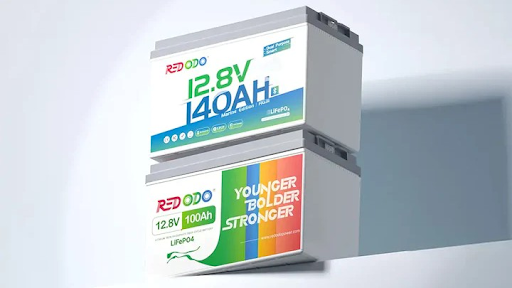
Choosing the right battery can be a challenge, especially when you’re faced with a variety of options like Group 31 lithium battery and the 12V 100Ah LiFePO₄ battery. Whether you’re upgrading your RV’s power system or building an off-grid solar setup, understanding the differences between these two can make a huge impact on performance and cost.
Despite their effectiveness, the wrong battery type may add costs to a system or reduce its electrical power delivery. This article dissects all the things you should consider if you are choosing between the two for your requirements including size, physical weight, energy density, and expected durability.
What is a Group 31 Lithium Battery?
A Group 31 lithium battery is a brand of deep cycle battery which is a standard 31 size with dimensions of about 13×6. 8 x 9.4 inches. It is intended to provide reliable long term power for purposes that are intended to be served by it. The main applications of these batteries are in RVs, boats, and off-grid solar systems where space and or weight are more of a constraint but you need deep cycling, and long cycle life batteries.
Benefits of Group 31 Lithium Batteries
- Lightweight design and long life: Each of the Group 31 lithium batteries is much lighter than a traditional lead-acid battery, thus it will be lighter to handle and to fix. Moreover, they have a longer life expectancy, however, ranging between 3 000 and 4 000 charge/ discharge cycles.
- Higher energy density than lead-acid: These batteries have increased energy density; this means they provide power in more concentrated increments, all in a compact size. This means they give more power per cubic foot than most other types which makes them ideal for applications such as RVs and boats.
- Maintenance-free and quick charging: Compared to other regular lead-acid batteries, the lithium Group 31 batteries are sealed and therefore do not require maintenance. They also charge faster which enables you to resume using your tools as early as possible.
Common Applications
- Off-grid solar energy systems: Because of these properties, Group 31 lithium batteries are best suitable for energy storage in solar power systems especially off-grid systems where space and weight are limited.
- Recreational vehicles (RVs): At present, it is utilized in RVs for lighting besides powering other appliances found in the camper trailers. Because of their compact size and relatively high power to size ratio, they are perfect for portable power uses.
- Marine vessels: Whether you are on a boat or yacht, Group 31 lithium batteries make it possible to have power to support electronics, lighting, and other electrical appliances in marine conditions.
What is a 12V 100Ah LiFePO₄ Battery?
A 12V 100Ah LiFePO₄ Battery is a miniature and powerful lithium iron phosphate rechargeable battery for different uses. The nominal rating is 12.8V and it has a capacity of 100Ah, yet its dimension and weight remain quite light. They are of LiFePO₄ chemistry, more commonly known for stability, safety and a significantly long cycle life. If you need a generator that is capable of generating power within a specific locality then the GMS series is for you.
Features of 12V 100Ah LiFePO₄ Battery
- Compact size and lightweight design: This weight is one feature worth to talk about: It weighs 20~30 lbs which of course the probability of fitting it into small spaces is higher than the lead-acid batteries normally used today. Nonetheless what may be expected given its compactness is that owshave the power storage capacity upto 1280Wh.
- Long cycle life: For the LiFePO₄ technology, a 12V100Ah battery type can provide 3000-4000 cycles at 100% DoD. This is the case with many products especially those that have an assured lifetime of many years before they are replaced.
Common Applications
- Smaller off-grid systems: This battery is best suitable where space is limited as in off-grid solar systems but a steady source of energy is needed most. Thus, because it is portable and has a long life expectancy, it can be used for energizing tiny homes or cabins.
- Electric vehicles and scooters: This there for makes the 12V 100Ah LiFePO₄ battery suitable for use in electric vehicles such as e-bikes, scooters, and even small electric automobiles.
- Backup power for homes: The 12V 100Ah LiFePO₄ battery can also be used in home backup systems to store power for critical loads to use during power failure.
Choosing the Right Battery for Your Needs
Considerations to Keep in Mind
- Space and Weight: Thus, when choosing a battery, the first thing that should cross one’s mind is the space and weight capability of the location where the battery will be installed. Group 31 is bigger and heavier, which could be better for RVs and boats since they don’t have as much space. On the other hand, a 12V 100Ah LiFePO4 battery can be a Group 31, 27, 24 battery even smaller size, depending specifically on their manufacturer. The practical application of the 12V 100Ah LiFePO₄ battery pack is small off-grid power systems or small backup power system.
- Energy Requirements: Contemplate for how much storage power outlet you need to obtain. If you work a lot of load demanding devices such as an RV or off-grid solar power system likely consisting of high-amperage appliances, then you can go for the Group 31 lithium battery. The 12V 100Ah LiFePO₄ battery pack is the right balance of energy for small systems or backup power that won’t consume a lot of space.
- Budget: Cost is an important consideration. Thus, though the Group 31 lithium battery delivers a higher output of power and lasts longer, it costs considerably more money. For those who are working with a limited budget, are not demanding a lot of power or have less space for battery capacity the 12V 100Ah LiFePO₄ battery is ideal.
Scenario Breakdown
- RV or Marine Setup: If you are making a mobile installation for RV or marine vessels and require a battery of more power and durability to support the energy delivery, the Group 31 Lithium Battery is preferable. It offers great energy density and has a long battery life, thus making it ideal for any trip or journey when access to other sources of energy may be wanted.
- Solar Energy: Compact Solar System/Backup Power For a small off-grid solar system or an emergency backup power supply of household equipment the 12V 100Ah LiFePO₄ Battery is suitable. Very light in materials, simple installation, and may be used in systems with moderate power requirements.
Battery Maintenance and Longevity
How to Extend Battery Life
- Regularly monitor the charge levels: A lot of battery troubles like overcharging or deep discharging might be avoided if the charges of the battery are monitored periodically. Any of these two circumstances can be deemed to cut the useful life of the battery.
- Avoid deep discharges and overcharging: Don’t let your battery run all the way down and do not overcharge your battery by keeping it on 100%. This keeps the battery healthy and therefore increases its lifespan.
- Such charges can only be maintained at an optimum temperature: Like all components in the electrical circuit, batteries have some optimal operating conditions, specifically in terms of temperature. Heat can be damaging or at least impairing to the battery’s performance so try not to expose your battery to any extremes of temperature.
Charging and Temperature Considerations
- Group 31 Lithium Battery: This battery is constructed to be capable in a broader temperature range hence more suitable for various climate conditions. This holds true when discharging and holds charges well in temperatures between -20 degrees Celsius and 60 degrees Celsius.
- 12V 100Ah LiFePO₄ Battery: This battery is best charged under temperature condition of 0 C-45 C. It may not be very efficient in extremely hot or freezing conditions, but it will work in a reasonable climate zone all right so in using this baking soda to clean your raw aluminum pans, make sure you use warm water only and avoid bringing water to a rolling boil.
Conclusion
Thus, selecting the battery appropriate for your unique needs is an important step towards attaining performance, a long cycle life, and economy. If choosing between Group 31 Lithium Battery for large power demands such as in RV, Boat, Marine, etc., or 12V 100Ah LiFePO₄ Battery for low power requirements such as off-grid home solar, emergency power, etc., both options are useful, but you need to know the difference. When it comes to decisions about energy, space, weight, and budget the choice can be made on which option is most suitable. Thus, if necessary care and attention are given, both types of batteries will serve their owner for a long time.
FAQs about Group 31 and 12V 100Ah LiFePO₄
- In general, what distinguishes the Group 31 and 12V 100Ah LiFePO₄ batteries?
The Group 31 is even bigger and has a longer capacity (140Ah) and a longer cycle life (up to 4000 cycles) more suitable for large power systems. The 12V 100Ah LiFePO₄ is compact, lightweight and is ideal for such applications like backup power.
- This is a very pertinent question to every person interested in or using the batteries to carry out a power plant project: How long does this battery last?
The actual life of the Group 31 is up to 4 thousand cycles, and the 12V 100Ah, 3 thousand cycles.
- What can I use the 12V 100Ah battery for, especially in an RV ?
Indeed, it does so for RVs with reasonable power demands, but the Group 31 is more effective for high power demand systems.
- That leaves me with several questions on How best to maintain my lithium battery?
It is advisable not to discharge the battery beyond the 40% level, do not charge the battery beyond 100% and keep the battery at optimal temperatures.
- What temperature should these batteries be kept at?
Both Group 31 lithium and 12V 100Ah LiFePO4 are worked on -20°C to 60°C for discharge.
- Is lithium better than lead-acid batteries?
Certainly, lithium batteries have longer lifespans, lighter weight, shorter charging time, and more stable performance compared to lead-acid batteries.