
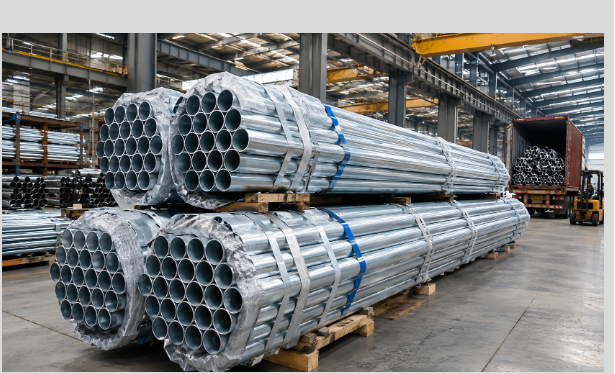
Galvanized steel pipe combines the mechanical strength of steel with a zinc coating that helps slow corrosion in construction, industrial, agricultural, and energy projects. The two main coating types are hot-dip galvanized and pre-galvanized pipe, which differ in coating coverage, cost, appearance, and suitable exposure conditions. Understanding these differences helps buyers compare galvanized steel with alternative materials and confirm the specifications, fabrication, and documentation requirements before ordering.
What Are the Main Coating Types of Galvanized Steel Pipe?
Galvanizing places a zinc layer between the steel and moisture, oxygen, and other environmental factors. It can reduce corrosion in many service conditions, but performance still depends on coating quality, installation, and the actual operating environment.
Hot-Dip Galvanized Steel Pipe
Hot-dip galvanized pipe is normally galvanized after the pipe has been formed. The finished pipe is cleaned and immersed in molten zinc, allowing the coating to cover the pipe surface more continuously.
This method generally produces a thicker coating than pre-galvanizing. It is commonly selected for outdoor structures, humid locations, agricultural facilities, solar mounting systems, and projects exposed to weather or repeated moisture. Its stronger protection usually comes with a higher production cost and a less uniform appearance.
Pre-Galvanized Steel Pipe
Pre-galvanized pipe is made from zinc-coated steel strip or coil that is later formed and welded into a pipe. The process is efficient and often produces a smoother, more consistent surface.
It is commonly considered for indoor structures, controlled environments, greenhouse frames, fencing, and other cost-sensitive applications. However, the welded seam and cut ends may not have the same coating coverage as the original strip, so buyers should confirm how these areas are protected.
Pros and Cons of Galvanized Steel Pipe vs. Alternative Materials
Galvanized steel pipe is often compared with black steel, stainless steel, plastic pipe, and aluminium tube. Each option offers a different balance of corrosion resistance, strength, weight, cost, and fabrication requirements.
Advantages of Galvanized Steel Pipe
- Improved corrosion protection: Compared with untreated black steel, the zinc coating provides additional protection against surface rust and can reduce repainting and maintenance in many outdoor or humid environments.
- High mechanical strength: Galvanized steel retains the strength and rigidity of its steel substrate. It is generally better suited than most plastic alternatives for structural loads, external impact, and equipment support.
- More economical than stainless steel: Where better corrosion protection than bare steel is needed but stainless steel is unnecessary, galvanized pipe can offer a more cost-effective middle ground.
- Wide application range: It can be used for scaffolding, fences, handrails, greenhouse structures, machinery supports, solar mounting frames, agricultural facilities, and selected low-pressure systems.
Disadvantages of Galvanized Steel Pipe
- Higher initial cost than bare steel: Cleaning, zinc coating, handling, and inspection increase production cost.
- Heavier than plastic or aluminium: The additional weight affects shipping, lifting, installation, and supporting structures.
- Coating damage during fabrication: Cutting, welding, threading, bending, and drilling can remove or damage the zinc layer. These areas may require cleaning and repair.
- Not suitable for every environment: Strong acids, strong alkalis, certain chemicals, prolonged immersion, and unsuitable water conditions may accelerate zinc consumption. In highly corrosive services, stainless steel or a specialised coating system may be more appropriate.
Which Applications Suit Galvanized Steel Pipe?
Galvanized steel pipe is generally considered when a project requires the strength or pressure-bearing capability of steel together with additional protection against moisture and external corrosion.
In pipeline applications, it may be specified for selected low-pressure water, gas, oil, steam, coal-gas, and other general utility lines. The zinc coating is particularly valuable where outdoor weather, condensation, or humid operating conditions could cause untreated steel pipe to corrode more quickly. Suitability still depends on the transported medium, operating pressure and temperature, connection method, and project requirements. Chemically aggressive fluids or applications with strict internal cleanliness requirements may require another pipe material or a specialised internal coating.
For structural applications, galvanized pipe is commonly used in scaffolding, greenhouse frames, fences, handrails, solar mounting systems, machinery supports, agricultural structures, and mine tunnel supports. In these projects, the additional galvanizing cost is justified when the pipe must carry loads while remaining exposed to rain, humidity, or repeated outdoor conditions. In dry indoor environments with limited corrosion risk, untreated or painted steel may be a more economical option.
What Should Buyers Confirm Before Ordering?
Before selecting a galvanized pipe manufacturer, buyers should define the technical and commercial scope clearly.
Confirm whether the project requires hot-dip galvanized or pre-galvanized pipe, whether internal and external surfaces must be coated, and the required outside diameter, wall thickness, length, steel grade, and applicable EN, BS, JIS, or other project-specified requirements.
The coating specification should also cover minimum thickness or coating mass, weld-seam treatment, cut-end protection, surface appearance, and inspection method. Any secondary processing—such as cutting, threading, grooving, drilling, bending, or welding—should be confirmed in advance, together with the repair method for damaged coating.
Finally, request the necessary material documents, dimensional and coating inspection records, product marking, third-party inspection arrangements, and export packaging details before production. Clear specifications reduce the risk of disputes, rework, and shipment delays.
Conclusion
Ultimately, galvanized steel pipe is a practical choice for projects that require a balance of mechanical strength, corrosion protection, and cost control. Successful procurement depends on matching the galvanizing method, pipe specifications, fabrication process, and inspection documents to the actual service environment. For international construction, industrial, agricultural, or energy projects, working with an experienced supplier such as Baolai Steel can help buyers coordinate product selection, quality verification, and export requirements more efficiently.