

Omar Hafez is the founder and CEO of Think Big Technology, an AI-driven company building software and infrastructure across construction, finance, and digital identity. He also leads multiple ventures, including Poseidon, an intelligent all-in-one platform for construction management.
Since founding Think Big Technology in 2021, Omar has scaled the company from an idea into a global operation with a team of 45+ across three continents, with offices in the USA and Qatar. The company has established partnerships with leading technology organizations such as Web Summit and Vercel, reinforcing its position within the global technology ecosystem. Omar began his career in financial technology at Deutsche Bank, contributing to systems operating within global financial markets. He studied at the New Jersey Institute of Technology and has since contributed to teams behind multiple successful exits.
His work focuses on designing and deploying scalable, production-ready platforms that address inefficiencies in high-stakes industries. Notably, he led the development of Firedesign.ai, which generated strong early-stage demand signals from enterprises such as Siemens during its initial phase.
Please tell us your name and briefly about your background in the technology and software industry.
I’m Omar Hafez, CEO of Think Big Technology and Poseidon, and Head of AI Innovation at Firedesign.ai. I began my career as a software and IT manager at Deutsche Bank. It taught me how serious technology is when the stakes are high. But over time I burned out. I was building systems that mattered to the organization, yet I couldn’t see how they made a difference to anyone beyond it.
That’s why I started Think Big Technology. I wanted to build for industries like fire protection and construction, where skilled people do critical work and the software world had largely left them behind. Helping them work smarter has given me the sense of purpose I was missing.
Think Big Technology builds AI-driven systems and software for high-stakes industries where performance and reliability are critical. How is the company positioning itself to lead the shift toward domain-specific AI platforms and industrial automation?
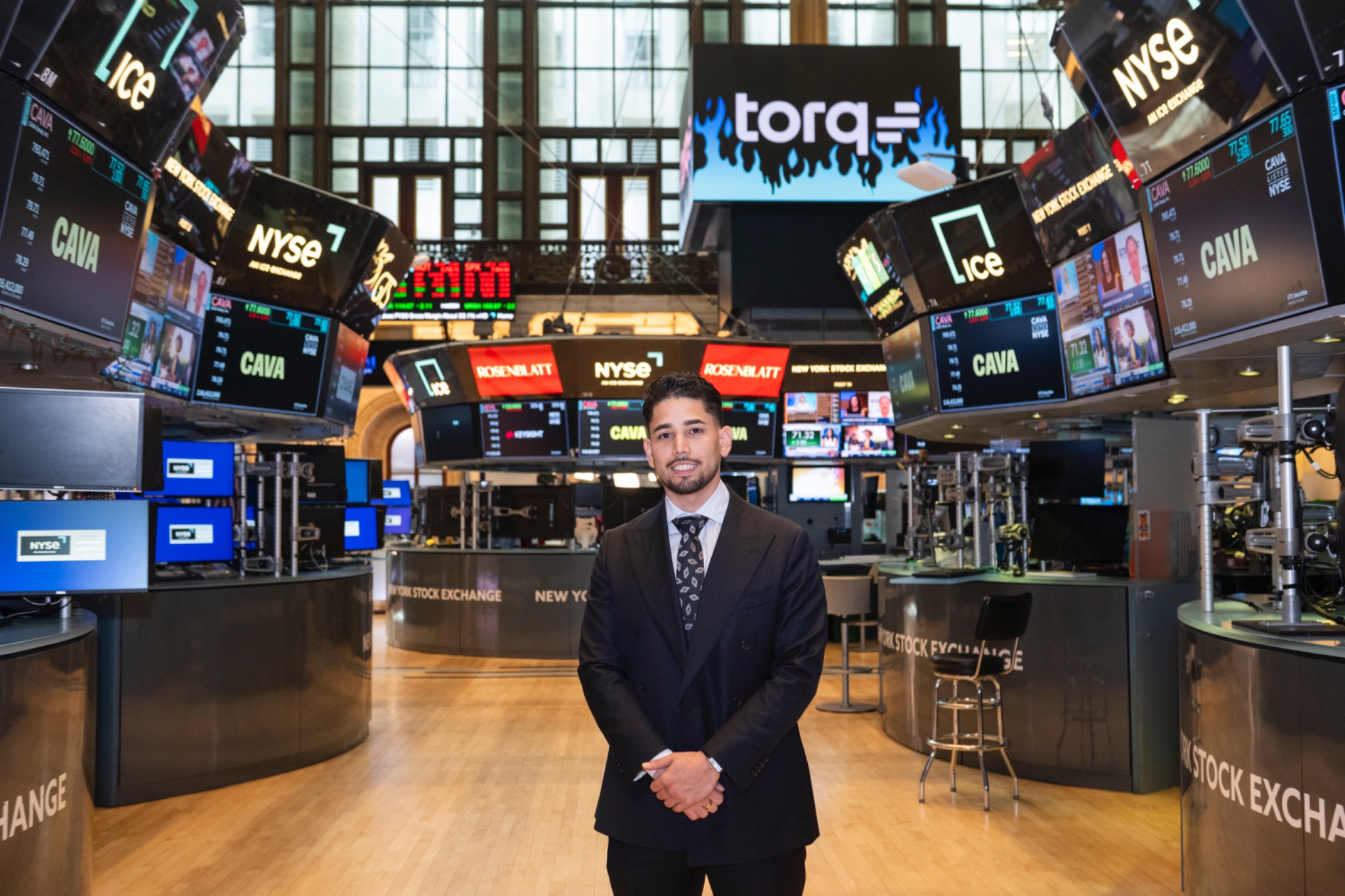
Our position comes down to one belief: in specialized industries, the data and the domain knowledge matter more than the model. General-purpose AI is impressive, but it doesn’t know how a sprinkler system has to be laid out under a sloped ceiling. It doesn’t know what an inspector will flag, either. We do, because we build on real work.
Firedesign.ai is a good example. It’s trained on 15 years of sprinkler layout designs for commercial buildings. Since 2022, our parent organization has given us exclusive rights to its past and future design data, so the system keeps learning from real projects designed by experienced engineers. That proprietary, continually growing dataset is a moat a horizontal AI company can’t replicate. Our strategy is to repeat that pattern in each vertical we enter. We start with deep operational data and real users, and then build automation that fits how the work is actually done.
Your portfolio ranges from AI-powered compliance tools like Sprink AI and Fire Design in fire safety to construction dispatch platforms like Poseidon. How do you identify non-traditional, highly regulated sectors that are ready for AI disruption?
We look for three signals. The first is repetitive expert work: highly skilled people spending much of their time on tasks that follow rules, like code lookups, layout calculations and scheduling. The second is a data asset that already exists but isn’t being used, such as years of drawings, job records or dispatch logs. The third is a real cost to delay or error, where a faster or more accurate answer translates directly into money, safety or competitiveness.
Fire protection checks all three. Construction dispatch, which is what Poseidon addresses, does too. Coordinating crews, equipment and materials across job sites is a daily puzzle that still runs on phone calls and whiteboards at many companies. We also have an advantage most startups don’t: we’re close to operators in these industries. We see the bottlenecks firsthand instead of guessing at them from the outside.
Building AI for critical workflows requires far higher precision than consumer applications. What key technological advantages and architectural frameworks set Think Big Technology’s solutions apart from off-the-shelf enterprise software?
First, we don’t let the model be the final authority. Our systems pair machine learning with deterministic rules engines. The AI proposes a design or a decision, and a rule layer checks it against the applicable standards, such as NFPA requirements, before anything reaches the user. If a result can’t be validated, it gets flagged instead of being presented as an answer.
Second, the training data is domain-specific. Our models learn from real, completed, code-compliant work, not scraped internet data.
Third, our workflows keep a human in the loop. Licensed professionals stay in control.
The software does the heavy lifting and the expert reviews, adjusts and signs off. That makes adoption easier and keeps accountability where it belongs.
Finally, we build end to end. Off-the-shelf enterprise software usually solves one slice of a workflow and leaves the gaps to spreadsheets and email. We build systems that span intake, design, review and field execution.
As CEO, how has your vision guided Think Big Technology's evolution from custom software development into architecting end-to-end infrastructure, automation platforms, and industry-tailored products?
Custom development taught us something important: clients kept bringing us the same problems in slightly different forms. Every engagement showed us where the industry’s real friction was. At some point it became clear that the bigger opportunity was to productize those solutions instead of rebuilding them project by project.
My vision has been to move from building software for clients to building platforms that become infrastructure for an industry. That meant investing in data rights, reusable architecture and products with their own identities, like Firedesign.ai, Sprink AI and Poseidon. Each one is built on a shared technical foundation, so every product makes the next one faster and stronger.
In specialized fields like NFPA code compliance and blueprint analysis, errors aren't just inconvenient, they carry safety and legal consequences. How does Think Big Technology balance rapid AI deployment with strict reliability, accuracy, and safety standards?

We move fast on everything around the core and deliberately on the core itself. Speed matters in interface, workflow and integrations. In the parts that touch compliance and life safety, we hold a much higher bar.
In practice, new model capabilities are tested against historical projects where we already know the correct, approved outcome. Features roll out in assistive mode first, where the AI suggests and the engineer decides, before we automate anything further. Every output is traceable, so users can see which rule or reference a recommendation is based on. And we never position the software as a replacement for professional judgment or the authority having jurisdiction. Our goal is to make experts dramatically more productive, not to take them out of the loop.
Enterprise buyers increasingly demand measurable ROI from emerging technologies. How is Think Big Technology balancing technical innovation with clear commercial outcomes and long-term client value?
We start every product with the metric the customer already cares about, such as design hours per project, turnaround time on bids, revision cycles, crew utilization or missed dispatches. If we can’t tie a feature to one of those numbers, it isn’t a priority.
Firedesign.ai shows what that looks like in practice. In one of our case studies, a sprinkler plan that took 18 hours of manual design work was completed in 1 hour and 45 minutes, start to finish. That’s roughly a 90% reduction in labor on a single plan. An owner at a fire sprinkler contractor told us just this morning that the platform saved him about two weeks of time overall, this was his first time trying out the app. For a design firm, that means more bids out the door, faster turnaround for contractors, and senior engineers spending their time on judgment calls instead of repetitive layout work.
Long-term value comes from compounding. The more a client uses our platforms, the more their own data improves the system, and the more embedded it becomes in how they work. We’d rather earn a ten-year relationship than a flashy pilot.
Looking ahead, what role do you see Think Big Technology playing in shaping the next generation of AI-driven industrial software and connected enterprise systems?
I think the next decade of AI value will come less from general chatbots and more from vertical systems that understand a specific industry deeply. Those systems will be trusted with real work, and they’ll connect design, operations and the field into one loop.
We want Think Big Technology to be the company that proves that model in regulated, physical industries. Picture a building’s fire protection design generated, validated and handed off to the field in a fraction of today’s time. Picture crews and equipment dispatched by a system that already knows the plan. That’s the connected enterprise we’re building toward. Fire protection and construction are where we’re starting. The playbook of proprietary data, domain-specific AI, rule-based validation and human oversight applies to many more industries, and we intend to bring it there.