
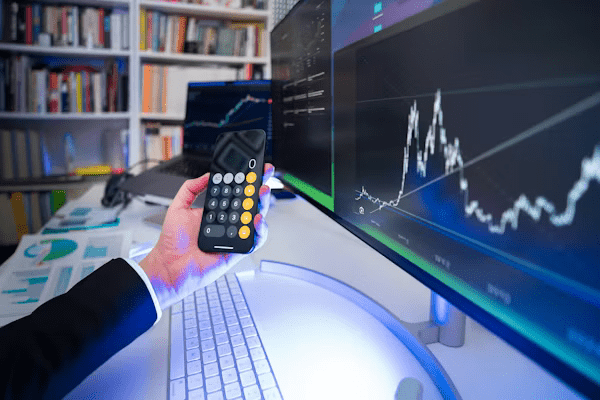
The education investors need depends entirely on how they plan to invest.A passive investor preparing for retirement needs completely different skills than an active trader making daily decisions. Yet many programs try to teach both groups the same material.
This mismatch wastes time and money. Worse, it leaves people unprepared for the actual approach they’ve chosen.
Two Completely Different Learning Paths
When investors decide to learn stock market trading the most important distinction is whether the goal is an active trading approach or a passive investing approach, because the required skills and time commitment differ substantially. Passive investing and active trading may both involve markets, but they rely on fundamentally different knowledge bases and decision-making rhythms.
Active traders need an entirely different education. Trading lessons online for active participants cover technical analysis, chart patterns, risk management, and market timing. The knowledge requirements expand dramatically because the strategy demands constant decisions.
Most investment learning platforms try to serve both audiences. This creates confused curricula that don’t prepare anyone properly. Trading education needs to split these paths from the start.
The core difference is the objective: passive investors generally aim to capture broad market performance through diversification, while active traders aim to outperform through timing and selection.
What Passive Education Actually Teaches
Passive investment education centers on a few key principles that rarely change:
- Index fund selection. Understanding expense ratios and tracking error. Learning why a 0.03% fee matters over 30 years.
- Asset allocation. Determining the right mix of stocks and bonds based on age and risk tolerance. Following basic rules like 110 minus your age equals stock percentage.
- Dollar cost averaging. Investing fixed amounts regularly regardless of market conditions. Removing emotion from the equation.
- Rebalancing schedules. Checking portfolio mix annually and adjusting back to target percentages. Nothing more frequent than that.
Historical returns for passive approaches average 7-10% annually tracking major indexes. Not exciting, but consistent. The low fees and minimal trading keep more money working instead of going to costs.
What Active Trading Education Requires
Active trading education is exponentially more complex. It covers multiple layers of knowledge and skill:
- Technical analysis. Reading charts, identifying patterns, understanding indicators like moving averages and RSI. Knowing when these signals work and when they don’t.
- Fundamental analysis. Evaluating company financials, earnings reports, competitive positioning. Determining intrinsic value versus market price.
- Risk management. Setting stop losses, calculating position sizes, managing portfolio heat. Understanding how much you can afford to lose on any single trade.
- Market psychology. Recognizing emotional triggers, avoiding common biases, maintaining discipline during volatility. This part gets taught least but matters most.
- Platform mechanics. Using order types correctly, understanding execution speeds, managing margin requirements for leveraged positions.
- The time commitment is massive. Active traders often spend hours daily researching positions, monitoring markets, and executing strategies. It’s closer to a full time job than casual investing.
The Execution Gap
Theory sounds simple for both approaches. Execution reveals the real challenges.
Passive investors face temptation during market crashes. Their education taught them to hold through volatility. Actually doing it while watching account values drop 30% requires different strength. The emotional discipline to stay passive gets tested hardest when markets panic.
Active traders face decision fatigue. Their education covered dozens of strategies and indicators. Which one applies right now? Markets move fast. Hesitation costs money. Overconfidence costs more.
Passive execution challenges:
- Ignoring media panic during downturns
- Resisting the urge to time the market
- Sticking to rebalancing schedule instead of reacting daily
- Trusting the long term plan when short term looks terrible
Active execution challenges:
- Managing emotions during losing streaks
- Avoiding overtrading after winners
- Adapting strategies as market conditions change
- Accepting that most trades will be small wins or losses
Many traders attempt to blend both approaches. They maintain a passive core of 80-90% in index funds while actively trading with 10-20% of capital. This hybrid model requires learning both education paths but limits active risk.
What Programs Get Wrong
Most trading education platforms present active strategies as accessible to everyone. They skip over the success rates. They downplay the time requirements. They ignore the psychological demands.
Passive investing programs sometimes do the opposite. They oversimplify to the point of being useless. “Just buy index funds” doesn’t explain which funds, how much, or how to rebalance properly.
The best education matches the approach honestly:
For passive investors, teach the minimal required knowledge. Explain why simplicity works. Show historical data supporting buy and hold. Prepare them emotionally for downturns but discourage constant monitoring.
For active traders, teach the brutal reality upfront. Show the failure statistics. Explain the competition from professionals. Build psychological resilience before technical skills. Require simulated trading before real money.
Choosing Your Path
Neither approach is objectively better. They suit different people with different goals and constraints.
Passive investing works for people who:
- Have other career priorities
- Want steady long term growth
- Dislike daily financial decisions
- Prefer lower risk and stress
Active trading suits people who:
- Enjoy market analysis and research
- Have time for continuous learning
- Can handle high stress and losses
- Want potential for outperformance
Financial advisors generally recommend passive strategies for most individuals. The math supports this. Lower fees and tax efficiency compound powerfully over decades.
But active trading serves purposes beyond just returns. Some people genuinely enjoy the intellectual challenge. Others use small active positions to stay engaged with markets while keeping most money passive.
The Education You Actually Need
Stop taking generic investment courses that try to cover everything. Choose your path first, then find education specific to that approach.
If you’re going passive, you need maybe 20 hours of quality education total. Learn index fund basics, asset allocation principles, and rebalancing mechanics. Then you’re done. Anything beyond that is noise.
If you’re going active, prepare for hundreds of hours of learning before you start. Even then, expect a long apprenticeship of small losses while you gain experience. The education never really stops because markets evolve constantly.
The gap between theory and execution closes through practice, not more courses. Passive investors need to experience holding through a real bear market. Active traders need to feel real losses from real mistakes.
Trading education works when it prepares you for actual execution of your chosen strategy. It fails when it pretends one curriculum serves both approaches. Know which investor you want to be before spending time and money on the wrong education path.