
In the heart of the urban jungle, towering cranes and scaffolding stretch skywards — and with them, the risks for workers building the city. A recent example: a firm in Manhattan launched a social-media campaign to educate Latino construction workers about the hazards of the job site. (Yahoo Finance)
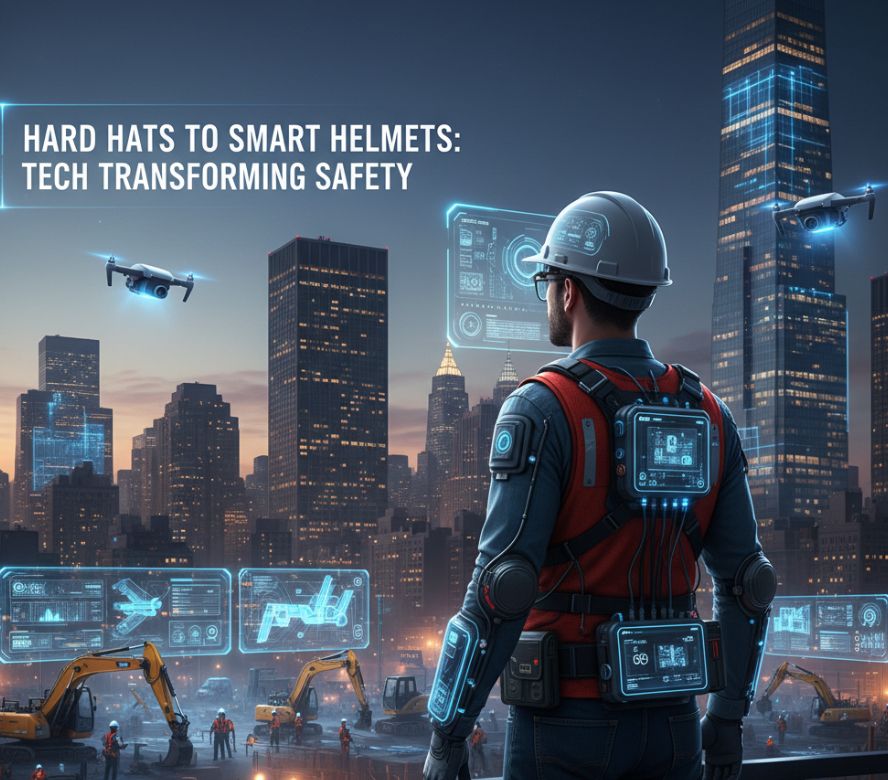
But what if instead of relying only on outreach and safety training, we brought tech into the building site in a way more common in the fintech or crypto world? For day traders like myself, we’re used to real-time data, alerts, dashboards and risk signals. It’s time construction used the same mindset.
Let’s explore how tech is upgrading one of society’s most essential industries — construction — and why that matters for workers, employers and innovators alike.
1. The wake-up call: construction still one of the most dangerous workplaces
Construction sites bring together heavy machinery, heights, moving materials, shifting conditions. Gravity-related accidents — falls from scaffolds, dropped objects — are among the most frequent. (The Law Firm of Jonathan C. Reiter)
Under laws like New York’s Scaffold Law, property owners and general contractors can be held responsible for failing to provide safe equipment and work conditions. (New York City Construction Accident Lawyer)
These realities tell us: the stakes are high. When something goes wrong, the impact is severe. So the question shifts from if to how we can reduce the risk. Technology and data give us the answer.
2. What “smart” looks like on the building site
Much as in trading where we watch liquidity gaps, volume spikes and algorithmic alerts, a construction site can deploy similar signal-detection systems. Here are some tech tools changing the game:
- Wearables / smart helmets: Helmets with built-in sensors that detect accelerations (indicating falls or being struck), geo-location (to track if a worker enters a high-risk zone), and connectivity (alerts sent to supervisors).
- Drone & sensor monitoring: Drones scanning scaffolding, detecting loose components, structural abnormalities, or deviations in construction progress.
- IoT connected equipment: Cranes, lifts and hoists with sensors monitoring load, vibration, tilt, and alerts when thresholds exceed safe limits.
- Data dashboards & predictive analytics: Aggregating worker location, equipment sensor feeds, environmental data (wind, temperature) and maintenance logs to generate risk-scoring in real time — just like trading platforms issuing alerts when a “gap fill” becomes probable.
- Augmented reality (AR) for training and audit: Workers put on AR glasses that simulate hazards, highlight unsafe zones, and enforce best practices before physical deployment.
By layering these technologies, construction can shift from reactive (after an accident) to proactive (pre-empting risk) — similar to how hot-money flows or liquidity gaps alert a trader before the move.
3. Why the occupational angle matters to tech investors & innovators
You might ask: “Why should a tech-centric audience care about construction safety?” Here are some forward-looking reasons:
- Massive market opportunity: The global construction industry runs into trillions of dollars annually. Upgrading safety infrastructure with sensors, wearables and analytics is a multi-billion-dollar TAM (total addressable market).
- Data generation parallel to financial markets: Construction sites generate enormous amounts of real-time operational data — equipment status, worker location, environmental conditions. Tech firms that develop platforms to aggregate, analyze and alert on that data can build sticky solutions.
- Regulatory tailwinds and liability risk: With laws that hold multiple parties accountable (owner, general contractor, subcontractor), there’s a strong incentive to adopt tech that reduces liability. Smart safety tech becomes not just “nice-to-have” but “must-have.”
- Cross-industry spillover: The same sensor, connectivity and analytics tech used in a construction site can migrate to mining, manufacturing, logistics and smart cities — creating multipliers for innovation.
- Human impact and brand value: Construction incidents hit the headlines, affect communities and reputations. Firms that adopt best-in-class safety tech gain a social licence to operate — and that’s increasingly important for investors focused on ESG (environmental, social, governance) criteria.
- A real-world bridge: combining tech with community outreach
Back to the Manhattan example: The firm’s initiative to reach Latino workers across all five boroughs—delivering bilingual education about construction risks—is important. (Yahoo Finance)
But education alone is only part of the equation. The missing piece: real-time tech support.
Imagine the bilingual outreach campaign + smart helmets with instant alerts + a dashboard showing site-wide risk scores. The synergy: Workers feel empowered, companies get data, innovators get scale.
Another example: If you integrate wearable alerts into supervisors’ mobile apps, you could trigger a “stop-work” signal the moment a worker enters a high-risk zone or a sensor detects unsafe equipment load. That’s the sort of proactive trigger traders relish — only here the “asset” is human safety.
5. Looking ahead: what should we watch for in 2026 & beyond
- Standards and interoperability: Safety tech must talk to existing site-management systems. Open APIs, sensor standards and data governance will separate winners from laggards.
- AI-driven prediction: Move from detecting when something went wrong to forecasting when something will go wrong — e.g., combining environmental data + equipment wear-logs + worker movement to flag “hazard likelihood = 87% over next 24 h.”
- Blockchain for liability & compliance: Immutable logs of safety inspections, worker certifications, equipment maintenance — all captured on distributed ledgers so that in a claim scenario, the data is tamper-proof.
- Insurance innovation: Safety-tech adoption may allow lower premiums, usage-based insurance for construction firms, similar to telematics in auto insurance. That frees capital for firms to upgrade.
- Worker-centric tech adoption: The next wave won’t just focus on machines — it will focus on workers — ergonomics, fatigue monitoring, health sensors, enabling longer careers and reduced attrition.
Conclusion
For a tech-savvy audience, the construction site might look far removed from crypto platforms, algorithmic trading and blockchain. But the pattern is the same: real-time data, actionable alerts, risk identification, and a platform that scales.
As we move into a world where machines build machines and workers interface with smart systems, construction safety becomes not only a moral imperative but an opportunity for innovation, investment and technological transformation.