
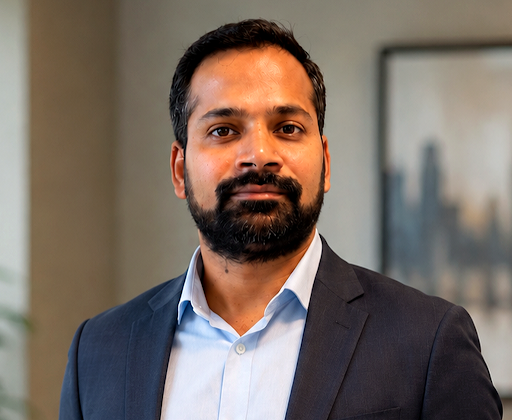
With more than 12 years of experience in technology, Kiran Reddy Sudini has progressed from hands-on database administration to leading multidisciplinary engineering teams responsible for cloud infrastructure, DevOps, reliability, and enterprise operations. In this conversation, he reflects on that evolution, the shift toward automation and cloud-native infrastructure, and the leadership principles that guide his work today.
Q: You’ve been in technology for over 12 years now. How did your career begin?
A: I started my career as a Database Analyst, focusing on enterprise database administration, including installations, backup and recovery, performance tuning, monitoring, and database migrations. From there, I moved into more specialized database engineering roles, where I managed large-scale, mission-critical database environments.
Those early years gave me a strong foundation in performance, availability, data protection, and infrastructure operations. They also taught me something that has stayed with me throughout my career: strong technology environments are built by anticipating problems rather than simply reacting to them.
Q: You spent several years progressing through senior database, cloud, and reliability engineering roles. What did that experience teach you?
A: That period was where I really grew as an engineer. I progressed from high-availability database engineering into Database-as-a-Service and autonomous database engineering, and eventually into Site Reliability Engineering.
I worked on large-scale database backup and recovery cloud services, contributed to architectural design and service improvements, and worked with monitoring approaches based on Service Level Indicators (SLIs) and Service Level Objectives (SLOs).
More importantly, those experiences changed the way I approached engineering. I began looking beyond individual technical issues and thinking about the entire service—how it performs, how it scales, how teams monitor it, how quickly it can recover, and how much of its operation can be automated.
Q: You’ve since advanced into an engineering and development operations leadership role. What does that role look like day to day?
A: I lead multidisciplinary technical teams working across cloud infrastructure engineering, DevOps and release engineering, reliability engineering, electronic data interchange, and database and network operations.
My day-to-day responsibilities range from overseeing cloud migrations and disaster recovery planning to data center operations and modernization of CI/CD pipelines through Infrastructure as Code. I also work closely with management and business stakeholders to evaluate architectural solutions, communicate technical decisions, and advise on infrastructure and cloud cost strategy.
As my career has progressed, my role has become less about solving every technical problem myself and more about creating the environment, processes, and direction that allow engineering teams to solve those problems effectively.
Q: What’s the biggest shift you’ve seen in enterprise cloud infrastructure during your career?
A: Automation has probably been the biggest shift. Early in my career, many infrastructure activities—including provisioning, backups, monitoring, upgrades, and recovery processes—required significant manual effort.
Today, Infrastructure as Code, CI/CD automation, and modern observability tools allow teams to build environments that are much more consistent and repeatable. Engineers can define infrastructure through code, automate deployment processes, monitor systems in real time, and design recovery mechanisms before failures occur.
For me, the most important change isn’t just the technology. It’s the mindset. Infrastructure is increasingly treated as something that can be engineered, tested, versioned, measured, and continuously improved.
Q: How has your background in database engineering influenced the way you approach cloud and DevOps leadership today?
A: Database engineering teaches you to think carefully about performance, availability, recovery, and data integrity because failures can have significant consequences. That mindset has stayed with me as my responsibilities expanded into cloud engineering, DevOps, and reliability engineering.
Whether I’m evaluating a database, a CI/CD pipeline, a cloud environment, or a disaster recovery architecture, I tend to ask similar questions: Can it scale? Can we observe what’s happening? What can we automate? What happens when something fails? How quickly can we recover?
That foundation helps me approach modern infrastructure from both an engineering and operational perspective.
Q: As you’ve moved into leadership, how do you balance technical priorities with business needs?
A: One of the biggest lessons I’ve learned is that the technically strongest solution isn’t always the right business solution. You have to understand cost, risk, operational impact, timelines, security, scalability, and the needs of the people who depend on the technology.
A large part of leadership is translating between those perspectives. Engineers need to understand why certain business priorities matter, while business stakeholders need a clear understanding of the technical risks and tradeoffs behind important decisions.
I try to bring those two sides together so that technology decisions support both long-term engineering quality and organizational objectives.
Q: You began your career in India before building your technology career in the United States. How has that experience shaped your approach to leadership?
A: Working across different technical environments and industries has given me a broad perspective on how organizations use technology and how engineering teams operate.
It has also reinforced the importance of communication, documentation, collaboration, and knowledge sharing. When you’re leading cross-functional teams, technical expertise is important, but leadership also requires understanding different priorities and communicating complex decisions clearly.
My approach is to provide engineers with direction and support while giving them ownership of their work. I want people on my teams to feel comfortable asking questions, proposing better approaches, learning new technologies, and taking responsibility for outcomes.
Q: What role does continuous learning play in your career?
A: Technology changes too quickly for learning to stop once you reach a leadership position. In some ways, leadership makes continuous learning even more important because you’re responsible for helping determine which technologies and approaches are worth pursuing.
I stay engaged with developments in cloud infrastructure, automation, Infrastructure as Code, observability, databases, and modern DevOps practices. I also encourage engineers to experiment thoughtfully, document what they learn, and share knowledge across teams.
I don’t think a technical leader needs to be the person who knows everything. The goal is to build a team where knowledge is continuously growing and being shared.
Q: What advice would you give engineers who want to move from hands-on technical roles into engineering leadership?
A: Don’t think of leadership as leaving technology behind. A strong technical foundation helps you understand the challenges your teams face, but leadership requires developing additional skills.
Learn how to communicate technical ideas clearly, understand business priorities, document decisions, mentor others, and give people ownership. As your responsibilities grow, your impact increasingly comes from helping other engineers succeed rather than being the person who personally solves every problem.
I also think it’s important to stay curious. Technology will continue changing, and good leaders need to remain open to learning from their teams as well as guiding them.
Q: What’s next for you?
A: I’m focused on continuing to modernize infrastructure, strengthen automation and operational resilience, and mentor engineers while staying connected to emerging cloud and engineering technologies.
As I continue growing as a technical leader, I’m interested in opportunities where I can combine hands-on technical understanding with engineering leadership to solve complex problems, develop strong teams, and contribute to broader technology strategy.
Ultimately, I want to continue building technology environments and engineering organizations that are scalable, efficient, and prepared for what comes next.
About Kiran Reddy Sudini
Kiran Reddy Sudini is an engineering and technology leader with more than 12 years of experience across database engineering, cloud infrastructure, Site Reliability Engineering, DevOps, automation, and development operations. He currently serves in an engineering and development operations leadership role, leading multidisciplinary technical teams responsible for mission-critical technology environments.
His academic background includes studies in software engineering and computer science. His professional focus centers on scalable infrastructure, cloud engineering, automation, operational resilience, engineering leadership, and developing high-performing technical teams.
Media Contact
Email: [email protected]
Country: United States
LinkedIn: http://linkedin.com/in/kiran-sudini-msc-56723132