
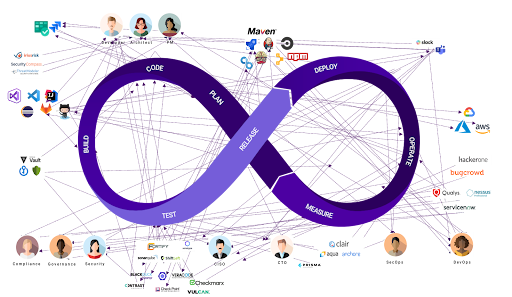
When “continuous delivery” started headlining conference keynotes a decade ago, most teams left inspired—and returned to the same ticket queues, midnight deploys, and silo spats. In early 2023, a fresh playbook called the Lean-Agile & DevOps Maturity Model Roadmap began circulating across engineering Slack channels. Six months in, the framework has moved two dozen product teams from stop-and-go releases to NASCAR-level lap times—without a single new hire.
The Pain: Agile Theater, DevOps in Name Only
Stand-ups were happening, but cycle times still stretched into double-digit days. Pipelines existed, yet ops folks still held pagers for 3 a.m. patch parties. Everyone agreed on why to improve; no one agreed on how—or how to prove progress.
The Brain Behind the Blueprint
Enter Utham Kumar Anugula Sethupathy, a SAFe® Agile Transformation Lead who had seen enough PowerPoints and decided teams needed a GPS, not another scenery slide. Over Q4 2022, he stitched together industry staples—SAFe assessments, Scrum.org rubrics, DevOps Research metrics—and added two missing pieces: a built-in security ladder and telemetry-driven recovery.
Roadmap in a Nutshell
| Track | Level 1: Getting Started | Level 5: All-Star |
| Build | Local scripts, manual versioning | One-click, reproducible, containerized |
| Deployment | Weekend change window | Zero-touch, canary with auto-rollback |
| Telemetry | Log files | Self-healing alerts + automatic rollback |
| Testing | Unit tests | Contract, chaos, & mutation tests in CI |
| Security | Annual pen test | Shift-left SAST/DAST on every commit |
| Architecture | Monolith | Modular services with API-level SLAs |
Each level comes with yes/no checkpoints, sample metrics, and a “promotion” gate (example: cycle time under ten days for three sprints straight).
How the Rollout Worked
- Workshop Blitz – Twenty on-site sessions gave 200+ engineers hands-on practice refactoring pipelines and writing test oracles.
- Self-Assessment App – A lightweight survey fed scores to a shared dashboard, turning gut feelings into burndown charts.
- Progress Gates – Advancement required hitting numeric targets: 30 % faster cycle time, < 2 % escaped defects, 80 %+ build reproducibility. No target, no promotion.
Six-Month Scorecard (Nov 2022 → Apr 2023)
| Metric | Before Roadmap | After Roadmap |
| Median cycle time | 15 days | 10 days (-33 %) |
| Deploys per team per month | 5 | 7 ( +40 %) |
| Post-deploy defects | 14 per release | 7 (-50 %) |
| Hot-fix hours/mo | 350 | 180 (-49 %) |
One team even bragged about rolling back a bad build in under four minutes—no human intervention needed—thanks to the telemetry ladder’s “self-healing” requirement.
Why This Matters to Tech Executives & Investors
- Faster Payback – Shaving five days off cycle time means revenue arrives a week sooner; compounding across multiple releases, cash-flow curves shift noticeably.
- Lower Burn Rate – Hot-fix hours halved equals thousands in saved engineering payroll each month.
- Customer Stickiness – Defect reduction fed directly into higher NPS scores in the organization’s Q1 2023 customer survey.
What Makes This Framework Different
- Security Is Track, Not Checkbox – The model demands SAST/DAST at Level 3 and requires passing OWASP ZAP gates before Level 4 promotion.
- Telemetry-First Mindset – Progress isn’t “done” until dashboards can trigger automated rollback. Observability is part of the definition of done, not an afterthought.
- Vendor-Agnostic – Jenkins, GitHub Actions, GitLab, or Azure DevOps all map to the checkpoints. No lock-in, no sponsor bias.
Voices from the Trenches
“We stopped debating who broke prod and started bragging about who automated the fix.”
— Senior Developer, platform team
“The maturity gates turned release planning from vibes to verifiable numbers. Our CFO finally sees DevOps on the balance sheet.”
— Product Line Manager
Next on the Horizon
- Green Metrics – A pilot is adding “joules per build” to the telemetry track, riding the wave of sustainable software.
- Community Edition – Sethupathy plans to open-source a trimmed version of the assessment app, inviting SMEs to fork and tailor.
- Lean Portfolio Tie-In – Work has started on aligning maturity levels with Lean Portfolio Management funding models—early signs point to quicker budget approvals when teams show data-backed improvement curves.
Take-Home for TechBullion Readers
Frameworks often drown in acronyms; this one surfaces in hard numbers—cycle time, defects, rollback minutes. In a climate where engineering budgets face CFO scrutiny, the Lean-Agile & DevOps Maturity Model Roadmap shows improvement can be both measurable and budget-savvy. Teams get a north star; leaders get ROI proof; customers get smoother releases.
For organizations stuck in agile theater, Sethupathy’s roadmap offers a clear exit onto the fast lane—no new headcount, no silver-bullet tooling, just a disciplined step-up ladder that anyone can climb.