

Fraudulent insurance claims continue to cost the global insurance industry billions of dollars every year. In motor insurance alone, from exaggerated repair estimates to entirely fabricated accidents, fraud manifests in many forms. As claim volumes increase and customer expectations shift toward faster settlements, insurers are under immense pressure to process claims quickly without compromising accuracy.
Traditionally, motor insurance claims have relied heavily on manual inspections, adjuster judgment, and document-based verification. While effective in smaller volumes, these processes are inherently prone to human error, subjective assessment, and deliberate manipulation. Fraudsters exploit these gaps, knowing that overstretched claims teams cannot scrutinize every case with the same level of rigor.
This is where AI-powered vehicle inspections are changing the equation. By introducing intelligent automation at the earliest stages of the claims lifecycle, insurers can detect inconsistencies, verify damage authenticity, and reduce fraud before payouts are even considered. Rather than reacting to fraud after losses occur, AI enables proactive fraud prevention right from the first point of contact.
Understanding Fraud in Motor Insurance Claims
Motor insurance fraud is rarely limited to extreme or obvious cases. In fact, the most damaging fraud often occurs in subtle, repeatable ways that are difficult to detect through manual review.
Common Types of Motor Insurance Fraud
Some of the most prevalent fraud patterns include:
- Reused or staged vehicle photos
Claimants may submit old images from previous incidents, images sourced online, or photos from other vehicles that resemble their own. - Inflated repair estimates
Minor damage is exaggerated to include unrelated repairs, replacement of unaffected parts, or inflated labor costs. - Claiming pre-existing damage as new
Damage that existed before policy issuance or before an incident is falsely attributed to a recent event. - Ghost claims
Entirely fabricated claims where the vehicle was never involved in an accident, but damage is falsely reported. - Concealed or disguised damage
Stickers, mud, tape, or creative framing are used to hide or distort the true extent of damage during inspections.
Manual review processes struggle to catch these patterns consistently, especially at scale. As claim volumes grow, insurers often face a trade-off between speed and scrutiny, creating opportunities for fraud to slip through unnoticed.
What Is AI-Powered Vehicle Inspection?
AI-powered vehicle inspection leverages computer vision and deep learning to analyze images or videos of a vehicle and automatically assess its condition. Instead of relying solely on human judgment, AI models are trained on millions of vehicle images to understand how genuine damage looks across different vehicle types, lighting conditions, and angles.
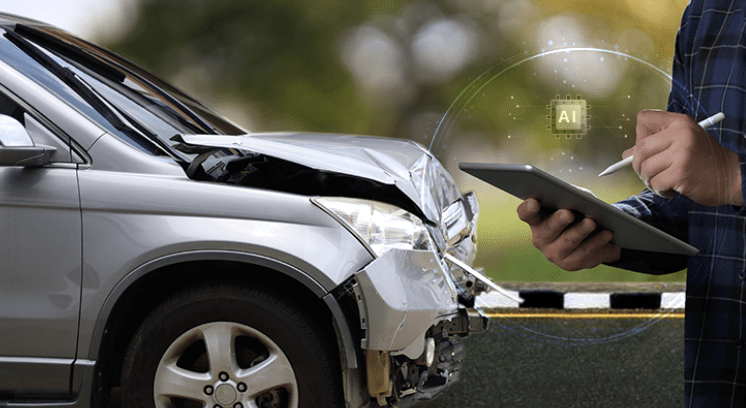
At a functional level, AI-powered inspection systems can:
- Detect and classify damage such as scratches, dents, cracks, broken parts, and glass damage
- Identify the precise location and severity of damage on the vehicle
- Generate structured, standardized inspection reports with visual evidence
- Attach timestamps, device data, and contextual information to each inspection
These systems can be deployed at multiple touchpoints in motor insurance, including First Notice of Loss (FNOL), policy onboarding, renewals, post-accident claims, and even vehicle handovers. This flexibility makes AI inspections for motor insurance a powerful fraud prevention tool across the entire policy and claims lifecycle.
How AI Detects and Prevents Fraud
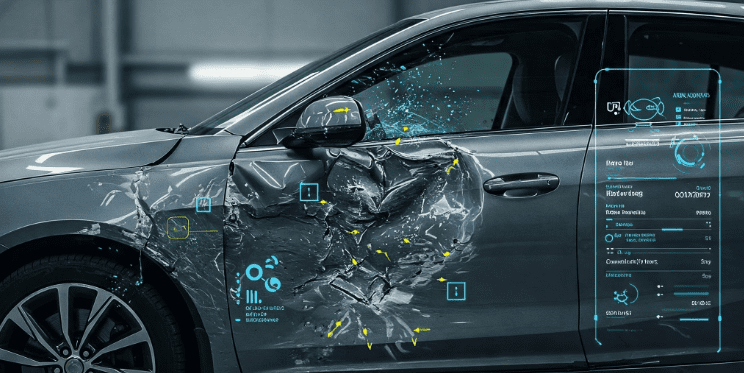
AI-powered vehicle inspection platforms go beyond basic damage detection. They apply multiple layers of intelligence to validate the authenticity, timing, and consistency of claim submissions, which helps reduce the chances of fraud significantly.
Image Integrity Checks
AI systems analyze the technical and visual properties of submitted images to ensure they are genuine.
- Detect reused, duplicated, or previously submitted images
- Identify screenshots, edited images, or images sourced from external platforms
- Analyze metadata such as timestamps, device information, and geolocation
- Flag inconsistencies in lighting, reflections, or shadows that suggest manipulation
These checks make it significantly harder for claimants to submit recycled or altered photos without detection.
Historical Damage Matching
One of the most effective fraud prevention mechanisms is historical comparison.
- AI compares new inspection images against prior inspection records
- Pre-existing damage is automatically identified and flagged
- Prevents “double-dipping,” where the same damage is claimed multiple times across policies or incidents
By maintaining a visual history of a vehicle’s condition, insurers gain long-term visibility that manual systems simply cannot provide.
Anomaly Detection in Damage Patterns
AI models are trained to recognize what genuine accident damage typically looks like.
- Distinguish between natural wear-and-tear and sudden impact damage
- Identify damage patterns that are inconsistent with the reported incident
- Flag cases where claim descriptions do not align with visual evidence
This allows insurers to focus investigative efforts only where there is a genuine risk, rather than reviewing every claim equally.
Tamper-Proof Audit Trails
Modern AI inspection platforms create a secure, traceable record for every inspection.
- Each inspection is logged with timestamps, user IDs, and device details
- Changes or re-submissions are tracked and auditable
- Ensures accountability across agents, partners, and customers
These audit trails not only deter fraud but also strengthen an insurer’s ability to defend decisions during disputes or regulatory reviews.
Business Impact of AI-Powered Fraud Prevention
The value of AI-powered vehicle inspections extends well beyond fraud detection. When implemented correctly, they deliver measurable operational and financial benefits.
- Reduced fraudulent payouts by identifying suspicious claims early
- Lower claims leakage through consistent, objective damage assessments
- Faster claim processing, as low-risk cases are approved automatically
- Improved customer trust, driven by fairness and transparency
- Better utilization of human assessors, who can focus on complex or high-value cases instead of routine reviews
Over time, these improvements compound—leading to lower loss ratios, improved profitability, and a more scalable claims operation.
Real-World Applications
AI-powered vehicle inspections are already being deployed across multiple vehicle-centric industries.
- Insurance companies use AI to pre-screen claims at scale, automatically flagging high-risk submissions for further review
- Car rental companies rely on timestamped AI inspections at pickup and return to reduce disputes and eliminate false damage claims
- Fleet operators and leasing providers document vehicle condition continuously, preventing liability transfer fraud between drivers, vendors, and partners
In each of these use cases, AI provides an objective source of truth that helps in reducing ambiguity, disputes, and manual intervention.
Conclusion
Fraud remains one of the most persistent and costly challenges in motor insurance claims. As fraud techniques evolve and claim volumes increase, traditional manual processes are no longer sufficient on their own.
AI-powered vehicle inspection systems offer a scalable, accurate, and intelligent defense against claims fraud. By verifying not just the presence of damage, but also its authenticity, timing, and consistency, AI shifts fraud prevention from reactive investigation to proactive protection.
For insurers and vehicle-based businesses, investing in AI-powered inspections is no longer just about operational efficiency. It is a strategic move to protect margins, enhance trust, and build a future-ready claims ecosystem where every decision is backed by data, not doubt.