
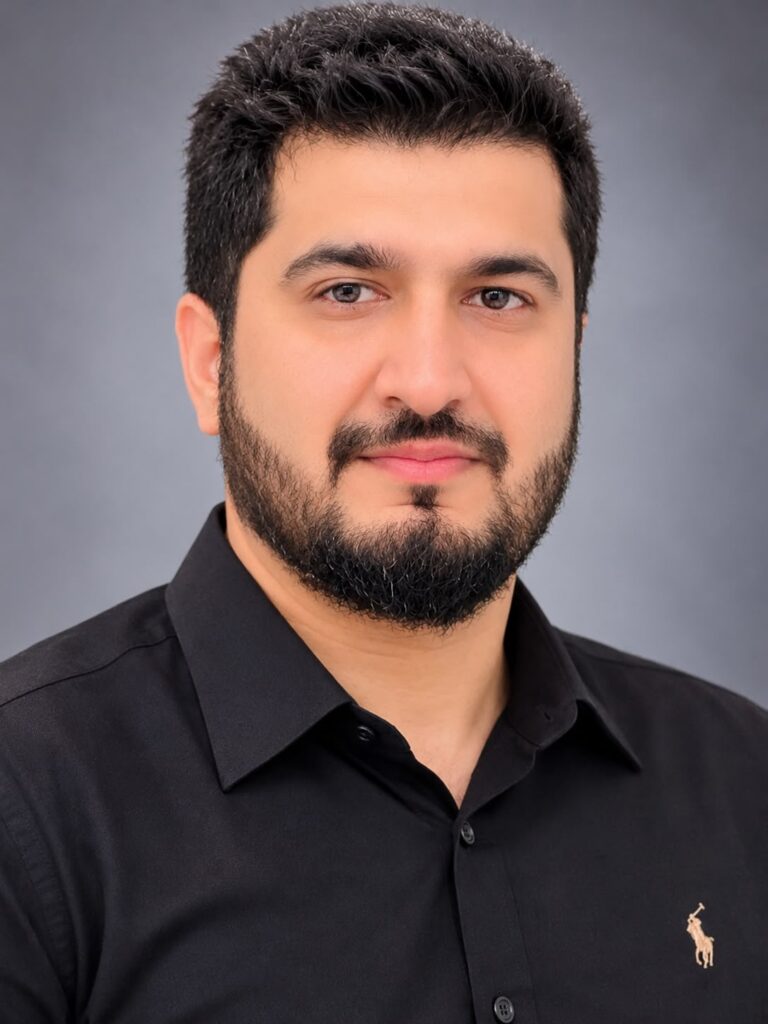
With research spanning artificial intelligence, machine learning, Internet of Things, financial technology, and cybersecurity, Faisal Rahman is contributing to interdisciplinary discussions about the opportunities and challenges shaping intelligent digital systems.
Artificial intelligence is increasingly influencing how organizations approach decision-making, education, financial security, industrial operations, and digital infrastructure. As intelligent technologies become more integrated into everyday systems, research into their capabilities, limitations, security implications, and responsible implementation is becoming increasingly important.
Faisal Rahman, an Information Technology Management master’s student at Southwest Baptist University, is developing a research portfolio that explores several of these emerging technological areas. His academic interests and collaborative publications cover artificial intelligence, machine learning, deep learning, cybersecurity, Internet of Things, and the application of intelligent systems across different industries.
His research portfolio reflects an interdisciplinary approach to understanding how emerging technologies can be applied to practical challenges while addressing questions surrounding security, reliability, governance, and responsible adoption.
Exploring Artificial Intelligence and Its Applications
A significant theme across Rahman’s research portfolio is the application of artificial intelligence to real-world systems.
One of his collaborative publications, An Advanced AI-Driven Risk Assessment Framework for US Banking Institutions: Integrating Predictive Financial Analytics, Regulatory-Aware Governance and Cybersecurity Risk, examines the intersection of predictive financial analytics, regulatory governance, and cybersecurity risk management.
The research addresses an important challenge facing financial institutions: how intelligent analytical systems can support risk assessment while accounting for regulatory and cybersecurity considerations.
Another publication, The Impact of Generative Artificial Intelligence on Student Learning Outcomes: The Mediating Role of Student Engagement and AI Literacy in Higher Education, explores the relationship between generative AI, student engagement, AI literacy, and educational outcomes.
This research connects technological adoption with the human and educational factors that influence how artificial intelligence is used in academic environments.
His portfolio also includes Generative AI in Higher Education: Global Trends, Challenges, and Policy Implications, which examines broader developments and policy considerations surrounding the integration of generative AI into educational institutions.
Together, these research themes highlight the importance of evaluating artificial intelligence beyond its technical capabilities, including its institutional, educational, and societal implications.
Research into Intelligent Systems and the Internet of Things
Another area represented in Rahman’s publications is the intersection of artificial intelligence and connected technologies.
His collaborative publication, IoT-Based Remote Monitoring and Control of Robots for Hazardous Environments Using Machine Learning, addresses the application of machine learning and Internet of Things technologies to remote robotic monitoring and control.
The subject is particularly relevant to environments where remote operations and intelligent monitoring can support industrial and operational processes.
His research portfolio also includes Hybrid AI Architecture for Predictive Maintenance in Smart Manufacturing Integrating IIoT Digital Twins and Explainable AI.
This work explores the combination of industrial Internet of Things technologies, digital twins, predictive maintenance, and explainable artificial intelligence.
Predictive maintenance is an important research area for smart manufacturing because it focuses on identifying potential equipment problems and supporting maintenance decisions through data-driven approaches.
The integration of explainable AI also raises an important consideration: intelligent systems should not only generate predictions but should provide interpretable information that helps users understand their outputs.
Examining Cybersecurity and Privacy in Emerging AI Systems
As artificial intelligence becomes more autonomous and interconnected, cybersecurity and data privacy have become important research considerations.
Rahman’s research portfolio includes Securing Agentic Artificial Intelligence Systems: Assessing Prompt Injection, Memory Poisoning, and Autonomous Tool-Use Risks in Intelligent Applications.
This publication examines security challenges associated with agentic AI systems, particularly risks involving prompt injection, memory poisoning, and autonomous tool use.
These issues are relevant to the development of intelligent applications capable of interacting with external tools, processing information, and performing multi-step operations.
His collaborative publication, Federated TinyML with Post-Quantum Security: Quantifying the Privacy–Robustness Trilemma in Critical Care IoMT, explores another important technological intersection.
The research brings together federated learning, TinyML, post-quantum security, and the Internet of Medical Things. These technologies are relevant to discussions about privacy-preserving machine learning and security in connected healthcare environments.
The growing use of intelligent technologies in sensitive environments makes research into privacy, security, and system robustness particularly important.
Artificial Intelligence, Digital Transformation, and Society
Beyond engineering and technical applications, Rahman’s research portfolio also touches on the broader relationship between artificial intelligence and society.
His collaborative publication, The Impact of Artificial Intelligence and Digital Transformation on Society: An Interdisciplinary Study of Human Behavior, Education, Governance, and Social Change, examines the wider implications of technological transformation.
This research area recognizes that the adoption of artificial intelligence is not exclusively a technical development. It also involves changes in human behavior, institutional processes, educational systems, and governance structures.
Another publication, From AI Adoption to Management Effectiveness: Examining Leadership as the Mediating Mechanism in Special Education, explores the relationship between artificial intelligence adoption, leadership, and management effectiveness in an educational context.
These interdisciplinary subjects demonstrate the importance of considering organizational and human factors when evaluating the implementation of emerging technologies.
Academic Development and Research Direction
Rahman is pursuing a Master of Science in Information Technology Management at Southwest Baptist University.
His research portfolio reflects engagement with emerging areas of information technology, particularly artificial intelligence, machine learning, cybersecurity, connected systems, and digital transformation.
Through collaborative research covering financial risk assessment, educational technology, intelligent manufacturing, autonomous AI security, and connected healthcare systems, his academic interests intersect with several important conversations in contemporary technology research.
The breadth of these subjects also reflects the increasingly interdisciplinary nature of information technology, where developments in artificial intelligence often intersect with security, management, education, healthcare, and industrial applications.
Looking Ahead
The next phase of technological development will require continued research into how intelligent systems can be designed, deployed, secured, and governed responsibly.
Artificial intelligence, connected devices, autonomous applications, and data-driven decision-making are creating new opportunities while introducing technical and institutional challenges that require sustained investigation.
Faisal Rahman’s research portfolio engages with several of these developments, particularly the intersection of artificial intelligence, cybersecurity, machine learning, and intelligent digital systems.
As he continues his academic development at Southwest Baptist University, his research interests remain connected to important questions about the future of intelligent technologies and their applications across different sectors.
His academic journey reflects the growing importance of interdisciplinary research in understanding the technologies shaping the digital economy.