
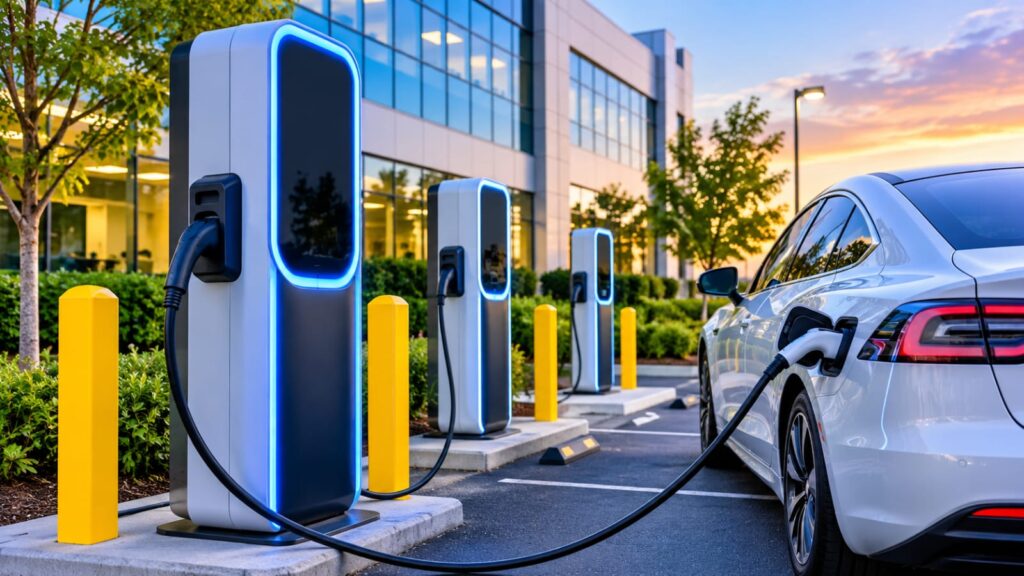
Electric vehicles are no longer a niche curiosity on American roads. They are becoming a standard part of daily transportation, and that shift is changing what tenants, customers, and employees expect from the properties they visit, work in, and live in. For commercial property owners, this growing demand means that commercial EV charging infrastructure has moved from a nice-to-have amenity to a serious business consideration with real financial and strategic implications.
Whether you own an office building, a retail center, a multifamily complex, or a mixed-use development, understanding how EV charging infrastructure works, what it costs, and how it affects property value is essential. This guide breaks down the key factors commercial property owners need to evaluate before installing charging stations on their property.
Why Commercial EV Charging Infrastructure Matters Now
The number of electric vehicles on the road has grown steadily over the past several years, and that growth shows no sign of slowing. As more drivers make the switch from gasoline-powered vehicles to EVs, the demand for reliable, accessible charging options grows right alongside it.
For commercial property owners, this trend creates both an opportunity and a pressure point. Properties without charging infrastructure risk falling behind in a market where tenants and customers increasingly expect it. Office tenants want charging available for employees. Retail customers are more likely to choose a shopping center that lets them charge while they shop. Multifamily residents, especially in urban and suburban markets, often list EV charging access as a deciding factor when choosing where to live.
At the same time, installing commercial EV charging infrastructure isn’t simply a matter of plugging in a few stations and calling it done. It requires careful planning around electrical capacity, equipment selection, installation costs, ongoing maintenance, and long-term return on investment. Property owners who approach this thoughtfully can turn charging infrastructure into a genuine value-add, while those who rush the process may end up with underused equipment, unexpected costs, or systems that cannot scale as demand increases.
Understanding the Types of EV Chargers
Before diving into installation planning, it helps to understand the three main categories of EV chargers, since the type you choose will shape nearly every other decision in the process.
Level 1 charging uses a standard 120-volt outlet, the same kind found in most homes. It is the slowest option, typically adding only a few miles of range per hour, and it is rarely practical for commercial settings where turnover and convenience matter.
Level 2 charging uses a 240-volt connection and is the most common choice for commercial properties. It charges significantly faster than Level 1, usually adding 10 to 60 miles of range per hour depending on the vehicle and the charger’s power output. Level 2 stations are well suited for locations where vehicles stay parked for a while, such as office buildings, apartment complexes, hotels, and retail centers.
DC fast charging, sometimes called Level 3, is the fastest option available and can charge a vehicle to 80 percent capacity in as little as 20 to 40 minutes. This type of charger requires significantly more electrical infrastructure and a much higher upfront investment, which is why it’s more commonly found along highway corridors, at travel centers, and in high-traffic retail locations where quick turnover matters most.
For most commercial properties, particularly those where vehicles are parked for extended periods, Level 2 charging strikes the best balance between cost, speed, and practicality.
Evaluating Your Property’s Electrical Capacity
One of the first and most important steps in planning commercial EV charging infrastructure is assessing whether your property’s existing electrical system can support it. This is not something to guess at or assume; it requires a professional electrical assessment, typically conducted by a licensed electrician or an engineering firm with experience in EV infrastructure.
Older commercial buildings, in particular, may have electrical systems that were never designed to handle the additional load that EV chargers introduce. Depending on the results of the assessment, you may need to upgrade your electrical panel, add new wiring, or even request additional capacity from your local utility provider. These upgrades can represent a substantial portion of your total project cost, so it’s important to factor them in early rather than discovering them partway through installation.
Some property owners find that a phased approach works best: installing the necessary electrical infrastructure to support future expansion, even if only a few charging stations are installed initially. This approach, sometimes called “make-ready” infrastructure, allows you to add more chargers later without having to redo the underlying electrical work, which can save significant time and money down the road.
Choosing the Right Number and Placement of Chargers
Determining how many charging stations to install, and where to place them, depends heavily on the type of property and how it’s used. An office building with a predictable daily tenant base will have different needs than a retail center with constant customer turnover or a multifamily property where residents expect overnight access.
A good starting point is to look at current EV adoption rates in your region and project forward using industry growth estimates. Many property owners also start small, installing two to four stations initially, and then scale up as demand increases. This approach avoids overbuilding before you have real usage data to guide you.
Placement matters just as much as quantity. Charging stations should be located in spots that are easy to find, well-lit, and close enough to entrances to feel convenient, without creating congestion in high-traffic parking areas. For retail and office properties, placing chargers near the front of the lot can also serve as a visible signal to customers and tenants that the property is forward-thinking and accommodating.
Costs and Funding Options
The cost of installing commercial EV charging infrastructure varies widely depending on the type of charger, the scope of electrical work required, and the number of stations installed. Level 2 chargers typically cost less per unit than DC fast chargers, but the total project cost also depends heavily on site-specific factors like trenching, conduit runs, panel upgrades, and permitting.
Fortunately, property owners are not always left to shoulder these costs alone. Federal, state, and local governments have introduced various incentive programs designed to encourage the expansion of EV charging infrastructure, including tax credits, rebates, and grant programs. Utility companies in many regions also offer incentives, particularly for make-ready infrastructure, since expanding charging access benefits the broader electrical grid planning process as well.
Before starting a project, it’s worth researching what incentives are currently available in your state and municipality, as these programs change frequently and can meaningfully offset upfront costs. Working with a charging equipment provider or installation partner who is familiar with your region’s incentive landscape can also help ensure you don’t leave money on the table.
Choosing a Business Model: Who Pays for Charging?
Another key decision for commercial property owners is how the charging stations will be monetized, if at all. There are a few common approaches, each with different implications for revenue, tenant relations, and administrative complexity.
Some property owners choose to offer charging as a free amenity, absorbing the electricity cost as part of overall property operating expenses. This approach can be a strong differentiator for attracting tenants or customers, though it does come with an ongoing cost that needs to be factored into budgeting.
Others choose to charge users directly, either through a flat fee, a per-kilowatt-hour rate, or a time-based rate. This model allows the property to recoup electricity costs and potentially generate additional revenue, but it requires payment processing systems and network software to manage billing.
A third option involves partnering with a third-party charging network provider, which installs, owns, and operates the equipment in exchange for a share of the revenue or a lease arrangement for the space. This model reduces the upfront burden on the property owner but also means giving up some control over pricing, maintenance, and the overall user experience.
The right choice depends on your property type, your financial goals, and how much operational involvement you want in managing the charging stations over time.
Maintenance and Long-Term Management
Once installed, commercial EV charging infrastructure requires ongoing attention to stay reliable and useful. Chargers that are frequently out of service create frustration for tenants and customers and can quickly undermine the goodwill that installing the infrastructure was meant to build in the first place.
Routine maintenance typically includes software updates, hardware inspections, and prompt repairs when issues arise. Many property owners choose to work with a charging network provider or third-party maintenance company to handle this on an ongoing basis, since in-house teams often lack the specialized expertise needed for EV equipment.
It’s also worth considering how usage data will be monitored over time. Many modern charging stations come with network connectivity that allows property owners to track usage patterns, identify maintenance needs before they become major problems, and make informed decisions about when to expand capacity.
The Impact on Property Value and Tenant Attraction
Beyond the practical considerations of installation and maintenance, commercial EV charging infrastructure can have a measurable impact on property value and marketability. Commercial real estate is increasingly competitive, and amenities that align with evolving tenant and customer expectations can set a property apart.
For office properties, EV charging access can be a meaningful factor in attracting and retaining corporate tenants, many of whom are focused on sustainability goals and employee satisfaction. For retail properties, charging stations can increase dwell time, as customers who are charging their vehicles are more likely to spend additional time and money at nearby businesses. For multifamily properties, charging access has become an increasingly common request from prospective residents, particularly in markets with higher EV adoption rates.
As EV adoption continues to climb, properties that lack charging infrastructure may find themselves at a competitive disadvantage, while those that invest early can position themselves as forward-looking and responsive to market demand.
FAQ: Common Questions About Commercial EV Charging Infrastructure
How long does it take to install commercial EV charging infrastructure?
Installation timelines vary depending on the scope of the project. Common factors that affect timing include:
- Whether electrical panel upgrades are needed
- The number of charging stations being installed
- Local permitting and inspection requirements
- Availability of contractors and equipment
Simple installations with adequate existing electrical capacity may take a few weeks, while larger projects requiring significant electrical upgrades can take several months from planning to completion.
Do I need a permit to install EV chargers on commercial property?
Yes, in nearly all jurisdictions. Permitting requirements typically cover electrical work, structural modifications, and sometimes accessibility compliance under the Americans with Disabilities Act. It’s best to consult with a local contractor or your municipality’s building department early in the planning process.
How many EV chargers should a commercial property install?
There is no universal answer, but many property owners start with two to four stations and expand based on actual usage. Key factors to consider include:
- Current EV adoption rates in your region
- Property type and typical visit duration
- Budget for initial installation versus future expansion
- Available electrical capacity for scaling up later
Can I make money from EV charging stations on my property?
Yes, depending on the business model you choose. Direct user fees, partnerships with charging network operators, and utility incentive programs can all contribute to covering costs or generating revenue, though some property owners choose to offer charging for free as a tenant or customer amenity instead.
What happens if a charging station breaks down?
Most commercial charging stations include some form of remote monitoring that alerts the property owner or network operator to issues. Response times depend on the service agreement in place, which is why many property owners opt for a maintenance contract with their equipment provider or a third-party service company to ensure prompt repairs.
Is commercial EV charging infrastructure required by law?
Requirements vary by state and municipality. Some jurisdictions have adopted building codes that require new commercial construction, or major renovations, to include EV-ready infrastructure or a certain number of charging stations. It’s important to check local codes before beginning any new construction or major retrofit project.
Planning for the Road Ahead
Commercial EV charging infrastructure represents a significant shift in how commercial properties are designed, managed, and marketed. For property owners willing to invest the time in proper planning, from electrical assessments to choosing the right business model, the payoff can include stronger tenant retention, increased property value, and a meaningful competitive edge in an evolving market.
The key is approaching the project methodically: understanding your property’s electrical capacity, choosing the right charger types and quantities, exploring available incentives, and selecting a long-term management approach that fits your goals. Properties that get ahead of this trend now will be well-positioned as EV adoption continues to accelerate in the years ahead.