
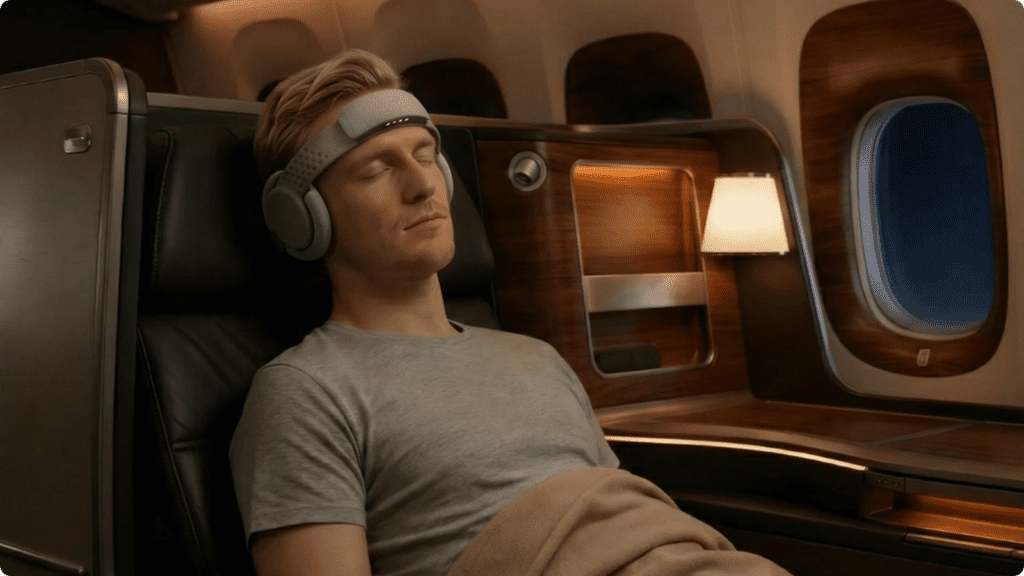
We spend roughly one-third of our lives asleep, yet millions of people wake up feeling exhausted. For a long time, the only way to understand our sleep was to guess based on how we felt the next morning. Today, technology has opened a window into our nights. However, not all sleep tracking technologies are created equal. If you’ve ever wondered why your smartwatch says you slept great when you feel terrible, it comes down to the fundamental difference between tracking physical movement and monitoring actual brain activity.
Key Takeaways
- The Shift in Tracking: Sleep tracking has evolved from simply counting hours in bed to analyzing the actual quality and architecture of your sleep.
- Indirect vs. Direct Monitoring: Traditional wearables (watches, rings) rely on indirect physical signals like heart rate and movement, while EEG devices measure actual brainwave activity.
- The EEG Advantage: An EEG headband provides clinical-grade insights by accurately identifying sleep stages, exact sleep onset, and micro-awakenings that traditional trackers often miss.
- Choosing What’s Right: Basic wearables are great for establishing a routine, but those struggling with sleep quality or looking for active sleep assistance benefit most from an advanced EEG sleep headset.
The Rise of Sleep Wearables
Over the past decade, there has been a massive surge in the popularity of sleep wearables. This trend is driven by a growing awareness of how crucial sleep health is to our immune system, cognitive function, and emotional well-being.
At the same time, the modern epidemic of stress, anxiety, and insomnia has created a vast demographic of people desperately seeking solutions for better rest. Users are no longer satisfied with merely knowing how long they slept. They want to know how well they slept. They are asking complex questions: Am I getting enough Deep Sleep? Why do I wake up feeling groggy? This shift in consumer demand has pushed the wearable technology industry to evolve rapidly.
Major Types of Sleep Wearable Devices
To understand where the industry is heading, we first need to look at the current landscape of mainstream sleep wearables.
Smartwatches and Fitness Bands
These are the most common sleep trackers on the market. Worn on the wrist, devices like the Apple Watch or Fitbit utilize a combination of accelerometers and optical heart rate sensors to track your night.
Smart Rings
Increasingly popular for their comfort and unobtrusive design, smart rings (like the Oura Ring) track similar metrics to smartwatches but gather data from the blood vessels in your finger, which can sometimes provide more stable heart rate readings during the night.
Head-Mounted Devices
This is the newest frontier in consumer sleep technology. Worn on the head or forehead, these devices aim to get closer to the source of sleep itself: the brain.
While watches and rings are convenient, it is crucial to understand what they actually measure. They rely on indirect signals—primarily actigraphy (body movement), heart rate (PPG), and blood oxygen levels (SpO2). They use complex algorithms to guess your sleep state based on these physical reactions. This sets the stage for a critical limitation that only brain-monitoring technologies can overcome.
EEG Sleep Headbands vs Traditional Wearables
The fundamental difference between traditional trackers and an EEG sleep headhead lies in the source of the data. Traditional devices guess your sleep state by looking at how your body reacts. EEG (Electroencephalography) devices read the direct electrical activity of your brain.
Limitations of Traditional Sleep Monitoring
Because traditional monitors rely on indirect metrics, they face several inherent limitations:
- Limited Accuracy in Sleep Staging: Wrist trackers struggle to accurately differentiate between Light Sleep, Deep Sleep, and REM sleep. Heart rate and movement can be similar across different stages, leading to confused data.
- Difficulty Identifying Sleep Onset: If you are lying perfectly still in bed reading a book or watching TV, your heart rate drops and your movement stops. A wrist tracker will often falsely record this awake time as “Light Sleep.”
- Missing Micro-Awakenings: Traditional devices often fail to register brief awakenings (arousals) that disrupt sleep quality but don’t involve significant arm movement.
What EEG Sleep Headbands Measure
To truly understand sleep, you must look at the brain. An EEG headband measures the actual electrical impulses (brainwaves) generated by your neurons.
By analyzing the frequency and amplitude of these waves (Alpha, Beta, Theta, and Delta), an EEG device can monitor exactly what is happening in your mind. It can:
- Identify Precise Sleep Stages: Delta waves definitively indicate Deep Sleep, while distinct patterns mark REM sleep, offering clinical-level staging accuracy.
- Pinpoint Sleep Onset: It captures the exact moment your brain transitions from wakeful Alpha waves to early-sleep Theta waves.
- Track Stage Transitions: It monitors the seamless (or disrupted) transitions between different sleep cycles, giving a true picture of your sleep architecture.
These metrics are highly correlated with your actual subjective sleep experience. When an EEG device says you had a restless night, it perfectly matches why you feel tired the next day.
How to Choose the Right Sleep Technology for Your Needs
Selecting the right device depends on your goals. If you simply want to build better habits and track how long you sleep, a basic smartwatch or fitness band can be enough. However, if you struggle with falling asleep or want more detailed data about your sleep quality, you may need to look beyond the wrist. In that case, a dedicated EEG sleep headband can provide deeper insight into your brain’s sleep patterns.
Innovative solutions like Lumimind EEG sleep headband not only track brain activity with greater precision but also translate those signals into personalized audio guidance, helping transition the brain from anxious wakefulness into deeper, more restorative sleep.
What Makes This EEG Sleep Headband Different?
- Direct brainwave monitoring – Instead of estimating sleep through movement or heart rate, EEG devices measure actual brain activity.
- Non-invasive BCI technology – Lumimind applies non-invasive brain–computer interface technology to interpret neural signals and provide neurofeedback, helping users fall asleep more easily and improve sleep quality over time.
- Sleep quality monitoring – The Lumimind EEG sleep headband features seven electrodes, enabling more precise monitoring of sleep quality and brainwave activity throughout the night.
For people who want deeper insight into their sleep patterns, EEG-based devices offer a different approach from traditional wearables by monitoring brain activity directly. Choosing the right sleep technology ultimately depends on whether you simply want general sleep tracking or more detailed information about how your brain behaves during sleep.