
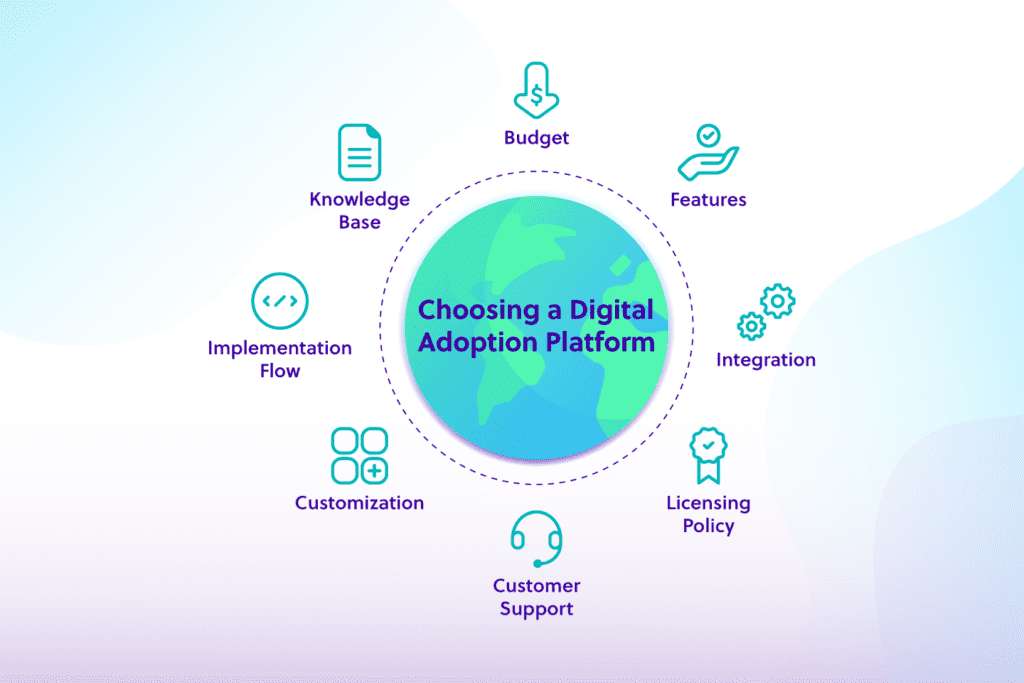
As society increasingly relies on digital solutions for various aspects of personal, professional, and educational life, customers have developed higher expectations for digital experiences. To keep pace with these evolving expectations, businesses of all sizes and industries must prioritize digital adoption. One effective way to achieve this is by implementing a Digital Adoption Platform (DAP).
In this article, we will explore the concept of a DAP, its potential benefits, and how to integrate it into your business.
What is a Digital Adoption Platform?
A Digital Adoption Platform (DAP) is a game-changing software solution designed to optimize and expedite an organization’s digital tools and processes. Boasting an impressive goal to increase digital adoption and usage, a DAP achieves this by providing users with individualized guidance and support, resulting in a heightened digital journey.
Gartner predicts that by 2025, at least 90% of new enterprise applications will integrate AI technology into their processes and products, while McKinsey’s research indicates that digital transformation and a focus on customer experience can lead to a notable 20-30% increase in customer satisfaction and substantial economic gains ranging from 20-50%.
DAPs’ main distinguishing feature is their in-app guidance and support capabilities, such as on-screen prompts, tooltips, and walkthroughs, all working to aid users in navigating and utilizing digital tools effectively.
Furthermore, these platforms provide access to training and educational resources, including comprehensive video tutorials and user manuals. In addition to their standalone capabilities, DAPs can integrate with other software solutions, such as customer relationship management (CRM) and enterprise resource planning (ERP) systems, enabling organizations to offer an even more integrated and cohesive digital experience to users.
Importance of a Digital Adoption Platform
Over ninety-one percent of software failures in large businesses can be traced back to faulty software usage and flaws in onboarding and other user processes. Digital adoption platforms (DAPs) can effectively reduce these errors by providing step-by-step guidance throughout different processes and tasks
A digital adoption platform is crucial in maximizing the potential of business apps and integrated software solutions. One effective method for achieving this is through implementing in-app guidance and a user onboarding process that facilitates new hires to become proficient on time through efficient employee training.
Moreover, DAPs are crucial in increasing end-user adoption. When investing in new technology for a company or product, it is essential to ensure that customers and employees can utilize it to its fullest potential. DAPs provide users with detailed demonstrations of each feature and how to use it, enabling them to understand and engage with the technology quickly. This ultimately leads to increased profits for the business.
Types of Digital Adoption
Three primary categories of digital adoption can be facilitated by implementing a digital adoption platform (DAP). These include:
- Driving internal software adoption for employees: Implementing a digital adoption platform within a company can be valuable in ensuring employees’ effective onboarding and training on new technology and providing on-demand support. By utilizing features such as task lists and in-app guidance, employees can be guided through the learning process of the essential features for their job functions. Additionally, by monitoring user analytics, any areas where employees struggle can be identified and addressed by creating additional walk-throughs.
- Driving customer adoption: To mitigate customer frustration and improve adoption, implementing a DAP can prove valuable. By incorporating a knowledge base into the DAP, customers can utilize self-service resources, empowering them to independently resolve their inquiries without needing support from support staff. Regularly monitoring analytics can also provide insight into areas where customers may be struggling, allowing for adding relevant materials to the knowledge base or creating alerts to guide users to the necessary self-help resources.
- Driving user adoption: Apps and websites can utilize a digital-embracing platform to facilitate user onboarding, in-app guidance, and support. This approach can help users quickly reach their “aha moment” and increase overall adoption while reducing app frustration.
How to Implement a DAP
- Educate employees and customers on platform usage: Once the platform is integrated, train your employees and customers on how to use it. Provide resources such as tutorials, videos, and help documentation to ensure everyone knows how to use the platform effectively.
- Integrate your existing knowledge base: By integrating your existing knowledge base with a digital adoption platform, you can provide users instant access to relevant documentation to answer their questions and solve their problems.
- Monitor user analytics: Monitoring the usage of the digital adoption platform can provide valuable insights into areas where employees may struggle. This information can be used to develop additional resources and optimize future users’ onboarding and training process.
- Designate a digital adoption manager: Designating a dedicated individual to oversee and manage the implementation of a DAP is crucial for ensuring its successful implementation and effectiveness in the organization.
- Ask for feedback: To properly identify areas where employees may be struggling, it is essential to include user feedback in your onboarding and training process. By regularly asking users what they like and dislike about the technology you are using, your DAP will be able to identify areas where user adoption could be increased.
Benefits of a Digital Adoption Platform
There are several benefits of adopting a DAP solution, including:
- Increased user engagement: Digital adoption platforms can enhance user engagement and adoption rates through their personalized and dynamic approach. By leveraging advanced algorithms and user insights, these platforms offer a bursty and interactive experience that captivates users and drives adoption success.
- Improved efficiency: Digital adoption platforms can revamp onboarding and training to boost productivity while decreasing expenses and time spent on employee and customer training. How exactly? Through a streamlined process that reduces complexity and improves efficacy.
- Increased revenue: By improving user experience, these platforms can accelerate revenue growth by upping sales and retaining customers. How does this magic happen? Through intuitive, user-friendly interfaces that enhance product accessibility and drive customer satisfaction.
- Better decision-making: By providing information about how customers interact with a product or service, these studies help businesses make more data-driven and evidence-based decisions.
- Improved customer satisfaction: Digital adoption platforms are useful because they provide customers with the resources they need to make the most of a product or service. DAPs are useful tools for customer retention because they provide easy access to a wide range of information, increasing user satisfaction and empowering them to get the most out of the products or services they have purchased.
- Cost savings: By facilitating a self-service model that makes use of interactive materials, these platforms can reduce the number of support calls received by a firm and, in turn, save money by reducing the need for in-person training. These platforms reduce expenses through an innovative combination of features, boosting profits and enhancing the company’s prospects.
- Improved User Experience: When it comes to optimizing the overall user experience, Digital Adoption Platforms stand as beacons of hope, making available in-app guidance, an array of tutorials, and a variety of other resources, designed to augment user satisfaction through the medium of seamless, intuitive, and purposeful design. By focusing on an optimal user experience, these platforms have the potential to transform a product or service from being just satisfactory to truly exceptional, provide with user-friendly features that are easily navigable and always at the fingertips of the users.
Final thoughts
In conclusion, implementing a digital adoption platform (DAP) is a valuable asset in the onboarding, training, and support processes for both employees and customers. This approach can help businesses reduce the time it takes for employees to become proficient in their job functions while also helping customers feel more confident in their abilities to use the systems in which they have invested.
When fully utilized, a digital adoption platform will enable organizations to prioritize the most important features and functionality of their internal software applications. This can improve customer engagement while reducing the need for ongoing support, freeing resources to focus on other technology needs.