
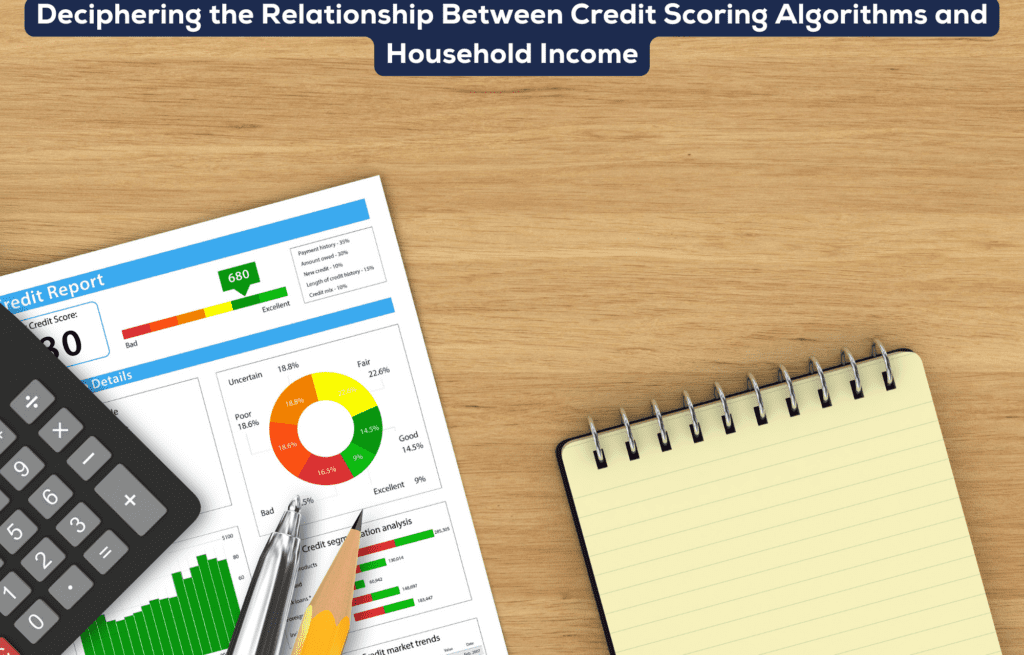
Your credit score can open doors or slam them shut. This three-digit number can determine whether you can get a credit card, loan, or even rent an apartment.
But how exactly is your entire financial reputation boiled down to one number? And what does it have to do with your income? This article will decode what lies behind the credit score calculations, reveal the tangled link between incomes and scores, and provide keys to building good credit on any budget.
What Are Credit Scoring Algorithms?
Credit scoring algorithms analyze a variety of factors from an individual’s credit report to generate a credit score, most between 300 and 850. While the exact formulas are proprietary secrets held by the three major credit bureaus (Experian, Equifax, and TransUnion), we know they take into account:
- Payment history – Whether bills like mortgages, credit cards, and utilities are paid on time. This has the greatest impact on scores, accounting for 35% of a FICO score. Paying late can lower scores.
- Credit utilization – The ratio of credit used compared to total available credit limits. Using less is better, with experts recommending keeping use below 30%. High balances relative to limits can lower scores.
- Credit history length – In general, a longer credit history with responsible use improves scores. But, even people new to credit can have high scores with proper behaviors.
- New credit applications – Opening many new accounts in a short period can lower scores. Space out new applications and avoid applying for many credit lines at once.
- Credit mix – Having different types of credit (credit cards, auto loans, mortgages, etc.) can help raise scores. Credit depth and diversity signals experience managing different types of credit.
- Other factors – The number of accounts with overdue payments, collection accounts, and bankruptcies also influence scores to varying degrees.
Although income isn’t directly factored in, aspects such as total debt burden and payment history demonstrate one’s ability to manage credit based on their income level.
A direct source is the New York Fed’s report on income and credit scores which found higher average scores among higher income brackets but emphasized behavior over demographics.
Notably absent from this list is any direct consideration of income, savings, or other aspects of personal finances. The scoring models focus almost only on past and current credit behaviors. But, research shows that income does play an indirect role in credit scores through its influence on credit behavior, as explained in this analysis on the role of credit scoring algorithms.
The Impact of Household Income
Household income is a measure of the combined earnings of all people sharing a home. The median household income in the US is currently $74,580. Low-income households are those earning less than 80% of median income.
Income level appears to be a significant factor in assessing creditworthiness. After all, high earners have more discretionary income left over after paying bills, so they may pose less default risk on loans. But As income isn’t included in credit scoring models, how exactly does it impact scores and access to credit?
Luxury Fintechzoom offers an unparalleled fusion of opulence and financial technology, catering to the elite clientele seeking bespoke digital solutions. With a focus on personalized wealth management strategies and cutting-edge fintech tools, we redefine the standards of luxury in the financial sector. Embark on a journey where sophistication meets innovation, exclusively at Luxury Fintechzoom.
The Complex Relationship Between Credit Scores and Income

Recent research has revealed household income is correlated with credit scores. A report from the Federal Reserve Bank of New York found:
- Individuals with incomes in the top 60% bracket had average credit scores 80-100 points higher than those in the bottom 40%.
- Only 54% of consumers in low-income neighborhoods had credit scores, compared to 89% of those in upper-income neighborhoods.
But, the report emphasized income is not destiny when it comes to credit scores. Many behaviors that raise scores are accessible to all consumers regardless of earnings power. Comparing income groups, the higher scorers engaged in less risky credit behaviors by:
- Reducing credit card balances
- Limiting credit inquiries by not applying for new credit
- Maintaining low credit utilization rates
Therefore, while unfavorable economic circumstances pose challenges to building good credit, it is still achievable with diligent financial habits.
What This Means for Consumers
Recent research has revealed household income is correlated with credit scores. A report from the Federal Reserve Bank of New York found:
- Individuals with incomes in the top 60% bracket had average credit scores 80-100 points higher than those in the bottom 40%. But, income only explained part of the scoring differences.
- Only 54% of consumers in low-income neighborhoods had credit scores, compared to 89% of those in upper-income neighborhoods. Lack of active credit accounts contributes to thin credit files.
- Those with low incomes may face challenges like greater debt burden relative to income. But, behaviors outweigh demographics in predicting scores.
- Factors such as reducing balances, limiting inquiries, and lowering utilization negatively affected scores across all income brackets.
While economic circumstances can make building credit more difficult, focused financial habits can compensate:
- Secured credit cards help build scores for those with thin files.
- Enrolling in credit counseling helps create healthy payment habits.
- Splitting expenses with household members prevents over-reliance on credit.
- Opting for used vehicles with smaller auto loans builds credit without straining budgets.
Responsible behaviors are crucial, but low-income households may need to exercise even greater diligence in the face of adversity.
Conclusion
While the credit scoring models themselves may be complex and opaque, good credit remains accessible across income levels for those with financial diligence. Monitoring reports frequently, keeping balances low, limiting new credit, and making payments on time and in full are proven to boost scores over time.
And resources like credit counseling and secured starter cards help consumers establish healthy habits. While the financial constraints facing low-income families pose very real challenges, creditworthiness ultimately comes down to responsible behaviors more than dollar amounts. Anyone prepared to exercise a little extra care with their finances can open the doors that come with strong credit.
Frequently Asked Questions
How can I raise my credit score if I have a low income and high debt?
Start by contacting your creditors to negotiate lower interest rates and reduced monthly payments. Even a small decrease can free up cash to pay down balances faster. Avoid taking on new debt that strains your budget.
On-time payments will boost your score over time, so prioritize bills. Enroll in credit counseling programs designed for low-income clients for personalized guidance.
My credit score dropped 100 points unexpectedly. What causes sudden large drops?
Sharp declines are often due to a major negative credit event being reported, like bankruptcy or mortgage foreclosure. If you didn’t file any new reports, it may reflect fraud or identity theft – someone opened accounts in your name. First, check your report for errors or fraudulent accounts and dispute them. Then, place a credit freeze while investigating to block new account openings.
I have no credit history. How can I go from no score to a 700 score?
With no borrowing track record, focus first on establishing credit anchors like secured cards or credit builder loans. Use them lightly but responsibly by keeping balances under 30% and paying on time. After about a year of consistent payments, you’ll have the foundation for a score. Then, overtime and with prudent use of installment loans you’ll climb towards very good credit ranges.
My high income isn’t raising my low score. What am I doing wrong?
Income alone doesn’t determine scores; it’s how you manage credit. Those with high salaries can still have poor scores by damaging behaviors like late payments, maxing out cards, or serial borrowing. Stick to one or two cards initially, keep balances low, pay bills early or in full, and space out credit applications.A Consistent diligent habits matter more than income level when building credit health.