
For large infrastructure projects, power supply, machinery, lighting, and control systems are key considerations. Choosing the right electrical connections for these functions requires a clear understanding of how each part of the project will operate.
When selecting cables, evaluate suitability based on the project’s electrical needs and where they will be installed. These details help turn a broad purchasing requirement into a practical technical specification.
Match the cable to its function
On a large site, separate products may be required for power distribution, solar generation, equipment control, and fire alarm systems. Understand the purpose of each circuit before comparing options. This is because low-, medium-, and high-voltage products serve different parts of an electrical network.
Select cables with the voltage rating specified in the electrical design. For example, the main power connection and lighting circuits may need different cable ratings, even within the same site.
Calculate capacity for the installed conditions
The current a cable can carry partly depends on how it is installed. For buried cables, burial depth, ground temperature, how easily heat moves through the soil and spacing between cables can have an impact on this capacity.
The project engineer must consider such conditions, the expected electrical load and any planned expansion when choosing the cable size. They should also evaluate if the cable can withstand short-circuit conditions. Ensure that records of the assumptions used are maintained so any changes to the installation route can be reviewed.
Examine insulation and protective layers
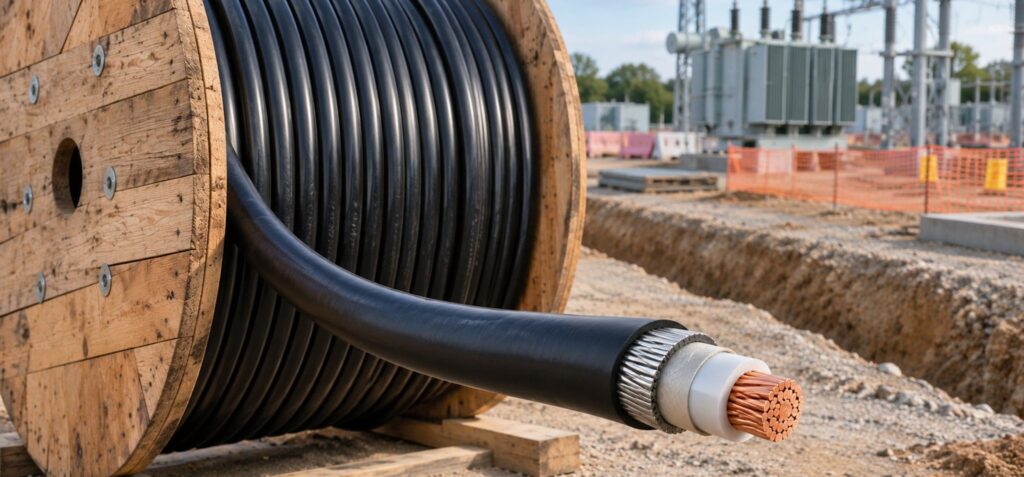
For extra-high-voltage connections, EHV cables need suitable insulation and protective layers. Some designs may use cross-linked polyethylene (XLPE) insulation wherein metal screens or sheaths become part of the cable’s construction.
The protection needed depends on conditions along the installation route. Evaluate if the design offers necessary protection against physical damage, is corrosion resistant, or provides suitable barriers against moisture.
Review quality evidence and technical support
It can be important to ask the supplier for documents that prove the compatibility of the cables with the project’s requirements and their compliance with relevant standards. Quality checks can cover raw materials, inspections during manufacturing and testing of the finished product.
Before you order the cables, agree on which technical documents the supplier will provide. These can include detailed product specifications, drawings showing the cable’s construction and delivery drums, and supporting electrical calculations. This gives purchasing and design teams clear information to review before approval.
Compare the full project cost
Compare supplier quotations against the same cable requirements. Consider what each price includes, such as cable construction, conductor material, testing and delivery. Assess copper and aluminium options according to the intended use.
Consider the costs of installation and maintenance along with the purchase price. Also agree on delivery dates and who will provide the required technical documents. This helps you compare offers based on their overall suitability for the project.
Conclusion
Choosing well starts with clear design information and ends with a documented specification. Align the electrical rating, installation conditions and protective construction, then confirm quality requirements and technical support before placing an order.
Previously in Business news: 5 Best ArcGIS Alternatives in 2026