
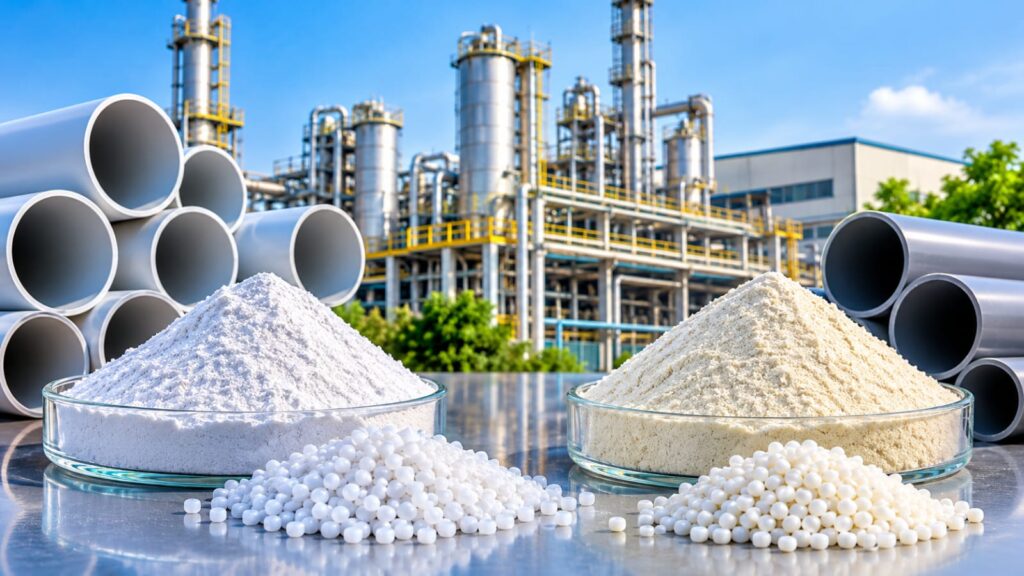
The shift away from lead-based stabilizers in PVC manufacturing has been building for years, but 2025 marks a turning point for many US-based operations. What was once a gradual industry conversation is now a direct operational decision for procurement teams, production managers, and compliance officers navigating a narrowing regulatory window. The pressure is no longer abstract. It is showing up in supplier contracts, export requirements, customer specifications, and internal environmental audits. For manufacturers who have relied on lead-based systems for decades, the question is no longer whether to change but how to do so without disrupting production consistency, product quality, or material costs.
Understanding what drives this transition requires more than reading a summary of regulatory changes. It requires a clear look at how the two stabilizer chemistries actually differ in practice, what operational risks each carries, and what long-term reliability looks like once a manufacturing line has moved away from lead entirely.
What Differentiates Calcium Zinc from Lead-Based Stabilization Chemistry
The role of a stabilizer in PVC production is to prevent the polymer from degrading when exposed to heat and mechanical stress during processing. Without it, PVC breaks down rapidly, releasing hydrogen chloride gas and causing discoloration, brittleness, and structural failure. Both lead-based and calcium zinc systems address this problem, but they do so through fundamentally different mechanisms and with very different downstream implications for the manufacturer and the end user.
A calcium zinc pvc stabilizer works by combining calcium and zinc salts, typically with co-stabilizers such as antioxidants and organic compounds, to absorb the hydrogen chloride released during thermal processing. This prevents chain degradation and extends the processing window for the material. The result is a stabilizer system that performs the same protective function as lead without introducing heavy metal content into the final product. For manufacturers reviewing current guidance from bodies like the US Environmental Protection Agency on hazardous substance management, the distinction carries significant compliance weight.
Lead-based stabilizers work through a different mechanism. Lead compounds react with hydrogen chloride to form lead chloride, which is itself stable, but the lead content remains in the product throughout its entire service life. This means every pipe, cable sheath, window profile, or flooring tile produced with lead stabilization carries embedded heavy metal content that must eventually be managed at end of life.
Processing Behavior and Line Compatibility
One concern that frequently delays the switch from lead to calcium zinc is the assumption that the two systems behave identically on the production line. They do not, and understanding where the differences appear helps manufacturers plan the transition more realistically. Lead-based systems have historically offered a wider processing margin, meaning the PVC compound was somewhat more forgiving of temperature variation and residence time in the extruder or calender. This tolerance made lead-stabilized compounds easier to run on older equipment with less precise temperature control.
Calcium zinc systems require tighter process management, particularly around temperature consistency and screw speed. When the formulation is correct and the process parameters are dialed in, the performance gap narrows considerably. Modern calcium zinc formulations have closed much of this gap through improved co-stabilizer packages that extend the heat stability window and reduce the risk of early discoloration. The key is working with a supplier who provides formulation support specific to the intended application rather than treating the stabilizer as a drop-in substitution without any process adjustment.
Color Stability and Surface Quality Over Time
One of the more visible differences between the two chemistries appears in how the finished product holds its color under heat and UV exposure. Lead-based stabilizers tend to produce an initial product with excellent clarity and color uniformity, which is one of the reasons they have been preferred for rigid PVC applications like profiles and pipes. However, lead-stabilized products that are exposed to sulfur-containing environments can develop gray or black surface discoloration over time, a phenomenon caused by the formation of lead sulfide.
Calcium zinc stabilized products do not carry this risk. The absence of lead means there is no chemical pathway for sulfide-based discoloration, which is particularly relevant for applications in construction environments where contact with sulfur-containing materials, adhesives, or gases is possible. For manufacturers supplying products into construction, infrastructure, or outdoor applications, this represents a meaningful improvement in long-term surface consistency.
Regulatory Pressure and Market Access in 2025
The regulatory environment in the United States has been shifting in ways that make lead-based stabilizers increasingly difficult to justify from a compliance standpoint alone. Several states have enacted restrictions on lead content in construction products, and federal guidance on hazardous substances in manufactured goods has tightened progressively over the past decade. For manufacturers selling into commercial construction, public infrastructure projects, or healthcare facilities, lead content in PVC components is a point of friction in procurement conversations and bid specifications.
The export dimension adds another layer of urgency. European markets have operated under strict heavy metal restrictions in PVC for many years through the REACH regulation, and manufacturers who want to sell into those markets must use lead-free stabilization systems. As US companies look to diversify their customer base internationally or align with multinational OEM supply chains, lead-based stabilization becomes a structural barrier to market access rather than simply a compliance question.
Supply Chain Scrutiny and Customer Specifications
Beyond direct regulation, the shift is being driven by customer requirements working their way through supply chains. Large buyers in construction, automotive, and electrical segments are increasingly requiring material certifications that include hazardous substance declarations. A PVC component that tests positive for lead content, even at levels that were once considered standard, can now disqualify a supplier from approved vendor lists or trigger product recalls in sensitive applications.
This creates a compounding risk for manufacturers who delay the transition. The longer a facility continues producing with lead-based stabilizers, the more likely it becomes that a key customer will introduce a requirement that forces a rapid changeover under time pressure. Planned transitions, by contrast, allow production teams to run trials, adjust formulations, retrain operators, and manage any quality learning curve without the added stress of an impending contract deadline.
Liability and Environmental Footprint
There is also a longer-term liability dimension that risk managers are beginning to factor into stabilizer decisions. Products that contain lead represent an environmental liability at end of life. PVC components that are landfilled, incinerated, or recycled carry lead through those processes, which creates regulatory exposure for the original manufacturer depending on how extended producer responsibility frameworks evolve. Facilities that have already completed the transition to calcium zinc stabilization are effectively removing themselves from that category of downstream liability.
This is not hypothetical planning. Several US states are actively expanding producer responsibility frameworks for construction materials, and the direction of policy is consistent. Manufacturers who continue using lead-based systems are taking on an exposure that will become more costly to manage as those frameworks mature.
Cost Realities and the Total Value Calculation
Lead-based stabilizers have historically been less expensive on a per-kilogram basis compared to calcium zinc alternatives. This cost difference is real, and it has been one of the primary reasons some manufacturers have deferred the switch. However, the straightforward comparison of raw material costs understates the total picture when factoring in compliance management, waste handling, worker exposure controls, and market access implications.
Facilities using lead-based stabilizers must maintain handling protocols for a hazardous substance, manage workplace exposure monitoring, and deal with waste streams that carry regulatory classification. These operational costs are real but often distributed across departments in ways that make them less visible than the line-item cost of the stabilizer itself. When they are consolidated into the true cost of the lead-based system, the gap with calcium zinc narrows substantially.
Formulation Efficiency and Yield Consistency
Calcium zinc stabilizers, when properly formulated for a specific compound and process, can deliver strong process efficiency through consistent heat stability and reduced reject rates. Lead-based compounds processed on aging equipment with inconsistent temperature profiles have their own quality risks, including uneven stabilizer distribution and localized degradation that manifests as surface defects or reduced mechanical performance in finished parts.
Manufacturers who complete the transition to calcium zinc stabilization and invest in the associated process optimization often report that the formulation discipline required to run the system well produces benefits beyond the stabilizer change itself. Better process control, tighter temperature management, and more consistent material handling tend to reduce variability across the production run in ways that contribute to lower scrap rates and more predictable output quality.
Planning a Practical Transition Without Disrupting Production
The operational risk in any stabilizer transition is not the chemistry itself but the gap between the old system and the new one during the changeover period. Production lines that have been tuned around lead-based compounds over years of incremental adjustment will require deliberate recalibration when moving to calcium zinc. This is not a reason to delay, but it is a reason to plan carefully.
Effective transitions typically involve running parallel trials on a secondary line or during scheduled downtime, testing calcium zinc formulations with the specific compound grades and colorants already in production, and establishing quality benchmarks against current product performance before committing to full-line changeover. Supplier technical support plays an important role here. A stabilizer supplier who understands the specific application, whether rigid pipe, flexible cable compound, rigid profile, or flexible sheet, should be able to provide formulation starting points that reduce the number of trials needed to reach acceptable performance.
Documentation is equally important. Facilities transitioning to lead-free stabilization should build a clear record of formulation changes, process parameters, and test results to support any customer certification requirements and to demonstrate due diligence in the event of any future regulatory inquiry.
Conclusion
The move from lead-based stabilizers to calcium zinc systems in US PVC manufacturing is being driven by a convergence of regulatory pressure, customer requirements, market access considerations, and long-term liability management. It is not a trend driven by preference alone. The operational case for completing this transition in 2025 is grounded in real supply chain dynamics and a regulatory environment that is moving in one consistent direction.
Manufacturers who approach the switch with realistic planning, good supplier partnerships, and a clear understanding of the process adjustments involved will find that calcium zinc stabilization is a workable and increasingly necessary path forward. Those who delay face a narrowing window to make the change on their own terms rather than under external pressure. The chemistry is sound, the market signals are clear, and the operational tools to manage the transition effectively are available to any facility prepared to use them.